The current heatwave has brought an important issue into sharp focus for businesses and facilities managers alike: how do we maintain comfortable working environments as Britain’s climate becomes increasingly unpredictable?
For years, much of the conversation around energy has focused on generation – where our power comes from and how we can make it cleaner. During recent Prime Minister’s Questions, Sir Keir Starmer highlighted the role renewable energy will play in helping the UK gain greater control over its energy future.
However, there is another side to the story: how we use energy within our buildings.
The challenge facing building owners today is no longer simply keeping warm in winter. Increasingly, it is about maintaining comfortable environments throughout the year to ensure employee wellbeing whether it be a cold January morning or in the midst of increasingly frequent spring and summer heatwaves.
Historically, the UK has been a heating-focused market with buildings designed to retain warmth.
But as hotter summers become more common, new challenges are emerging for architects, specifiers, developers, business owners and facilities managers alike.
Buildings that perform well in winter can quickly become uncomfortable during prolonged periods of high temperatures. Offices, schools and other occupied spaces can become difficult environments in which to work, learn and operate effectively.
The question building owners should now be asking is not simply, “How do I heat my building efficiently?” but “How do I maintain comfort all year round irrespective of the elements in the most cost-effective way?”
Reliability, performance, cost efficiency and comfort are all key considerations with control playing a pivotal role in achieving this.
The most successful buildings of the future will be those that can respond to changing conditions without excessive energy consumption or spiralling costs. That requires systems that are flexible enough to provide warmth when temperatures fall and cooling when temperatures rise.
One of the greatest strengths of ground source heat pumps is their ability to provide cooling as well as heating.
As temperatures continue to rise, this capability becomes increasingly valuable.
A properly designed and maintained ground source heat pump system can eliminate the need for separate heating and cooling infrastructure, enabling a single solution to deliver year-round comfort. The result is a building that remains comfortable through every season, while reducing reliance on multiple standalone systems, improving energy efficiency, strengthening resilience against changing climate conditions and helping to lower long-term operational costs.
Most importantly, it gives building owners and facilities managers greater control over their internal environment.
However technology alone is not the answer.
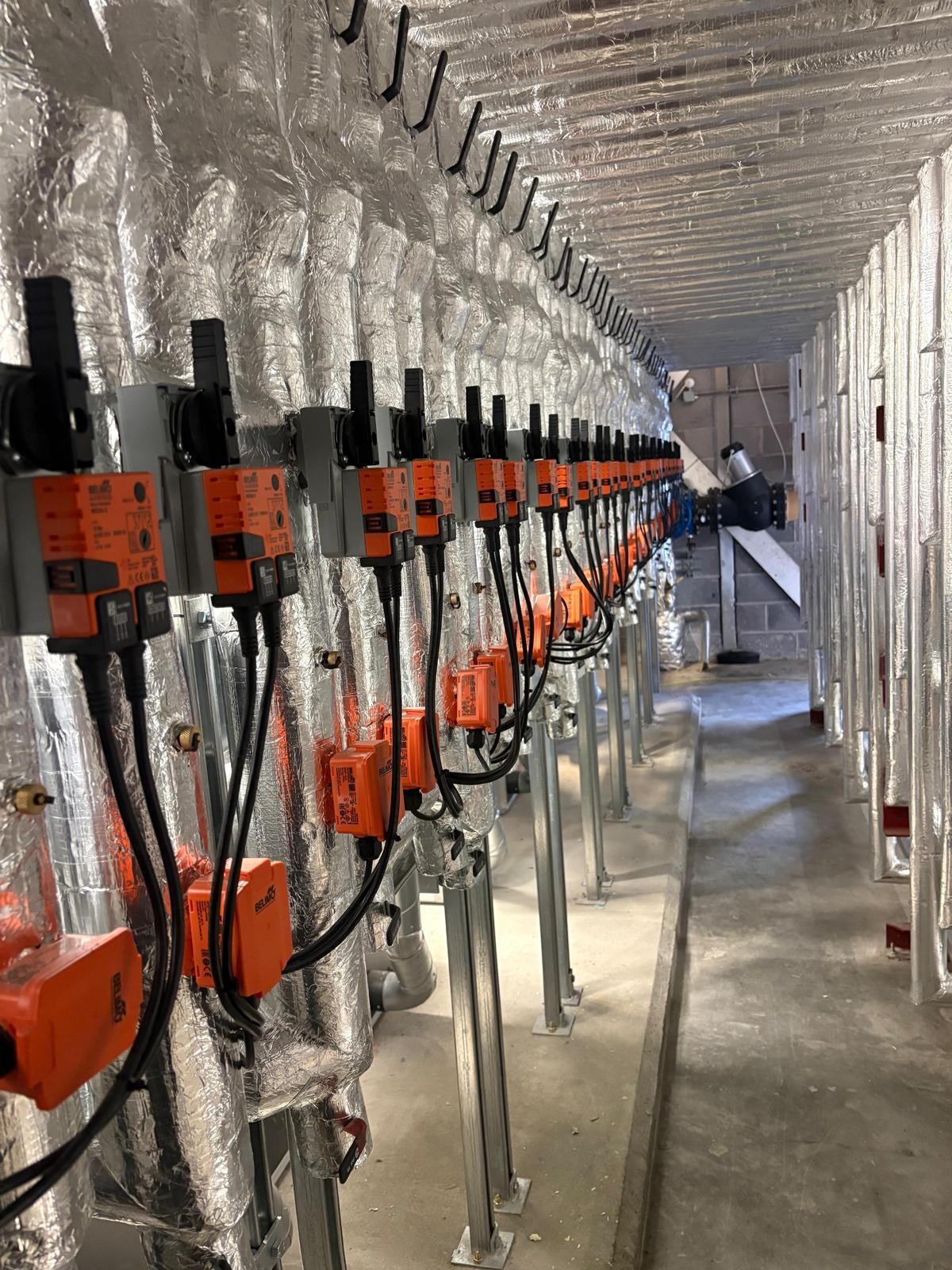
One of the biggest lessons we have learned through maintaining, optimising and integrating ground source heat pump systems is that performance depends on how effectively systems work together.
Heating and cooling technologies must be integrated with controls, building management systems and occupancy requirements to ensure energy is used intelligently. Systems should not be viewed as individual components but as part of a coordinated strategy that is designed, maintained and continuously optimised.
This becomes even more important as organisations seek to manage fluctuating energy costs while meeting sustainability targets and occupant expectations.
The UK’s energy transition will see renewable energy playing an increasingly critical role in delivering a cleaner and more secure energy future.
As our climate evolves, building owners need solutions that provide flexibility, efficiency and year-round comfort, regardless of the season.
Ground source heat pumps are uniquely positioned to meet that challenge. By delivering both heating and cooling from a single system, they provide the adaptability modern buildings increasingly require.
In a world of rising temperatures, evolving energy markets and growing expectations around sustainability, the ability to control the internal environment efficiently may become one of the most valuable assets any building can possess.