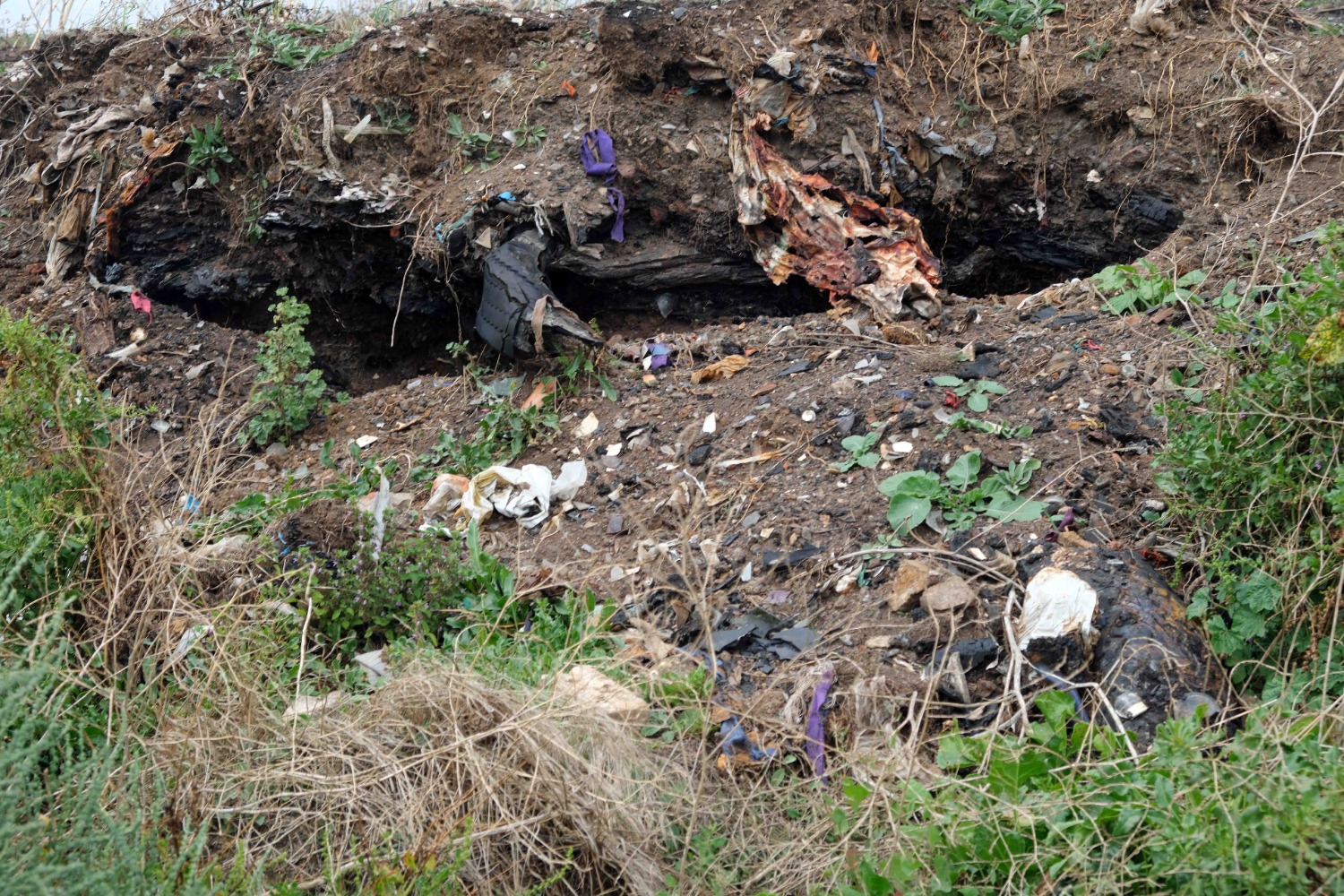
A first-of-its-kind analysis of Europe’s landfills has revealed that tens of thousands are located in flood-prone zones, areas used for drinking water, or in sensitive conservation sites. Reporters from Investigate Europe and Watershed Investigations found that many of the 60,000 sites mapped are at risk of leaking toxic waste, posing threats to human health and disrupting fragile ecosystems.
Almost 30 per cent were found in areas with a significant risk of flooding, raising the possibility of harmful waste entering water systems and surrounding land. Around 10,000 were identified in drinking water zones across France, the UK, Spain, the Netherlands, Germany and Italy. More than 3000 sites were located in protected conservation areas, leaving ecosystems and natural habitats at risk of pollution.
“With increasing frequency and magnitudes of floods and erosion from climate change, there’s a greater risk of these wastes washing into our environment,” said Patrick Byrne of Liverpool John Moores University. “This includes physical waste like plastics and building materials, but also toxic metals and chemicals such as PFAs [‘forever chemicals’].”
Data obtained from Freedom of Information requests, government agencies and public sources pinpointed 61,338 sites across Europe. Many are likely to be historic, pre-dating the European Union’s 1999 Landfills Directive, meaning they could lack pollution control measures, such as the use of protective lining to prevent leakages of harmful waste. Although modern landfills which are well managed will likely be low risk.
“Europe is obviously ignoring its landfill crisis,” Jutta Paulus, a German MEP with the Green grouping, said in response to the findings. “The hundreds of thousands of legacy sites, many in flood- or erosion-prone zones, remain a dangerous blind spot.”
The EU directive has been in place for more than 25 years, but there is no obligation for member states to provide exhaustive data on landfill locations or how historic sites are being rehabilitated.
The European Commission has opened 42 infringement proceedings against member states relating to breaches of the directive since 1999, involving both legal and illegal dump sites, the investigation found. Almost half of those are still open, according to the official database.
Cyprus, Spain, Slovenia and Slovakia are among those to have been brought before the European Court of Justice, some on multiple occasions. Italy, one of the worst-performing member states, has paid hundreds of millions in penalties relating to its track record on waste management. In one case alone, it has paid €326 million, according to European figures published this April.
In the UK, more than 22,000 historic landfills were identified by the investigation, including over 4,000 within drinking water catchments across England and Wales, which may lack safeguards against toxic leaks. They could contain a range of industrial, commercial, domestic, hazardous, and liquid sludge, which could be leaching into the environment unhindered. It is estimated that 80 per cent of the UK population live within two kilometres of known landfill sites. “Essentially, we are all living on a garbage dump,” said Kate Spencer, Professor of Environmental Geochemistry at London’s Queen Mary University