In the absence of the Stockholm Furniture Fair, this year’s design week in Stockholm took on a new format through a new initiative, Stockholm Design Days, and various other events and ventures that took place across the city.
Reflecting on the week, Bo Hellberg, the CMO of the Swedish design icons, String Furniture and Grythyttan Stålmöbler, shares his insights on the week as a whole and what to expect looking forward.
The Stockholm Design Week looked a little different this year, how was the feel amongst Swedish brands and in the city?
“I think it was genuinely positive, a sense of rebirth in some way. The absence of Stockholm Furniture Fair and the Stockholm Design Week organisation gave license to brands to find and create their own space in a new way. Everything from simply opening their showrooms to creating completely new formats and creative expression.”
Tell us about the initiative you organised this year?
“The starting point was a fantastic building from 1658, over three floors in very centre of Stockholm. I thought it’d make for an inspirational space to experience design and booked it, without a real plan to be honest.
As CMO for String Furniture and Grythyttan Stålmöbler I obviously represent two brands, but we needed bigger range and diversity. Which is why we contacted colleagues from design brands Källemo and Gemla who are very different to us, but share our values. They were quick to jump onboard and together we curated a list of brands – and emerging talents.
Each brand had their own rooms, designed their own exhibition independently, which made for a diverse, intriguing experience for the visitors. Their exhibitions had to work with the rooms – many with the original features and artwork from the 1700s.
I was obviously a bit anxious before we opened, we had invited a long list of architects and press but this was a brand new destination and format. We didn’t know it’d be such a success!”
The initiative showcased the work of emerging designers; can you tell us a bit more about your scholarship programme?
“Well that’s two different things but kind of connected: String Furniture has been part of ”Young Swedish Design” since 2022 and hand out a scholarship annually to one new designer. A part of our scholarship is to give the students the opportunity to go from their design idea through the rigmarole to something that can be produced.
The Emerging Designers was an idea we had to give back. The participating brands funded a space for young designers to exhibit, we chose Nils Askhagen who is an interesting new name to curate the list with some input from us: we simply asked for design that would have variation in materiality, expression and technique.”
What can we expect from Swedish design as we look ahead to 2026/7? Were there any key trends that came out of the week in Stockholm? How important is Swedish design in the international marketplace?
“Looking at the Emerging Designers in the Building – and Creative Edition, we can definitely see new thinking in design and material. One key trend for me was recycling that goes beyond sustainability, where the reuse becomes part of the design. Almost like sampling in music.
Swedish Design is important, although it doesn’t always show up with the confidence it deserves. What sets Swedish design apart is the innovation and creativity, the forces that move us forward and are vitally important for our whole industry.”
In terms of office design, how is this evolving in 2026?
“There is finally the realisation that the old offices are not coming back, meaning architects and companies both have to rethink how we work, where we work and what is the purpose of the office. There is a generation that have only known hybrid working, and are good at it. But hybrid working doesn’t’ create cohesion or common goals.
The more important aspect is that we are a cognitive social species, we do better work when we physically come together – inspire each other and thrive off each other. Those are the moments when we create real value.
Which brings me to the theory of the ”third space”. In city planning there is often a plan for residential and for work, but oftentimes the place to congregate – the third space – is forgotten or simply not given enough importance. Third spaces are places we meet, socialise, where culture happens and ideas are exchanged.
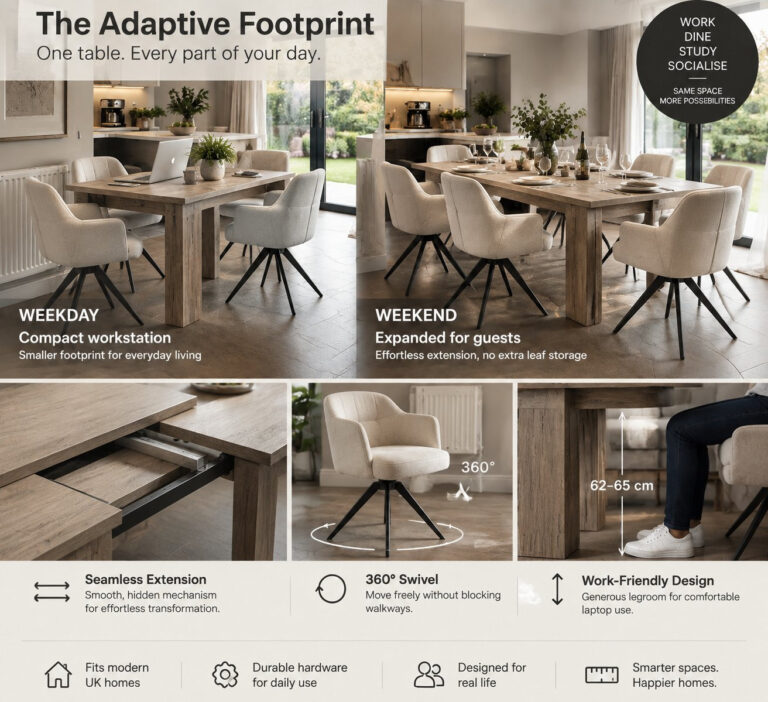
Companies are realising that if they want to have a common culture, let people exchange ideas and create real value, they need to become third spaces. Meaning a rethink in office design as we know it. Offices need become meeting places, dynamic spaces and room settings that are flexible and modular in its design. Walls that can be moved, or dividers between areas that can be reconfigured upon need, tables that have multiple purpose, new storage.”