PortXchange: Spain’s New Fuel Law Is a Rerun of the Rule That Cost Rotterdam 650,000 Tonnes

Editorial Brief
At a glance: AI-assisted overview, optimised for journalists, search & news aggregators

Spain has introduced Royal Decree 611/2026, imposing a decarbonisation obligation on marine fuel suppliers, similar to a law in the Netherlands that led to a significant drop in Rotterdam's bunker fuel sales. The decree targets domestic cabotage shipping, requiring a reduction in greenhouse gas intensity from 6.5% in 2027 to 33% by 2040. This move reflects a fragmented approach within the EU, as different countries adopt varying rules, potentially shifting fuel sales to ports without such obligations.

EDITORIAL INSIGHT: Context, industry insight and market perspectives of this news story

Spain’s adoption of a binding decarbonisation mandate for marine fuel suppliers follows a pattern already seen in the Netherlands, raising immediate questions about the effectiveness of unilateral regulation in a highly mobile sector. With Rotterdam’s experience showing that fuel sales can quickly shift to neighbouring ports without matching rules, the Spanish approach highlights the practical challenge of enforcing climate targets at the national level when regional coordination is lacking.

For fuel suppliers and port operators, the divergent pace of national implementation across Europe means commercial decisions are increasingly shaped by regulatory boundaries rather than emissions outcomes. Unless broader alignment is reached, the risk remains that emissions targets are undermined by cross-border shifts in supply, rather than genuine decarbonisation. The upcoming IMO meetings will be closely watched for signs of progress towards a more unified global framework, which many in the industry now see as essential to avoid further market fragmentation.

Story Ideas
Politics/policy

Impact of Spain’s Fuel Law on European Maritime Commerce

Spain's new fuel law replicates the Dutch model, raising questions about its impact on European maritime trade, particularly in the context of differing national policies across the EU.

Target audience
who would cover this
Story potential
8/10
Economic impact

Economic Implications of Spain’s Decarbonisation Mandate on Ports

Exploring how Spain's new marine fuel obligations could influence port economics and competitiveness, particularly in light of the Rotterdam experience.

Target audience
who would cover this
Story potential
7/10
Press Release

(Rotterdam, 22 September 2026)

Nine months after the Netherlands became the first country to impose a binding decarbonisation obligation on marine fuel suppliers rather than on the ships they serve, Spain has followed with Royal Decree 611/2026. The market data from Rotterdam shows what other ports should expect if the mechanism keeps spreading unevenly, according to PortXchange, the port emissions data specialist.  

Since Dutch rules took effect on 1 January 2026, requiring fuel suppliers to cut the greenhouse gas intensity of bunker fuel sold in the Netherlands, Rotterdam’s bunker sales have fallen sharply, dropping 648,399 tonnes in the first quarter of the year to their lowest level since 2009.  

Belgium has delayed introducing an equivalent rule and Germany has so far excluded maritime fuel from its own transposition, so the volume that left Rotterdam has moved to ports with no equivalent obligation rather than being decarbonised. By September, Rotterdam’s compliance-driven price premium over its nearest competitor had widened to $20-25 per tonne.  

Spain’s Royal Decree 611/2026 applies the same principle, a binding obligation on fuel suppliers rather than vessel operators, but scopes it to domestic cabotage shipping, with a greenhouse gas intensity reduction curve rising from 6.5% in 2027 to 33% in 2040. Spanish ports will also be required to report annually on the fuel and electricity they supply, categorised by type.  

The timing is pointed. The IMO’s own attempt at a single global mechanism, the Net-Zero Framework approved in principle in April 2025, failed to secure adoption at an extraordinary session in October 2025 on a 57-49 vote.  

The question returns to the table this winter: an intersessional working group meets on 23-27 November 2026, immediately followed by MEPC 85 and the resumed extraordinary session from 30 November to 4 December, where the adoption vote is expected to be revisited.

PortXchange argues the EU’s national rollout is, in effect, a live pilot of the fragmentation risk IMO member states are trying to avoid.  

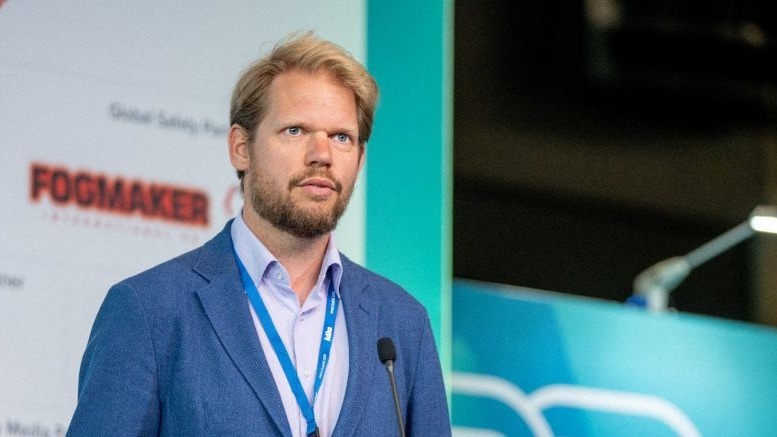
“Netherlands played it straight. Belgium delayed. Germany opted out. And the volume did exactly what volume does when the rules aren’t the same next door: it moved. Spain’s next. The real question is who else is willing to go first without checking whether anyone’s coming with them,” said Sjoerd de Jager, Managing Director and Co-Founder of PortXchange.  

PortXchange’s EmissionInsider and Port  Emission Reporter give ports and operators visibility into bunker volumes, supplier jurisdictions and Scope 3 emissions exposure across multiple markets, allowing shifts of this kind to be identified as they form rather than reconciled after the fact in quarterly trade data.  

Sjoerd de Jager concludes, “This is bigger than one decree. Two governments have now shown what happens when the transition isn’t coordinated: the tonnes move, the emissions don’t. The industry doesn’t need another debate about who regulates first. It needs ports, suppliers and regulators acting together before  December, not after. That’s not a policy preference. It’s a survival strategy.”
Notes to editors

Notes to Editors For interviews or more information, please contact: Sue Terpilowski or Vy Le at Image Line Communications – [email protected] or [email protected] by phone +44 (0)207 689 9009. About PortXchange PortXchange is a Rotterdam-based maritime technology company accelerating port decarbonization through data-driven action. Its flagship product, EmissionInsider, enables ports to monitor, analyze, and reduce Scope 1, 2, and 3 emissions in real time, providing full visibility across ship, truck, rail, and terminal activity. The platform includes a standalone Port Emissions Reporter, designed to turn complex emissions data into strategic, regulatory-ready insights. PortXchange also offers Synchronizer, a collaborative planning tool that helps reduce vessel idle time and optimize port calls through a Just-in-Time (JIT) smart system that facilitates coordination between ships, terminals, and service providers. As a B Corp-certified company, PortXchange is committed to partnering with forward-thinking ports and maritime companies to replace data paralysis with emissions accountability, proving that climate action starts with operational decisions. Custom Digital Solutions In addition to its core platforms, PortXchange develops custom digital solutions tailored to the operational realities of ports, terminals, and inland operators. Rather than introducing generic tools, these solutions are designed around the systems, workflows and data already used by each organisation, integrating directly through APIs or existing platforms. One example is ETAPredictor, an AI-based engine that continuously recalculates vessel arrival times using real-time operational data. Originally developed for a large inland barge operator managing thousands of vessels, the tool replaced static ETA estimates with dynamic predictions, significantly improving planning accuracy, asset utilisation, and operational decision-making. Learn more at: www.port-xchange.com

Get more news like this

Get more news like this on Google. Set News By Wire as a ‘Preferred News Source’ to get quicker access to news that’s important.

All done!
Thank you for subscribing.

Email Subscription