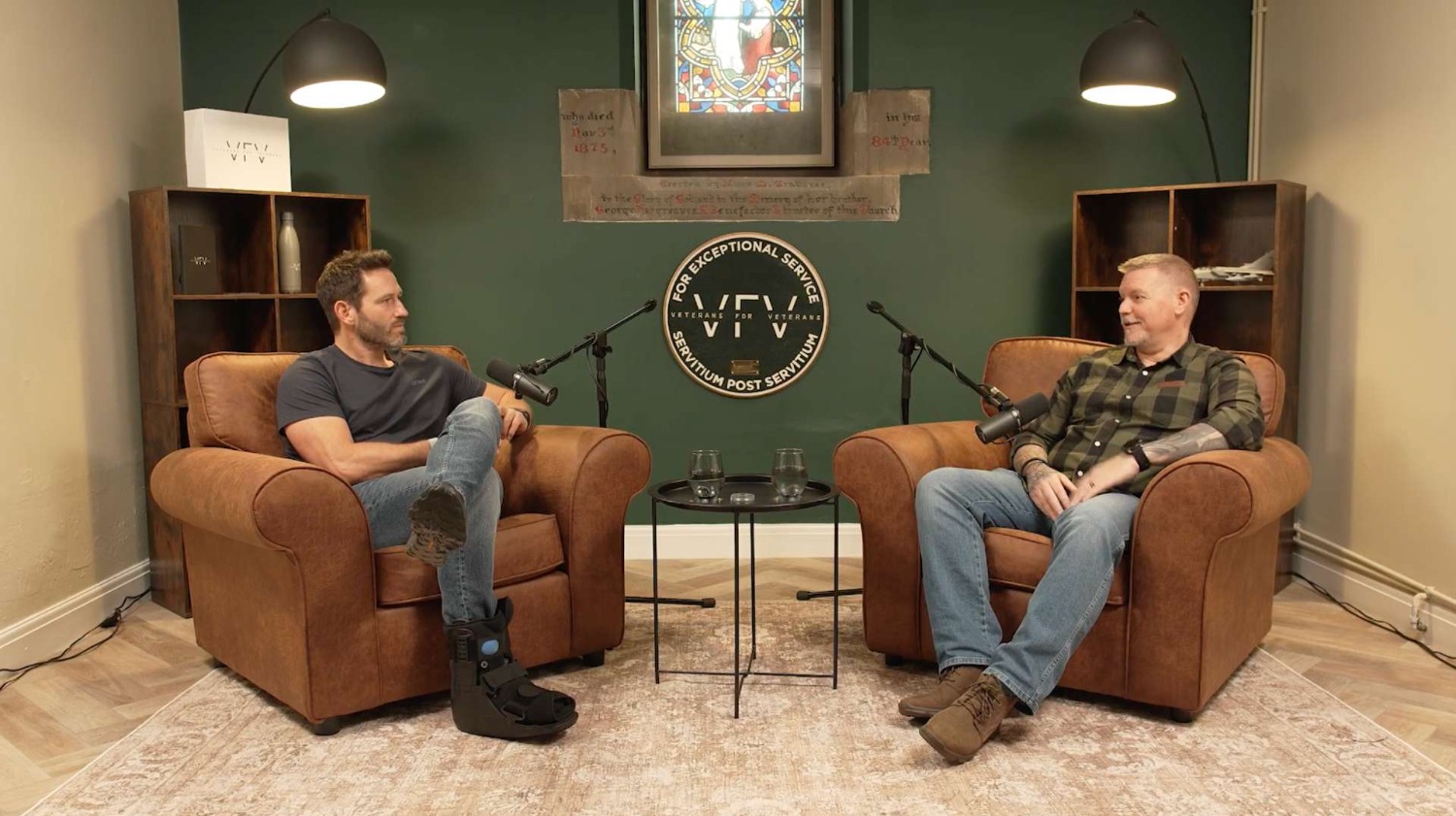
Former British Army trooper Paul Rees, who now supports ex-service personnel navigating injury, trauma and life after discharge, has shared the full extent of his journey in a newly released filmed interview with former Special Forces soldier Jay Morton.
His story includes a $100,000 bounty placed on his head by Muammar Gaddafi – and 21 days held captive in Libya, where he was beaten and abused.
The incident that ended his Army career
In 2001, during operations in Bosnia, the Land Rover Rees was travelling in rolled into a ditch and detonated an anti-personnel mine. He regained consciousness in a German military field hospital.
“I remember the vehicle turning… then I woke up in hospital. I had a fractured spine. I was paralysed from the waist down.” He was 29 years old.
After months of rehabilitation, his Army career ended soon after. He says the physical injury was only the beginning.
“I remember the vehicle turning… Then I woke up in a field hospital. I had a fractured spine. I was paralysed from the waist down.”
Rees says the most enduring impact came after discharge: the sudden shift from structure, identity and purpose to a world where recovery is expected to be private (and fast).
“You’re expected to crack on – but you are not the same person”
The interview explores his upbringing in Cardiff, his decision to join the Army, deployments to Kosovo and Bosnia, and the long-term consequences of operational service that can follow veterans long after an incident has left the headlines.
Libya: A $100,000 bounty
Years later, working in Libya during the 2011 uprising, Rees found himself in another conflict zone.
During fighting in Benghazi, footage of him assisting a journalist was broadcast on Libyan state television. Muammar Gaddafi publicly accused him of being British Special Forces and placed a $100,000 bounty on his head.
Shortly after, he was abducted.
He was held captive for 21 days by an armed group. During that time, he was beaten, humiliated and repeatedly assaulted.
“They kept saying there was money on my head. That was the only reason I was alive.”
Rees eventually escaped by overpowering one of his captors. He does not describe it as heroism.
“I just knew I had to get out. That was it.”
He returned to Libya again after recovering.
A new mission: supporting others after service
Today, Rees works as a veterans liaison at Veterans for Veterans and is also an ordained pastor.
The interviewer, Jay Morton (a former Special Forces soldier) said: “Twenty-five years is a milestone. Paul’s story is not about glory. It is about consequences. It shows what service can take from someone long after the headlines move on.”
Rees says he is speaking now because the public often sees the incident – but not the aftermath.
The full interview is available to watch here: https://www.youtube.com/watch?v=310S6YdwCzI