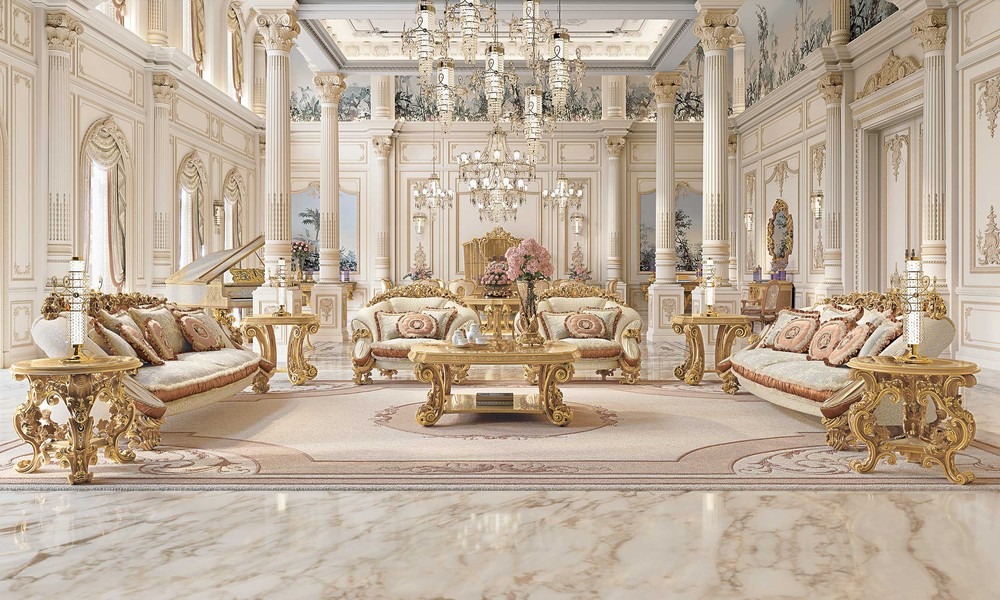
101domus has published an English-language guide to classic Italian luxury furniture, profiling six Italian ateliers that still build classic pieces by hand instead of reproducing antiques. The guide is aimed at interior designers, architects and hospitality buyers who need to distinguish genuine craftsmanship from factory copies, through details that rarely show in photographs: the density of the carving, the weight of hand-applied gilding, a veneer panel that is bookmatched rather than printed.
Asnaghi Interiors reworks eighteenth-century Venetian proportions into a softer, livable frame with its Campanula line. The atelier’s Classic Collection groups sofas, armchairs and tables designed to be specified as a matched set rather than one piece at a time.
La Contessina draws on the French baroque salon. Its Versailles armchair has a beech frame finished in antique gold leaf, upholstered by hand in a jacquard woven to echo period damask patterns.
Riva Mobili D’Arte is built around marquetry and hand-applied veneers. In its Comacina Collection, named after Lake Como, a curio cabinet pairs walnut burl veneer with a hand-cut brass edge along every panel, a detail that takes a single artisan several days on one cabinet.
Provasi brings the same classic vocabulary to upholstery: the Eden armchair is carved to a traditional cabriole profile and offered in a choice of velvets, so it can be matched to a specific interior.
Andrea Fanfani works from Florence, where gilded carving and hand-applied gold leaf still follow methods documented since the workshop’s founding.
Francesco Molon, founded in 1966, adapts the classic language to an architectural scale with its Prospettiva collection for grand living rooms and formal libraries, favouring hand-applied wax over sprayed lacquer, a finish that ages without yellowing.
The guide also reflects two very different buyers of the category: private clients furnishing a single residence, and hospitality and contract teams sourcing classic pieces for hotels, yachts and branded residences, where consistency across many rooms matters as much as craftsmanship.
Designers comparing these workshops can also browse the directory of Italian brands represented on 101domus. For a residential or hospitality brief, the next stage is to assess shortlisted pieces against room dimensions, finishes, lead times and delivery requirements. Through 101domus, project teams can develop these enquiries across Italian manufacturers through a single point of coordination, with support for bespoke requests, technical information, production planning and international logistics.