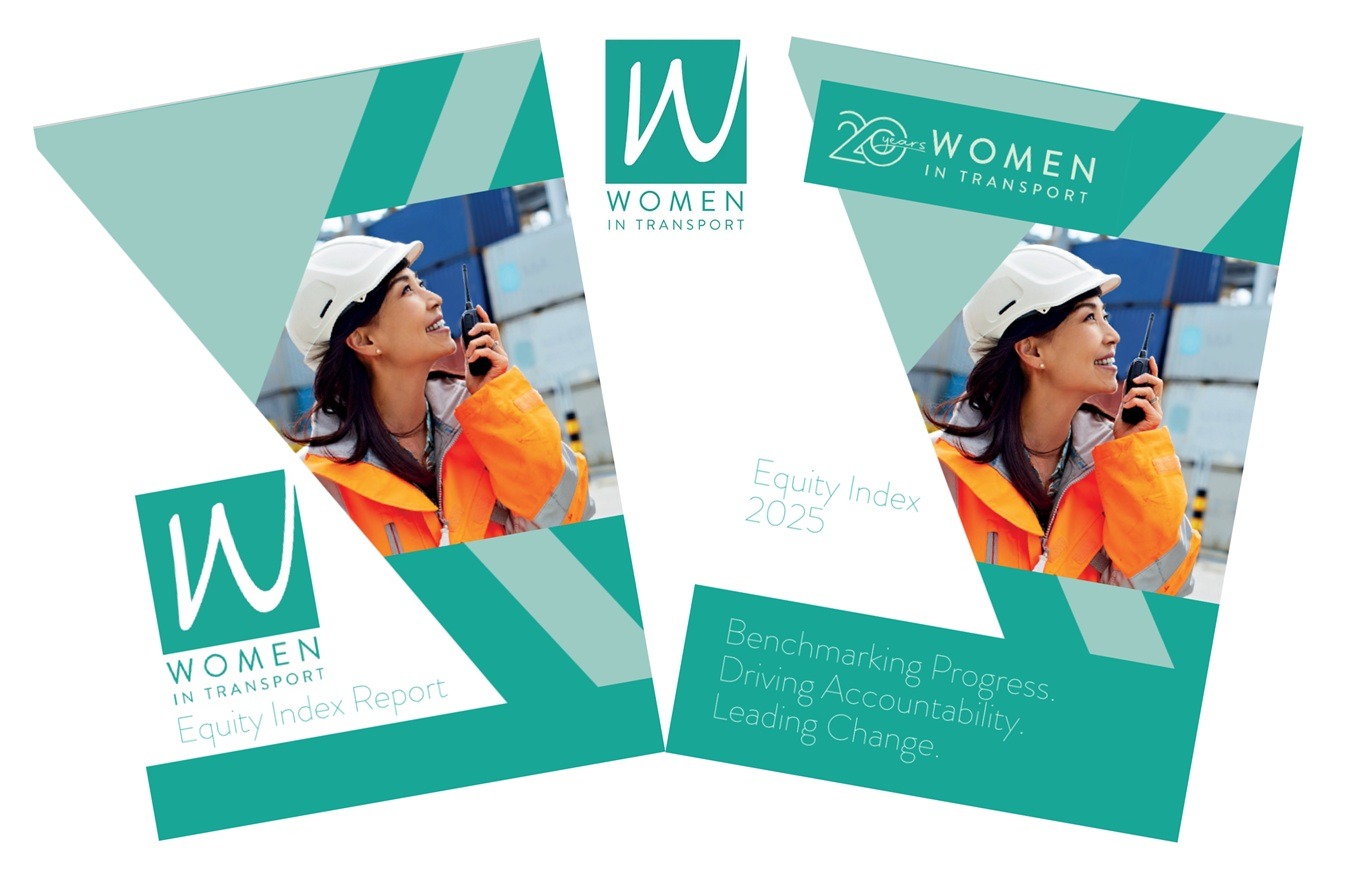
Third Women in Transport Equity Index survey opens, with new findings due in March 2027. Nearly six in ten organisations responding to the 2025 Women in Transport Equity Index reported a gender pay gap of 11% or more. Almost two-thirds said they had no action plan to reduce it. Employers are now being asked to show what has changed.
The third Women in Transport Equity Index survey opened on Monday 12 October, inviting employers across rail, roads, maritime, logistics, bus and coach, cycling and other parts of the industry to report on pay, progression, representation and workplace policies.
The last survey drew responses from 100 organisations. It found that women made up 27% of the workforce of participating organisations, up from 23% in the 2023 survey. Women also held 36% of leadership roles, compared with 26% previously. But progress on pay and parental support was limited: average fully paid parental leave remained at eight weeks.
The Index is run by Women in Transport in partnership with WORK180. Its mandatory-question score was 52 in 2025. A separate, more detailed WORK180 assessment produced a score of 47%, using WORK180’s broader assessment framework and employer benchmarks beyond transport. The two figures describe different assessments and should not be treated as interchangeable.
Women in Transport wants more small employers and businesses with operational staff to respond, so that the next report can show where change is happening and where barriers remain.
Julia Buckley MP, Chair, APPG for Women in Transport: “Transport needs skilled people in every part of the country. We should understand what helps women enter the industry, stay in it and move into senior and operational jobs. I welcome this opportunity for employers to contribute evidence and show what they are doing to widen opportunity.”
Sonya Byers OBE, CEO, Women in Transport: “Transport employers are competing for skills at the same time as they are changing how services are delivered. That makes recruitment and retention a boardroom issue. The Index tells us where employers have made headway and where their policies still fall short. We want organisations of every size to take part, including those that have never completed the survey before.”
Sue Terpilowski OBE, Equity Index Lead, Women in Transport: “The value of the third survey is that we can ask a straightforward question: what has changed? In 2025 we saw encouraging improvements in representation, but stubborn problems on pay and support for working parents. More responses, particularly from smaller employers and frontline businesses, will give us a clearer view of what needs to happen next.”
Gemma Lloyd, CEO and Co-founder, WORK180: “At WORK180, we know meaningful change starts with understanding where we are and being honest about where there’s still work to do. Now in its third year, the Women in Transport Equity Index is building an increasingly valuable picture of industry progress while highlighting where greater action is needed. We’re proud to continue supporting an initiative that turns data into insight, accountability and ultimately better outcomes for women across transport.”
The survey opens this week. Findings are due to be published on International Women’s Day, 8 March 2027.
Organisations that participated in previous surveys can access their existing data, making it easier to review and update responses and track progress over time. Women in Transport is encouraging employers of all sizes, across every transport sector, to take part and contribute to a clearer picture of workplace equity across the industry.
Find out more: https://www.womenintransport.com/equity-index
Take the survey: https://work180.com/en-gb/for-employers/how-we-can-help/women-in-transport-index-survey
The 2026 Women in Transport Equity Index is supported by The Seafarers’ Charity, Network Rail, Camilleri Appointments, FM Conway, Lotus Consilium Limited, and Equal Route Ltd. Their sponsorship helps Women in Transport continue its benchmarking work, broaden participation across the industry and identify where progress is being made and where further action is needed.