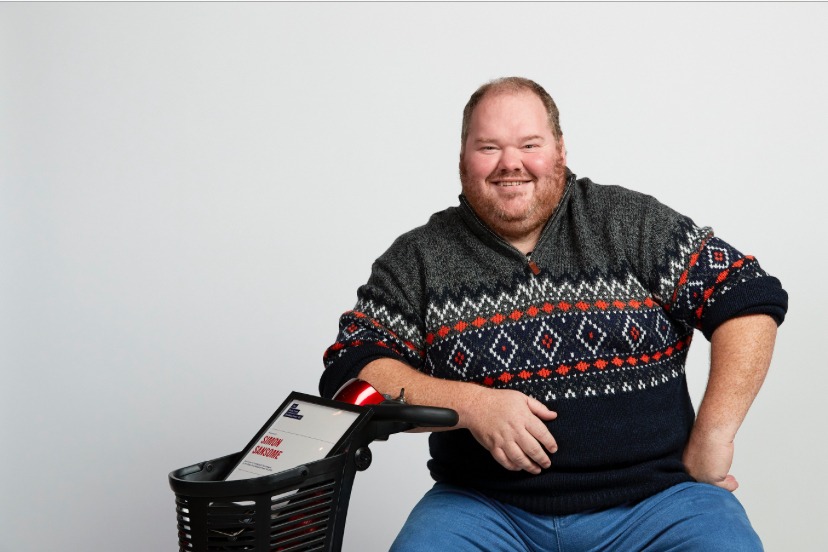
Snowball, the free accessibility app helping disabled people find places they can visit with confidence, has been named one of TIME’s Best Inventions of 2026, marking a significant milestone for the business and its founder, Simon Sansome.
The recognition comes more than a decade after Simon suffered a spinal injury in 2014 that left him paralysed from the waist down. Having experienced first-hand the difficulties of finding reliable information about accessible places, he set out to create a solution that would help other disabled people make informed decisions about where they could go, from restaurants and hotels to shops, attractions and other everyday destinations.
Now used by a growing community of disabled people, Snowball combines accessibility assessments, reviews and practical information to help people understand whether a place is suitable for their needs before they visit. The app also considers needs beyond physical access, including a stimulation rating to help neurodivergent people assess whether an environment is likely to work for them.
For Simon, the recognition from TIME is particularly meaningful given the personal experiences that led him to create the app, as well as the challenges involved in turning the idea into a business.
“When I found out that Snowball had been selected as one of TIME’s Best Inventions of 2026, I was absolutely blown away.
“I’ve been disabled for 12 years now, and I know how frustrating and isolating it can be when the world simply isn’t designed with you in mind. I’ve been refused access to transport, struggled to find accessible hotels and missed out on experiences that other people take for granted. Snowball came from wanting to change that, not just for myself but for millions of other disabled people.
“To go from that experience to being recognised by one of the world’s most famous media platforms is quite extraordinary. What makes it especially meaningful is that something created out of a difficult personal experience is now helping other people. If Snowball gives one disabled person the confidence to leave home, travel somewhere new or do something they previously thought was impossible, then we’ve achieved something worthwhile.”
Snowball’s recognition follows a period of significant progress for the business. In October 2025, Simon appeared on BBC’s Dragons’ Den, where all five Dragons made investment offers, bringing the app to a much wider audience. The company subsequently joined Google for Startups and has continued to develop its accessibility information and partnerships.
Snowball’s community now reaches around 170,000 people across its app and social media platforms, with partnerships including mobility retailer CareCo, which is bringing Snowball assessments to its 41 UK locations, and launching soon with Ambassador Cruise Line. The business also works with local authorities and other organisations to help venues understand their accessibility and identify opportunities to become more inclusive.
Snowball is developing an expansion programme, with plans to grow in the USA, starting in New York. An important part of this next phase is the ambition to recruit up to 1,000 self-employed accessibility assessors in the USA, creating opportunities for disabled and neurodivergent people to use their lived experience to generate an income. Assessors will receive training and have the opportunity to earn the local equivalent of £200 per completed assessment, helping Snowball expand its coverage while opening up new earning opportunities for people who can face barriers to traditional employment. Simon believes this is an important part of the business’s wider purpose, demonstrating that accessibility can drive innovation and commercial opportunity while making a practical difference to people’s lives.
“There are more than 1.3 billion disabled people worldwide, yet accessibility has historically been treated as an afterthought. I think we’re beginning to understand that it isn’t a niche issue, and that disability innovation can be commercially successful, technologically advanced and genuinely transformative.
“What excites me most is that TIME has recognised Snowball as an invention. Disabled people aren’t just consumers of innovation, we can be the innovators, entrepreneurs and business leaders creating solutions that make a difference.
“Our ambition is to make Snowball the global standard for accessibility information, so that wherever you are in the world, you can make informed decisions about where you can go. We want to help people travel with greater confidence, help businesses understand their customers better and create opportunities for disabled people along the way. Our message has always been: Everyone Deserves Everywhere.”
Snowball’s journey has also been shaped by the support of Simon’s wife, Kate, who has been alongside him throughout the business’s development, and COO Clive Cooper, as well as the accessibility assessors and community members who contribute their knowledge and experiences.
Simon, who returned to university after his injury and studied journalism at De Montfort University in Leicester, also won the Santander X UK entrepreneurship competition in 2023.
He says the TIME recognition is a reminder of how far the business has come, but also of the problem it still wants to solve.
“If you’d told me 12 years ago, when I was lying in hospital wondering what my future would look like, that something I’d created would one day be recognised by TIME as one of the world’s best inventions, I wouldn’t have believed you.
“I didn’t set out to create one of the world’s best inventions, I set out to solve a problem that was making my life, and millions of other people’s lives, unnecessarily difficult. That’s what makes this recognition so special.”