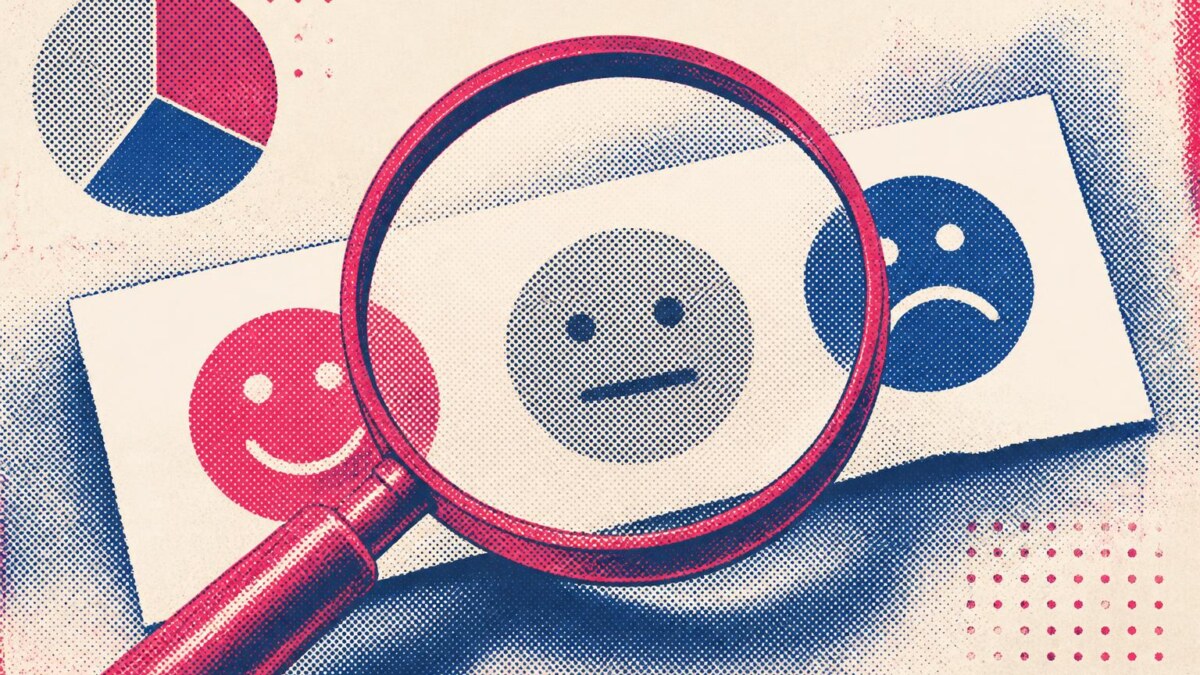
Let’s talk about sentiment analysis. The classic “positive, negative, neutral” breakdown most social listening tools rely on. It sounds helpful. It looks tidy in a report. But if you work in PR, does it actually tell you anything useful?
I’ve been digging into social listening platforms recently—exploring options from a reputation and crisis comms perspective—and I keep hitting the same wall: these tools are too surface-level. They give you a general vibe, but miss the emotional layers that actually shape public perception.
Here’s the thing: PR isn’t just about knowing whether people like or dislike something. It’s about reading the tone between the lines. A “neutral” headline might be loaded with doubt. A “positive” tweet could be laced with heavy sarcasm. Context shifts everything.
When 70% of Your Mentions Are “Neutral,” Something’s Off
Many practitioners in the field are quick to flag the issue. One person mentioned that in their internal testing, automated sentiment tools often label 70% of mentions as neutral. But when they have a human go through the same dataset, that number drops to just 15%. That’s a massive gap. And it’s not just a rounding error—it’s the difference between thinking your brand is flying under the radar versus realising you’re bleeding credibility quietly.
Sarcasm, irony, slang, memes—automated tools aren’t built for this kind of nuance. Most of them rely on keyword lists and shallow language parsing. That might work for basic customer service monitoring, but not for reputation work, especially during a crisis or campaign launch where tone is everything.
Emotional Insight > Sentiment Buckets
What’s actually useful? Emotion detection. Not just “positive,” but relief, anger, cynicism, excitement, fear. Some newer platforms like Mentionlytics and Talkwalker are starting to integrate this kind of emotional tagging. One user even mentioned sarcasm detection—which sounds laughable until you realise it’s getting decent results.
Why does this matter? Because emotional context changes how you respond. If people are disappointed, that’s different from them being angry. If they’re confused, that’s a comms clarity issue. If they’re sarcastic, your brand might be becoming a punchline. These all require very different strategies.
Human Analysis Still Rules the Day
Most pros seem to land in the same place: sentiment data isn’t useless, but it can’t stand on its own. It needs to be paired with a human lens. That’s the only way to accurately spot tone, subtext, and audience intent.
Some agencies have started doing hybrid models—using tools to collect the content, then layering in human review for sentiment. It’s slower. It’s more expensive. But it’s also more accurate and a better investment when your brand’s reputation is on the line.
Let’s be real: if a dashboard tells you your coverage is 15% positive, but you know the campaign went well, you’re not just questioning the data—you’re questioning the tool, and probably yourself. That’s not where you want to be.
Should We Expect More From These Platforms?
Yes. We should. The tech is getting better, especially with generative AI being trained to detect more nuance. Some platforms are testing sentence-level sentiment or tagging for specific emotions. But we’re not there yet.
Until then, we need to stop treating sentiment analysis as a gospel truth and start framing it as just one piece of the puzzle. Use it to spot patterns, sure. But trust your own judgment—and your team’s ability to read the room—above the algorithm.