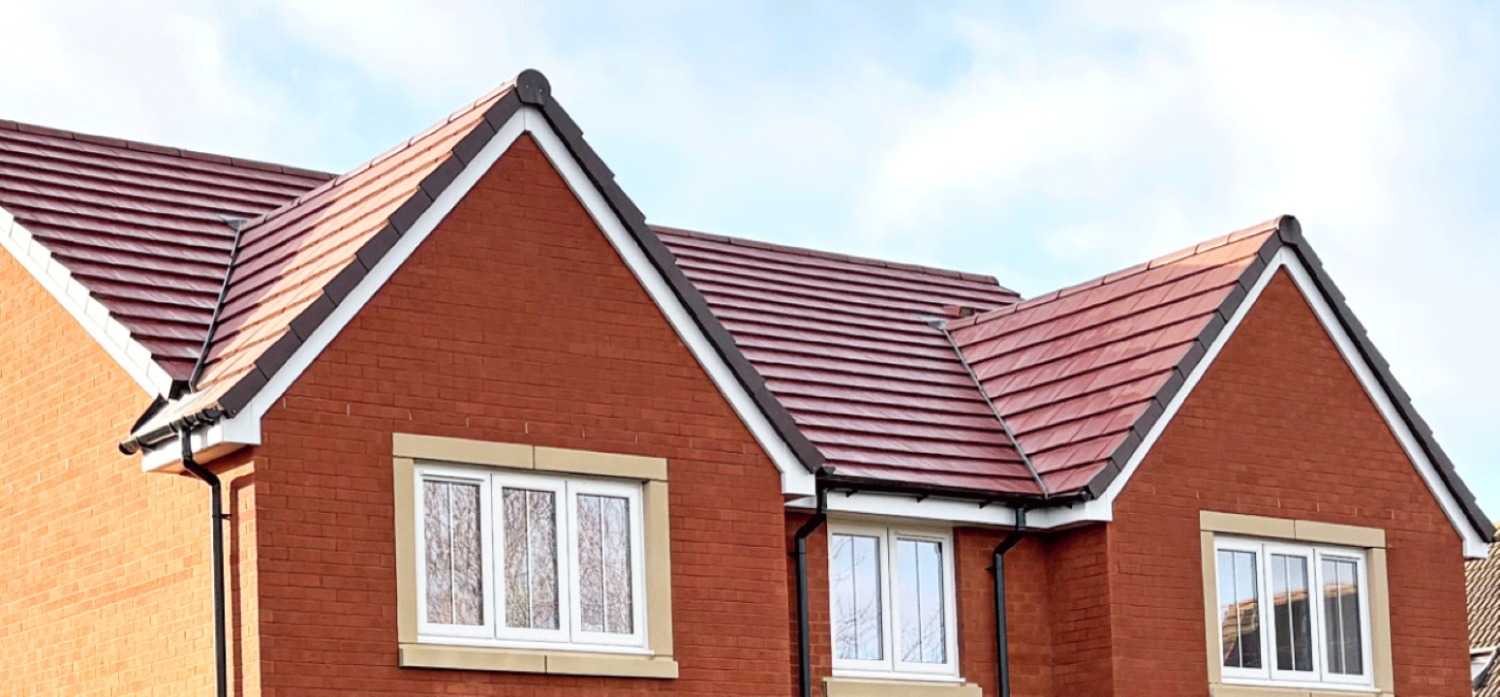
With pressure on construction costs continuing, substituting roofing components can look like an easy way to make savings. But leading manufacturer Russell Roof Tiles warns that specifying products simply because they meet minimum requirements can expose contractors and developers to far greater costs in the long run if the complete roof system has not been designed and tested to work together.
Roofing standards have evolved significantly in recent years, driven by the need to improve durability, weather resistance and long-term performance. Nowhere is this more apparent than in Dry Fix roofing systems, which have become an increasingly important part of modern roof design. However, as cost pressures remain high across construction, Russell Roof Tiles is urging specifiers to look beyond headline compliance and consider the performance of the roof as a complete system.
Scott Summers, Regional Sales Manager for Russell Roof Tiles, has spent more than 40 years in the roofing industry, initially as a roofer before progressing to manage a major roofing contracting businesses and then joining Russell Roof Tiles. He says one issue that has repeatedly emerged in his experience is the attempt to value engineer roofing specifications which can sometimes create significantly greater costs further down the line.
“In today’s market, the pressure to value engineer projects is very real,” says Scott. “But swapping elements of a complete roof system for mismatched components may create an apparent saving on paper, while introducing risks that are much harder and more expensive to resolve later.”
The potential consequences can be substantial according to Scott, rectifying a failed roof where incompatible products have been installed can result in thousands of pounds of additional expenditure once the stripping-out, replacement products, scaffolding and potential disputes are factored in.
Compliance is the starting point
The introduction of the standard BS 8612:2018 represented an important milestone for the roofing sector, establishing performance requirements and testing methods for Dry-Fixed ridge, hip and verge systems used alongside roof slates and tiles. It followed changes to BS 5534, the Code of Practice for Slating and Tiling, which strengthened requirements around mechanical fixing rather than relying solely on mortar. Under BS 8612, Dry Fix systems must achieve minimum levels of performance including resistance to wind loading and driving rain and snow, appropriate ventilation and long-term durability.
But Russell Roof Tiles argues that this is where the specification conversation should begin rather than end. Two products may both achieve the relevant compliance requirements while differing considerably in their materials, design, durability and, crucially, their compatibility with the other elements being installed on the roof. Roof tiles, ridges, hips, verge components, underlays, fixings and ventilation products are not necessarily interchangeable. Products designed around one tile profile may not offer the same fit, weather protection or finished appearance when used with another. This means that seemingly minor product substitutions made during procurement can undermine the thinking behind the original roof specification.
The hidden risk of mixing systems
Scott believes this is particularly important when contractors are being asked to identify savings after a specification has already been developed.
“The question shouldn’t simply be, ‘Does this individual product comply?’” he explains. “It should also be, ‘Has this combination of products actually been designed and tested to work together?’ “A roof is exposed to wind, rain, snow, temperature fluctuations and increasingly extreme weather throughout its life. If components haven’t been developed as part of the same system, you are introducing an unknown into that performance.”
The issue can also extend beyond physical performance to product guarantees. Russell Roof Tiles warns that using untested third-party components alongside its tile ranges without adequate test certification could compromise roof system performance and potentially affect the guarantees available on the finished system.
Material selection should also form part of the assessment. UV stability, structural integrity, and weather resistance can all affect how a Dry Fix component performs over its service life. Russell Roof Tiles uses PVC within its systems, which it says has a track record of more than 30 years on UK sites and offers durability and resistance to UV degradation.
Fire performance is also becoming increasingly relevant as rooftop solar PV installations become more commonplace, further reinforcing the need to think about the roof as an integrated assembly rather than a collection of standalone products.
From product specification to whole-roof responsibility
Russell Roof Tiles has developed RussSpec around this whole-system approach. Rather than focusing solely on the manufacturer’s concrete roof tiles, a bespoke RussSpec specification brings together the tiles, underlay, fixings and ventilation products required for the project, with components engineered to integrate as a complete roof solution. The company’s technical team develops the specification incorporating factors including the building’s location and construction requirements, while additional support can include Site verification, training and compliance inspections. RussSpec also provides a 15-year Design Liability Guarantee covering the integrated roof system rather than just individual roof tiles.
For Scott, having a single manufacturer taking responsibility for the specification can become particularly valuable if an issue subsequently arises in the future.
“With a roof assembled from products that have not been properly evaluated, supplied by several different businesses, establishing where responsibility sits can become complicated very quickly,” he says. “A complete system gives contractors and developers greater clarity. There is one specification, one manufacturer and one point of responsibility rather than several suppliers potentially looking at each other.”
Looking beyond the lowest cost
For specifiers, developers and roofing contractors, Russell Roof Tiles believes the practical lesson is straightforward: Validate any proposed substitutions very carefully to ensure they are fit for purpose.
Scott continues, construction companies are under continued pressure to control costs on every project using the cheapest components do not necessarily provide the lowest-cost solution if the substitution introduces uncertainty around compatibility, weather resistance or reduced life span the potential cost of replacement and putting it right can quickly dwarf the initial saving. The objective should be to engineer value into the roof without engineering performance out of it.”
Russell Roof Tiles continues to invest in production technology, automated manufacturing and quality control, with its Dry Fix products manufactured and tested to British and European Roofing Standards, providing the solid assurance and confidence to housebuilders, contractors, merchants, as well as specifiers.