Retailers are increasingly examining what sits behind their store traffic numbers as traditional entry counts provide only a partial view of customer activity.
A store can record thousands of entries during a reporting period, but the figure may include employees, delivery personnel, repeat visits and other non-target traffic. This can make it difficult for retailers to understand how much of their measured traffic represents genuine consumer opportunities.
The issue is becoming more relevant as physical retailers use traffic data to evaluate store performance, marketing activity, staffing and conversion.
Moving Beyond Basic Visitor Counts
Traditional people counting remains useful for measuring overall store activity. It can show traffic trends, identify busy periods and provide a consistent metric for comparing locations.
However, raw visitor numbers can become less useful when they are treated as a direct measure of customer opportunity.
For example, two stores may each record 1,000 entries in a day but have very different traffic compositions. One location may experience a larger proportion of non-target visits, while the other may receive more relevant consumer traffic.
This difference can affect how retailers interpret conversion rates and store performance.
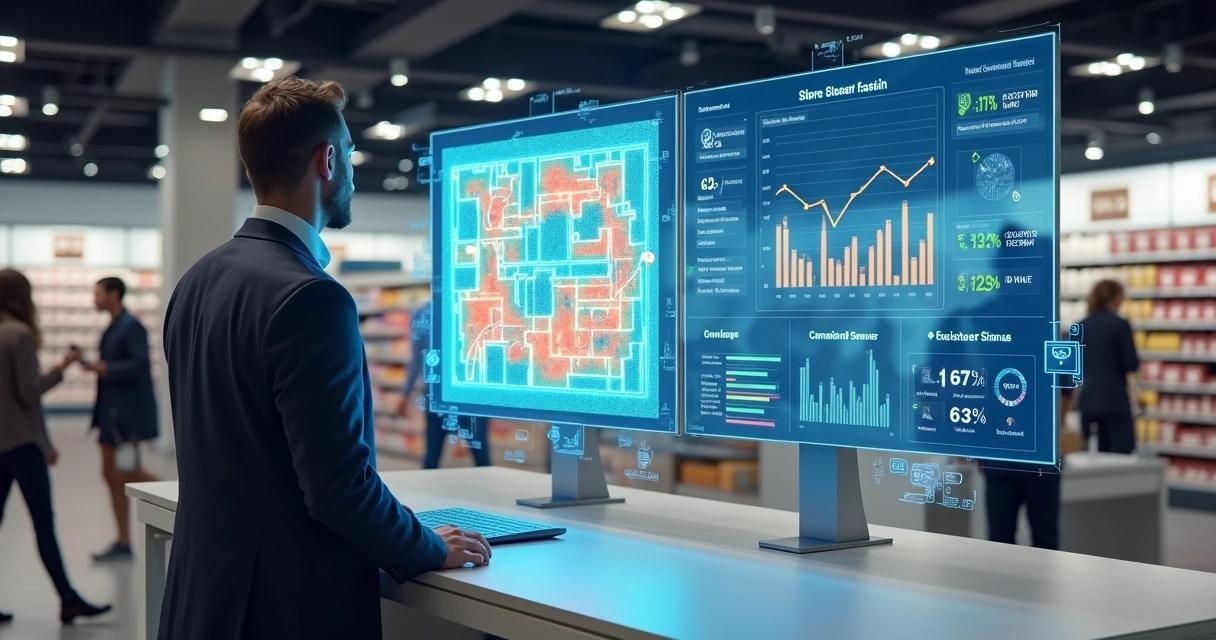
More detailed customer traffic analysis allows businesses to examine traffic alongside other indicators, including transactions, dwell time, operating periods and historical trends.
Technology Supports More Detailed Traffic Analysis
Advances in 3D vision, artificial intelligence and edge computing are changing how physical-store traffic can be measured.
AI-based people counting systems can analyze movement direction, entry and exit activity, dwell time and other traffic characteristics. Depending on the application, intelligent filtering can also help reduce certain types of non-target traffic.
The objective is not to determine whether every visitor will make a purchase. Purchase intention cannot be directly established from movement data alone.
Instead, the focus is on reducing measurable traffic noise and creating a dataset that is more relevant to retail analysis.
Implications for Retail Operations
Better traffic data can support several practical retail decisions.
Marketing teams can compare campaign-related traffic with changes in relevant consumer visits. Store managers can examine traffic patterns when reviewing staffing requirements. Retail analysts can compare traffic with transaction data to identify changes in conversion performance.
This creates a broader measurement framework:
Traffic volume → Traffic composition → Consumer activity → Transactions
Such a framework can help retailers avoid relying on a single visitor-count metric when evaluating physical-store performance.
FOORIR develops IoT and AI-based people counting solutions using technologies including 3D binocular vision and edge computing. Its solutions are designed for retail and other physical environments where organizations need structured traffic data.
As physical retail becomes more data-driven, the question is gradually shifting from “How many people entered?” to “What does the traffic data actually represent?”