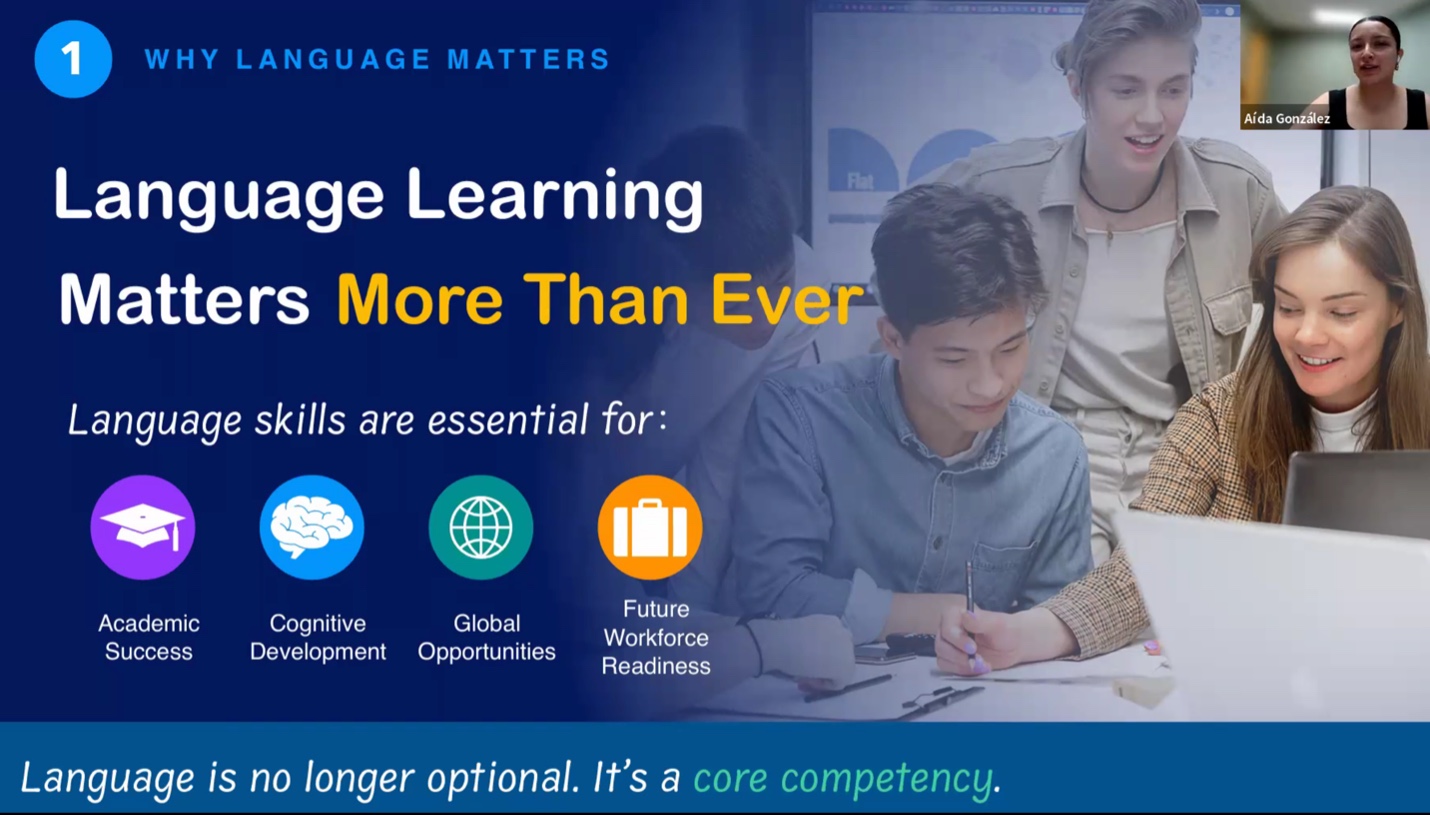
New Edulight, a leading education partner dedicated to advancing bilingual education in Latin America, hosted a webinar in collaboration with The Mimir, an innovative language-learning platform designed to support schools with structured curriculum, differentiated instruction, teacher resources, student practice, and data-informed progress tracking.
New Edulight is committed to providing educators with products, services, and inspiration that strengthen teaching performance and positively impact student learning. The organization serves as the exclusive representative of Center for the Collaborative Classroom and Perfection Learning and is dedicated to supporting the growth of bilingual education across Latin America.
During the webinar, The Mimir team introduced how its platform helps schools build stronger Chinese language programs by supporting teachers and students throughout the learning process. The session focused on how Mimir helps teachers manage mixed-level classrooms, reduce lesson-planning workload, and guide students toward more confident, real-world communication in Chinese.
The webinar also highlighted Mimir’s alignment with major language-learning standards and frameworks, including HSK, Advanced Placement, International Baccalaureate, and broader international proficiency guidelines. With New Edulight’s deep understanding of Mexico’s language education landscape, participating educators were able to see how Mimir can bring meaningful value to their institutions and classrooms.
Mimir is designed as an integrated learning system, not simply a collection of digital materials. Its Chinese curriculum is organized across beginner, intermediate, and advanced levels, with each level divided into structured units and lessons that help students build skills step by step. This progression allows learners to develop language ability gradually, rather than studying disconnected vocabulary or grammar points.
A key part of Mimir’s approach is differentiated instruction. Because students often enter Chinese language classrooms with different levels of background knowledge, learning speeds, and support needs, the platform allows students to work from the same core lesson while accessing different materials, entry points, and levels of depth. This helps teachers maintain a shared classroom focus while still providing appropriate support or challenge for individual learners.
The webinar also demonstrated what a Mimir-supported class can look like in practice. Lessons typically begin with structured input, move into guided modeling, and then lead students toward active language use. Through speaking, reading, writing, listening, and interactive activities, students move from passive recognition to practical communication.
For teachers, Mimir reduces the burden of creating materials from scratch by providing ready-to-use resources, activities, videos, articles, and classroom support materials. This allows educators to spend more time guiding students, addressing individual needs, and creating meaningful classroom interaction.
For students, Mimir creates more opportunities for independent practice. Learners can review content, complete activities, practice pronunciation, receive feedback, and engage with interactive materials outside of class. This flexibility supports both students who need additional reinforcement and those who are ready to move ahead at their own pace.
Mimir also emphasizes progress visibility. The platform helps teachers understand student learning beyond final scores by showing assignment progress, activity completion, quiz attempts, video review, and areas of difficulty. These insights help teachers identify learning gaps earlier and make more informed instructional decisions.
Overall, the webinar demonstrated how Mimir brings together curriculum structure, classroom flexibility, communication practice, teacher support, and learning data in one platform. Through this integrated approach, Mimir aims to help schools strengthen Chinese language programs and support students in becoming confident, capable communicators.