Something happens when you bring a group of students together around a shared moral conviction. The conversation shifts. The questions get deeper. The ambition grows. That is exactly what Vivo Sharma discovered when they founded the Humane Choices Foundation (HCF), and it is what continues to drive the organization forward today.
HCF is a volunteer-run nonprofit dedicated to animal rights, veganism, and the reduction of animal suffering. It does not accept industry funding, holds no corporate partnerships, and makes no apologies for where it stands ethically. Today, a team of over 20 volunteers drives the organization forward, from campus engagement to digital communications to governance, each of them contributing their time because the work genuinely matters to them. From its earliest days organizing on university campuses, HCF has built something that is increasingly rare in this space: a movement grounded in genuine conviction rather than pragmatic compromise.
“We are not asking people to make better consumer choices within a broken system. We are asking them to see that the system itself is the problem.”
A Foundation Built on Ethics, Not Trends
HCF sits at the intersection of animal rights, climate change, food insecurity, and public health. While many organizations treat veganism as a lifestyle trend or a dietary preference, HCF approaches it differently. The foundation places animal sentience at the center of everything it does. Animals are not resources to be managed more humanely. They are beings with interests, and those interests matter.
This ethical clarity is not a communications strategy. It shapes every program, every piece of content, and every campus conversation the organization has. When students engage with HCF, they are not being sold a plant-based diet. They are being invited into a deeper conversation about power, systems, and what justice actually requires of us.
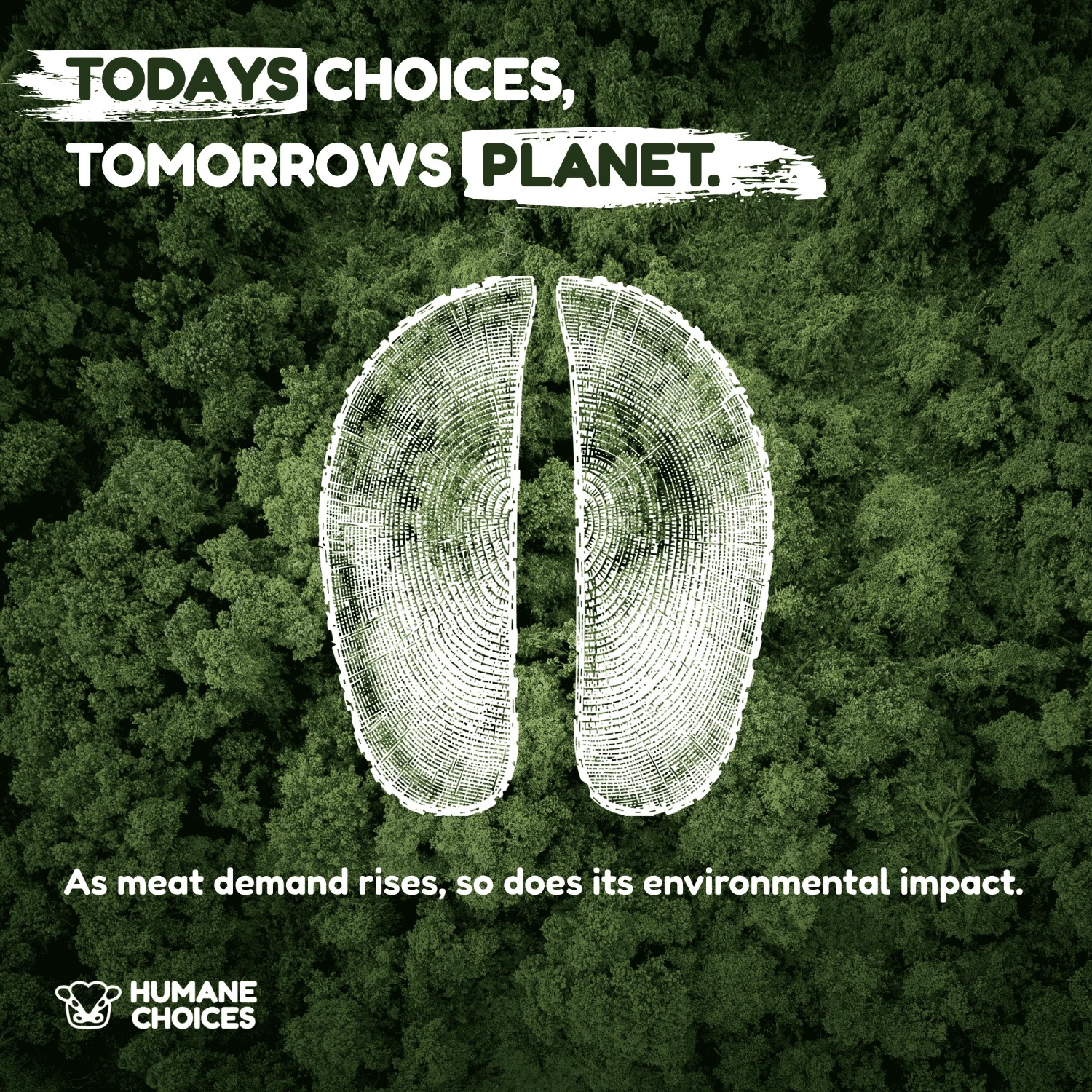
The organization also takes seriously the ways animal agriculture intersects with other crises. Industrial animal farming is a leading driver of greenhouse gas emissions, deforestation, ocean dead zones, and antibiotic resistance. It is deeply entangled with food insecurity, land displacement, and public health risk. HCF’s work makes these connections explicit, because none of these issues can be solved in isolation.
Where the Work Happens: Campus and Youth Engagement
HCF’s origin story is rooted in campus life, and that is not incidental. Universities are where people are actively forming their worldviews, building their identities, and asking the hardest questions. They are also where social movements have historically found some of their most committed participants.
The foundation’s Campus Ambassador Program places student leaders at colleges and universities to facilitate conversations, organize events, and build local communities of engaged young people committed to change. These are not passive sign-up tables or leafleting campaigns. HCF trains its ambassadors in communication, messaging, and connected-systems thinking, so they can meet their peers where they are and move those conversations forward with care and substance.
The program is set to expand significantly, with a formal launch planned for September 2025. As the organization grows, so does the infrastructure behind it. HCF has been building out its internal team, organizational policies, and communications systems to support that growth without losing the grassroots texture that makes the work meaningful.
“Every campus chapter is a community. It starts with a handful of people who care deeply, and it grows from there.”
The Vision: Global Reach, Grassroots Depth
HCF is not a Canada-only organization. Its ambitions are global, and its framing reflects that. The issues it works on, whether ocean and wildlife protection, the climate toll of industrial agriculture, the links between animal exploitation and food insecurity, or the cultural normalization of harm to animals, do not stop at national borders. Neither does the community of people who care about solving them.
What sets HCF apart from larger, better-funded organizations working on these issues is its commitment to depth over scale. The foundation is not trying to amass the largest social media following or secure the biggest donor. It is trying to build a generation of engaged people who understand these issues at a systemic level, can talk about them thoughtfully, and are prepared to work on them for the long term.
That takes time. It also takes trust. HCF has spent its early years earning that trust, among students, within the broader animal rights movement, and with the communities it works alongside. That foundation matters enormously as the organization moves into its next chapter.
What Growth Looks Like for a Values-Led Organization
Growth at HCF looks different from growth at a conventional nonprofit. It is not measured purely in donor revenue or program reach, though both matter. It is measured in the quality of the conversations being had, the clarity of the organization’s ethical commitments, and the depth of the community being built around those commitments.
In practical terms, that growth is visible in several ways. The organization is formalizing its people and volunteer culture, developing onboarding infrastructure, and creating resources that help campus ambassadors do their best work. Its communications have become more consistent, with a clear brand voice, a growing library of original content, and a social media presence that speaks plainly and without corporate polish.
HCF is also building the systems to sustain itself long-term without compromising its independence. Remaining free of industry funding is not a constraint. It is a strategic choice that preserves the organization’s ability to say what needs to be said, take positions that are not always popular, and hold to its ethical commitments even when it would be easier to soften them.