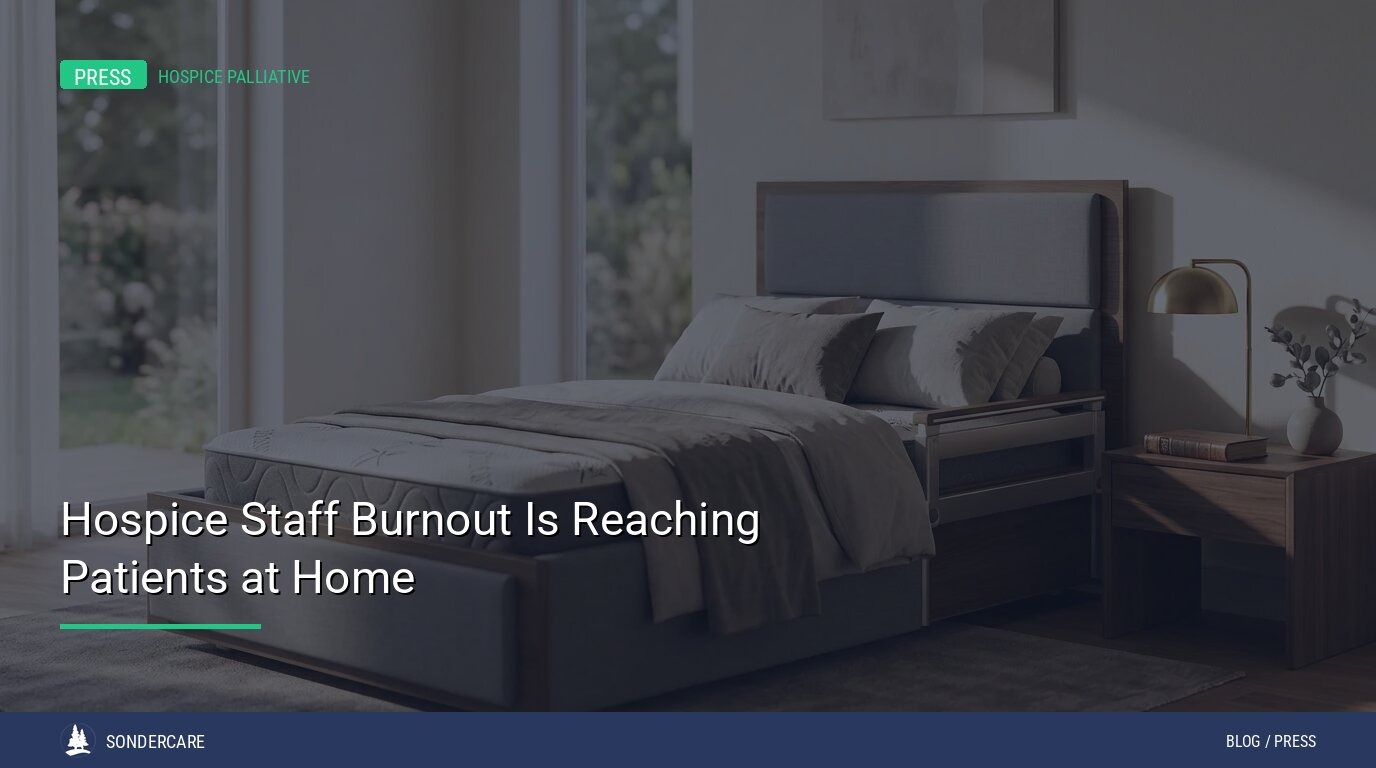
A new industry analysis from Vynca CEO Dr. Darren Schulte, published this week in Hospice News, draws a direct line between clinician burnout and diminished patient outcomes — including 4–5 month wait times for appointments, shorter-than-needed visits, and rising emergency room utilization. The findings underscore a reality SonderCare has long recognized: when professional care capacity is under pressure, the home environment becomes a critical line of defense.
Burnout Extends Well Beyond the Clinician
In the Hospice News interview, Dr. Schulte — whose company Vynca provides virtual palliative care and advance care planning technology — outlined a ripple effect that begins with burned-out providers and ends with patients receiving less care when they need it most. “Clinician burnout isn’t just a workforce issue,” the article notes. “It potentially affects how and when care is provided.” According to Dr. Schulte, burnout drives leaves of absence, no-shows, and clinician departures that threaten network adequacy across Medicare, Medicare Advantage, Medicaid, and commercial insurance lines. Rural patients face the sharpest impact, often with no alternative provider and no clear path to timely care. Research supports the severity of the trend. Studies published in peer-reviewed journals estimate that up to 62% of hospice and palliative care clinicians report burnout — the highest rate among all healthcare specialties. When burnout leads to shortened visits or delayed appointments, patients in home-based hospice settings face the consequences without a clinical safety net nearby. The downstream costs are measurable. Vynca’s own palliative care data shows a 43% reduction in emergency department visits and a 52% reduction in inpatient admissions when patients receive consistent, coordinated care. When that coordination breaks down due to workforce shortages, those numbers move in the wrong direction — at significant cost to patients, families, and payers alike.SonderCare’s Perspective: Equipment Fills the Gap
SonderCare believe that clinician visits are essential — but they are not the only layer of protection for patients receiving care at home. Between every nurse visit and every telehealth check-in, patients spend hours in their beds. The quality, safety, and functionality of that equipment is not a secondary concern — it is primary. “When hospice and palliative care teams are stretched thin, families carry more of the day-to-day load,” said Ben Martin, President of SonderCare. “Having a hospital-grade bed at home doesn’t replace clinical care, but it reduces the physical risks that accumulate between visits — from falls during transfers to pressure injuries that develop overnight. The right equipment gives families one less thing to worry about.” SonderCare’s Aura Premium Hospital Bed was designed precisely for this intersection of clinical need and residential care. It is certified to the International Hospital Standard and FDA-registered, carrying the same safety credentials as institutional equipment — but built to live in a bedroom, not a ward.What SonderCare Brings to the Home
For patients receiving hospice or palliative care at home, the Aura Premium Bed provides a range of positioning and safety features that directly address the risks that compound when clinical oversight is reduced:- FallSafe Ultra-Low Height — lowers the platform to 10 inches (17 inches to the mattress top), reducing fall severity during unsupervised repositioning or nighttime movement
- Hi-Lo Adjustment — raises the bed from 10 to 39 inches, enabling safer caregiver-assisted transfers without back strain, even when a professional aide isn’t present
- Zero Gravity and Trendelenburg Positioning — pre-programmed positions that improve circulation and respiratory function between clinical visits
- Cardiac Chair Position — elevates the head and bends the knees to support breathing for patients with COPD or respiratory complications
- 21-Inch Transfer Position — pre-programmed for safe bed-to-wheelchair transitions