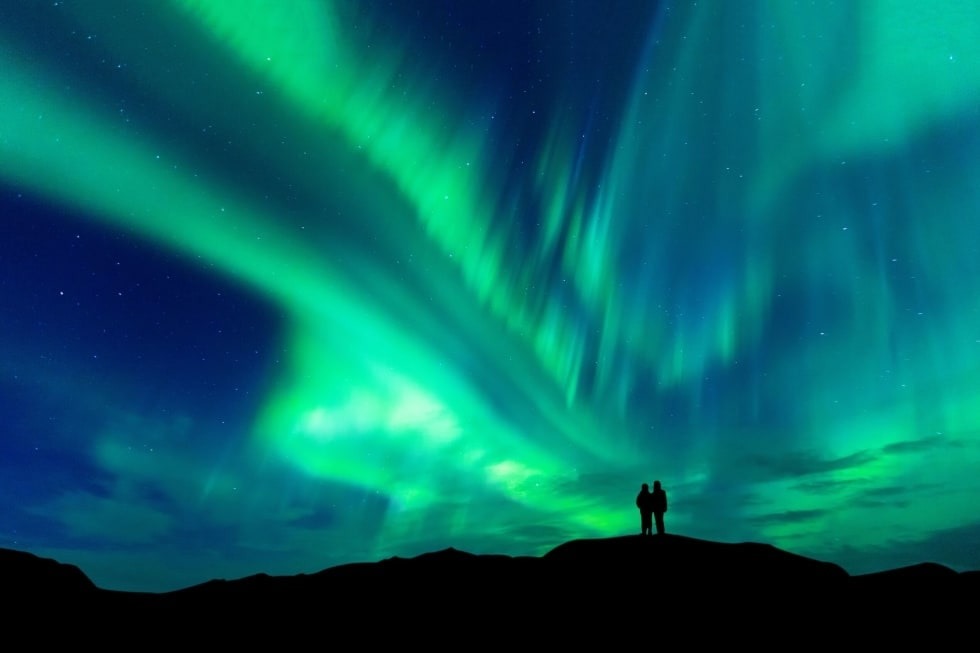
With solar activity currently at its strongest in over a decade, scientists say the Northern Lights are entering one of their most active phases making the winter of 2026 a standout period for sightings.
Longer nights, darker skies and heightened solar storms mean January and February are widely regarded as the most reliable months for viewing aurora activity, not just in the Arctic but, during stronger events, across parts of the UK as well.
As solar storms are unpredictable, monitoring aurora conditions in advance is essential. One of the easiest ways to do this is via AuroraWatch UK, which tracks geomagnetic activity in real time and issues alerts when the Northern Lights are likely to be visible from the UK.
Gísli S. Brynjólfsson, Director of Global Marketing at Icelandair, shares a step-by-step guide on how to catch the aurora.
Choose your location: Best spots to view the Northern Lights in the UK
Despite Iceland being the best location to see the Northern Lights, in the winter months there are some really good areas throughout the UK to view them.
Wherever you are chasing, always remember the golden rule: get away from the city lights. Dark, rural areas with minimal light pollution offer the best chance of seeing the aurora clearly.
When and how to see the Northern Lights from the UK
January and February fall within the most reliable months for monitoring the Northern Lights, sitting at the heart of the October – March aurora season.
Aurora visibility depends on solar flares and coronal mass ejections interacting with Earth’s magnetic field. Monitoring the KP index score, a scale that measures geomagnetic activity, is one of the best indicators for potential sightings. Generally, the higher the score, the greater the chance of seeing the Northern Lights. This can be tracked via SpaceWeatherLive.
However, for UK viewers, one of the most effective tools is AuroraWatch UK, which uses real-time magnetometer data to issue alerts when disturbances in Earth’s magnetic field suggest aurora may become visible within the next 20–40 minutes.
Red alert: Aurora likely visible across the UK
Orange alert: Most likely visible from Scotland, northern England and Northern Ireland
For UK viewers, the optimal viewing window is typically between 10pm and 2am, when skies are darkest and geomagnetic activity is most likely to translate into visible aurora. Of course, if there are no clouds.
Photograph the Northern Lights with your Android smartphone
-
Enable Night Mode on your Android camera app
-
Switch to Professional or Manual mode
-
Toggle the MF icon to focus manually
-
Turn off the flash
-
Set ISO to 1600 or higher for low-light conditions
-
Adjust white balance to around 3200K for more natural colour
-
Use a shutter speed of 1–5 seconds for bright aurora, or 20–30 seconds for dimmer displays
-
Rotate your device horizontally for wider shots
-
Keep hands steady or use a tripod to avoid blur