Britain’s ports are no longer simply gateways for trade. They are becoming part of the country’s future energy system.
Across the UK, a structural shift is underway as ports evolve into hubs for electrification, battery storage, clean transport and industrial energy resilience. Shore power, electric vessel charging and integrated battery infrastructure are moving beyond the pilot stage. They are becoming essential components of a modern maritime economy. The opportunity now is to ensure that policy, planning and grid delivery keep pace with that change.
This matters because Britain sits at the intersection of two major transitions: decarbonising shipping and restructuring the national electricity system around renewable energy and storage. Ports are where those two transformations increasingly converge. Around 95 per cent of the UK’s trade by volume is estimated to move through ports, including critical imports of food, fuel, industrial components and consumer goods. The resilience of Britain’s ports is therefore inseparable from the resilience of the wider economy. For decades, ports have largely been viewed through the lens of logistics, freight capacity and cargo throughput. That is changing.
The ports that will hold the greatest strategic value over the next decade will not simply be those that can move goods efficiently. They will increasingly be those capable of integrating energy, transport and industrial infrastructure into a single modern system, distributing clean power as effectively as they move cargo.
From shipping corridors to energy corridors That transition is already beginning around the Irish Sea. The proposed Belfast-Heysham green shipping corridor points towards a different model of maritime infrastructure. Shore power, battery storage and electric vessel charging can help ships reduce emissions while berthed and increasingly support electrified short-sea routes operating on fixed commercial schedules. This is precisely the type of route where electrification can move from ambition to operation. High-frequency commercial services, predictable schedules and regular port calls create the conditions for infrastructure to be planned around known vessel and energy requirements.
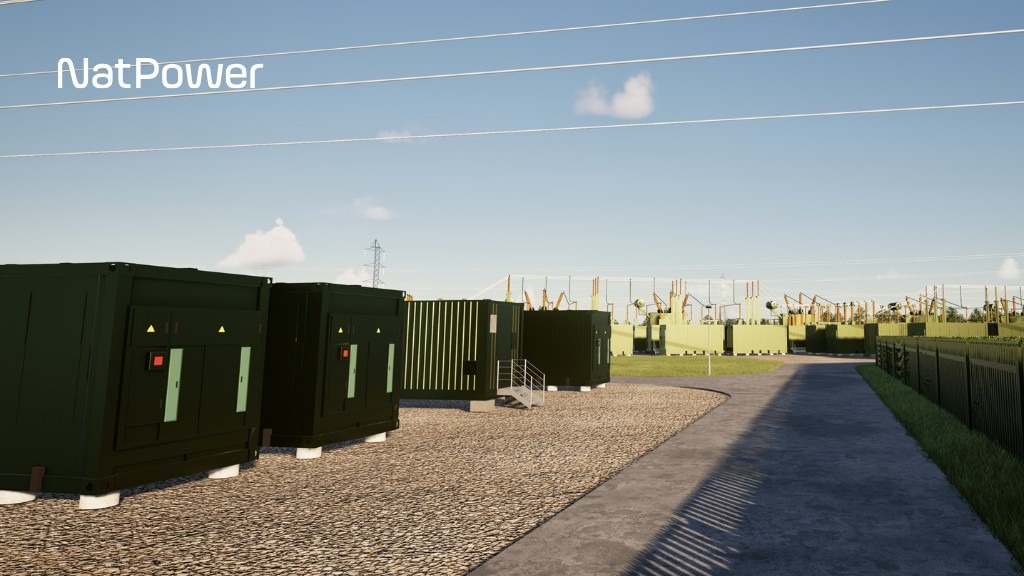
NatPower Marine’s partnership with Peel Ports demonstrates how this approach can be put into practice. NatPower Marine is developing privately financed clean power infrastructure designed around the needs of ports, vessels and shipping corridors, combining shore power, cold ironing, e-ship charging and battery-backed energy systems. This is not simply a shore-power project. It is an integrated infrastructure model designed to give ports and shipping operators access to the energy capacity they need to transition.
Government has an important enabling role: providing planning certainty, coordinating grid delivery, granting separate allocation to strategic sectors such as AI data centres and marine electrification to avoid unfair competition, creating the regulatory clarity required for private investment to move quickly and responsibly, and reducing the cost of energy by cutting VAT and waiving system costs.
Making better use of Britain’s clean power The opportunity extends well beyond shipping. Britain has some of Europe’s strongest offshore wind resources. Yet increasing volumes of renewable electricity are being constrained because the grid cannot always absorb power at the right time or in the right place. At the same time, ports and shipping corridors remain exposed to fossil fuel costs and increasing pressure to reduce emissions.
That creates an important economic opportunity. If Britain can store more of the clean electricity it already produces and use it where demand is concentrated, including at ports, it can reduce wasted renewable generation, improve resilience and support cleaner trade. Battery storage changes the equation by allowing electricity to be stored when supply is abundant and deployed when demand rises. Integrated into ports, this infrastructure can support shore power, heavy vehicle charging, cold ironing and electric propulsion systems for commercial shipping. In effect, ports are becoming flexible energy hubs as well as transport assets.
BESS: infrastructure, not an afterthought This is also where the conversation around battery energy storage systems, or BESS, needs to mature. Battery storage is sometimes treated in local debates as new or inherently unsuitable for sensitive infrastructure locations. Modern BESS projects, however, can be designed with multiple layers of safety, monitoring and operational control.
California provides a useful illustration of what happens when battery storage is deployed at scale. As solar generation expanded, the state faced a familiar challenge: clean electricity was increasingly abundant during the day while demand peaked later in the evening. Large-scale battery storage helped shift that electricity to periods when it was most needed. By early 2026, California had installed nearly 17GW of grid-scale battery storage. On one evening in March 2026, batteries supplied more than 12GW to the grid, demonstrating how storage has become an increasingly important component of system flexibility and reliability. The lesson for Britain is not that it should copy California wholesale. It is that storage can turn surplus renewable generation into flexible capacity.
For ports, that lesson is directly relevant. Shore power, cold ironing, e-ship charging and heavy transport electrification will all require flexible power systems capable of managing demand safely while minimising unnecessary pressure on the wider grid. Battery-backed port infrastructure can therefore serve two purposes: supporting cleaner shipping and contributing to wider energy resilience. It should be assessed as critical infrastructure that can be delivered safely and responsibly, not simply as a technology to be excluded because of concerns about its risks.
Public confidence is central to this. Local communities are right to expect clear safety standards, robust design, emergency planning and transparent engagement. Infrastructure providers have a responsibility to answer those questions openly and demonstrate how projects are designed, monitored and operated. NatPower Marine’s position is clear: port electrification must be delivered safely, sustainably and with community confidence from the outset. That means battery storage should not be bolted onto an electrification project as an afterthought. It should be considered as part of an integrated energy system, alongside grid capacity, clean generation, shore power, charging, energy management and operational resilience.
In a rapidly changing world, we need many more GW and GWh of energy storage than NESO estimated years ago. 7GW / 56GWh would be needed for shipping electrification only, a segment that is dramatically accelerating due to the Chinese new five-year plan targeting shipping electrification by 2030 and UK convergence towards EU emission regulations.
From ambition to infrastructure
This shift has important policy implications. If ports are increasingly functioning as both strategic trade and energy infrastructure, they should be treated accordingly in planning and grid connection frameworks. Accelerated grid access for port electrification should be viewed not simply as a transport issue, but as part of Britain’s wider economic and energy security strategy. Ports should be recognised as strategic energy hubs when planning and allocating grid capacity.
Britain does not need to wait for another technology breakthrough. The technologies required to support port electrification already exist. The challenge now is aligning private capital, grid capacity, energy supply and maritime demand so that projects can be delivered at scale.
Much of the investment required already exists within the private sector. NatPower is investing on the basis that port electrification, battery storage and clean shipping infrastructure will become essential components of Britain’s future industrial economy. Its model is built around privately financed infrastructure designed for the specific needs of ports and shipping corridors: shore power, cold ironing, e-ship charging, giga-scale and long-duration flexible battery-backed demand management and long-term energy resilience. The constraint is increasingly not a lack of ambition or capital. It is the practical challenge of aligning planning approvals, grid connections and regulatory certainty around infrastructure that is nationally important. This is where partnership with Government becomes critical.
Battery storage also needs a planning framework that reflects its growing role in the energy system. Modern battery energy storage systems incorporate multiple layers of safety protection. These typically include battery management and monitoring systems, thermal management, automated shutdown and isolation, fire detection, physical separation or compartmentalisation, and site-specific fire protection and emergency response measures designed to reduce the likelihood and consequences of a failure. Many newer utility-scale projects use lithium iron phosphate, or LFP, battery chemistry. LFP is generally considered more thermally stable than other commonly used lithium-ion chemistries, such as nickel manganese cobalt, or NMC, although appropriate safety design and operational controls remain essential.
Sustainable storage also means looking beyond the battery itself. Responsible projects should seek to minimise environmental impact, improve biodiversity wherever possible, provide clear community benefit and support the wider energy transition without placing unnecessary pressure on existing local infrastructure. NatPower Marine’s projects, for example, target biodiversity net gain above the statutory requirement.
The state does not need to finance every major infrastructure project itself. Its role is to create the conditions for private capital to move quickly and at scale. Faster planning decisions, accelerated grid access, clearer long-term frameworks for shore power and maritime electrification, modernised planning guidance for BESS and stronger technical support for local authorities and emergency services could unlock significant private investment alongside public funding.
A competitive opportunity for Britain The strategic importance of this should not be underestimated. Global shipping is entering a period of structural transition driven by tightening emissions regulation, volatile fuel costs and increasing pressure from cargo owners to decarbonise supply chains. Ports with reliable, clean power infrastructure will become increasingly important to shipping operators and cargo owners. Other European markets and China are already moving to position ports as integrated energy and logistics hubs, supported by investment in storage and grid flexibility. Britain has the opportunity to do the same. The UK possesses strong renewable energy resources, globally significant maritime trade routes and growing private-sector investment in clean infrastructure. The next step is to turn those advantages into delivery.
The ports that succeed in the next phase of maritime trade will not simply be those with the greatest cargo volumes. They will increasingly be those capable of integrating energy, logistics and industrial infrastructure into a coherent modern system. The transition has already begun. The question now is how quickly Britain can bring policy, grid planning and private investment together to scale it.