Premium home hospital bed maker responds to New York Times coverage of the AgeTech boom – arguing that no smart home system replaces a medically certified sleep environment.
A New York Times report exploring how technology may help Americans grow old at home has spotlighted one of the fastest-growing movements in healthcare: the push to age in place.
For SonderCare, a premium home hospital bed manufacturer with more than 25 years of experience in home healthcare, the coverage affirms a conviction the company has long held – that technology advances aging in place, but the bedroom is still where safety is won or lost.
The Aging-in-Place Movement Reaches a Turning Point
The numbers behind the movement are striking. According to AARP’s 2024 Home and Community Preferences Survey – one of the most comprehensive studies of its kind, drawing on responses from more than 3,000 adults – 75% of Americans age 50-plus want to remain in their current home as long as possible. Among adults 65 and older, that preference is even more pronounced.
The technology sector has responded. The AgeTech market – encompassing wearable vital-sign monitors, fall-detection sensors, AI-powered medication management platforms, and smart home security systems – was valued at approximately $42 billion in 2024 and is projected to reach $67 billion by 2034, according to Aging and Health Technology Watch. Innovations profiled in recent coverage include home sensors that track health patterns in real time, voice-activated assistants, and robotic companions designed to reduce isolation and improve independence. The New York Times report reflects this momentum, profiling people in their 60s, 70s, and 80s who are actively building the infrastructure to stay in their homes on their own terms – not waiting for a health crisis to force a decision.
The Gap Technology Cannot Close Alone
SonderCare acknowledges the promise of the AgeTech boom while pointing to a dimension that often goes unaddressed: physical safety at the point where most home accidents actually occur. “The technology coming out of the AgeTech space is genuinely exciting, and the desire to stay home is something we’ve seen up close for decades,” said Ben Martin, President of SonderCare. “But the leading cause of injury-related death for adults over 65 is still a fall – and most falls happen at home, often in the bedroom, often during a transfer in and out of bed. No sensor prevents that. The right bed does.”
AARP data supports the concern. While 64% of adults planning to age in place say they will need a medical alert system, 72% anticipate physical home modifications – grab bars, ramps, bathroom upgrades – reflecting that digital tools and physical safety engineering must work together.
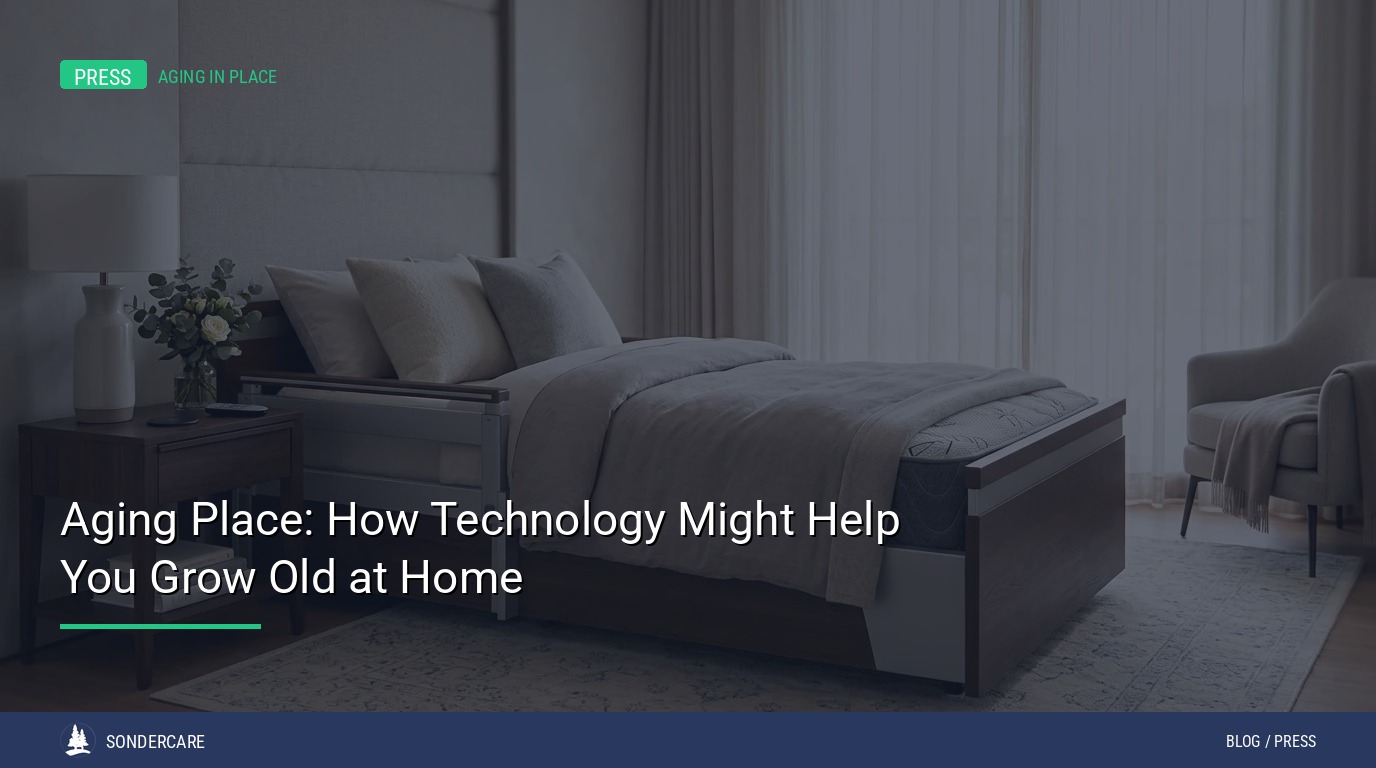
SonderCare’s Aura line of home hospital beds is built around exactly that interplay. The company’s FallSafe Ultra-Low Height technology lowers the sleeping platform to just 10 inches – 17 inches to the top of the mattress – reducing both the likelihood and severity of a transfer-related fall. Full positioning capabilities, including Zero Gravity, Cardiac Chair, and Trendelenburg tilt, support the medical needs of aging adults without requiring a move to a facility. And the beds’ furniture-grade residential finishes mean the bedroom continues to look like a home, not a patient room.
Caring for Couples, Not Just Individuals
One nuance of the aging-in-place conversation that the New York Times coverage touches on – and that SonderCare has built a product around – is the reality that most people want to age alongside a partner, not independently of one. SonderCare’s Aura Companion Bed addresses this directly. Configured as a split king, it allows each side to operate independently for head and knee positioning while synchronizing height adjustments – so two people with different care needs can share a bed and a room without compromise.
“A lot of aging-in-place planning treats it as an individual challenge,” Martin said. “But most of our customers are couples who want to stay together, in their own bedroom, without one of them feeling like they’re living in a hospital. The Companion Bed was designed for that exact situation.”
A Foundation, Not a Last Resort As the 65-plus population in the United States approaches 82 million by 2050 – a figure cited by the U.S. Census Bureau – SonderCare believes the home hospital bed will increasingly be seen not as a reactive purchase made after a fall or a diagnosis, but as a foundational investment in a safe, independent life at home.
Families considering the next step in aging-in-place preparation can learn more about SonderCare’s Aura line at www.sondercare.com/beds/.