Tunley Environmental shares new cross-sector insights, exploring how sustainability is influencing product design, procurement, traceability and customer behaviour.
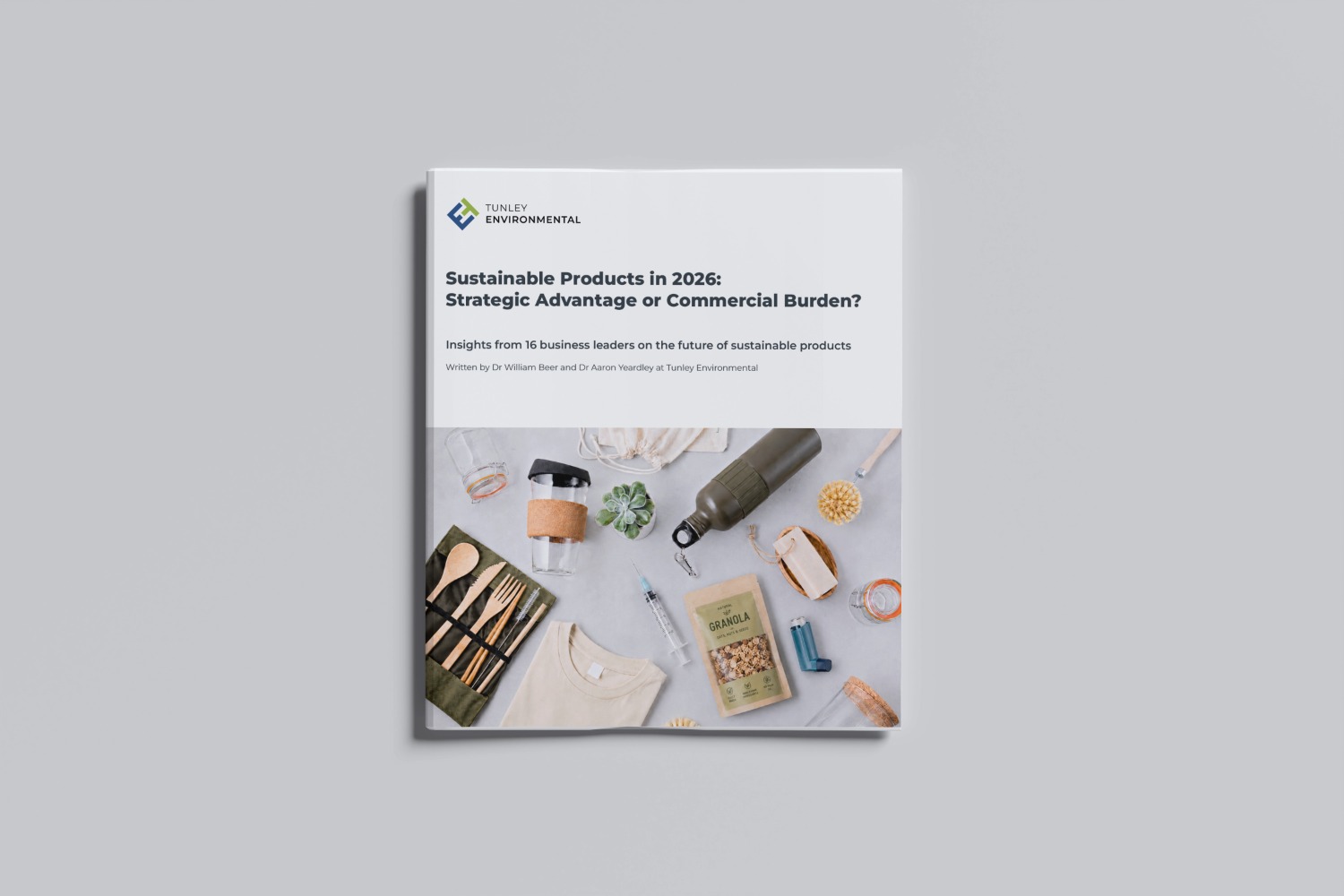
Leeds (UK), 3rd September 2026 – Tunley Environmental has published a new paper exploring whether sustainable products are becoming a strategic advantage or an increasing commercial burden, drawing on the views and experiences of 16 sustainability leaders from across a range of sectors.
The paper, Sustainable Products in 2026: Strategic Advantage or Commercial Burden?, follows a roundtable hosted by Tunley Environmental in June 2026, where leaders from product-based organisations came together to discuss how sustainability is influencing product development, procurement, customer expectations and wider business strategy.
The discussion found that sustainability remains commercially important, but that it does not replace the fundamentals of a successful product. Price, quality, availability and trust continue to shape purchasing decisions, while customers, procurement teams and regulators are asking organisations to provide verified environmental evidence.
The paper explores six key themes that emerged from the discussion:
- Why sustainability is becoming a commercial prerequisite
- The gap between customer sustainability ambitions and buying behaviour
- How evidence is becoming the bridge between environmental ambition and commercial value
- Why product and supply chain traceability is becoming more important
- The challenge of communicating sustainability information clearly
- Why businesses need to look beyond carbon towards water, biodiversity, circularity and climate resilience
The article also looks at some of the challenges that companies are currently dealing with. Price, performance, and practicality are still important considerations when making purchases, even though consumers are demanding more transparency and sustainable products. As a result, rather than considering sustainability as an independent idea, participants emphasised the significance of tying it to a convincing business case.
Commenting on the paper, Dr William Beer, CEO of Tunley Environmental, said:
“The variety of experiences at the table was what made this conversation so beneficial. These sixteen sustainability leaders were addressing these issues in various industries, supply chains, and consumer marketplaces.
“The paper is intriguing because there was no definite answer to the question of whether sustainability is a burden or a commercial advantage. It became apparent that companies are incorporating sustainability into their strategies for managing risk, competing, and meeting customer and procurement demands. Organisations with the ability to use environmental data to make better choices are probably in the best position.”
Sustainable Products in 2026: Strategic Advantage or Commercial Burden? is now available to read here.