GREATER KRUGER, South Africa, August 2026, For many American travelers, a safari in Africa is a significant trip, and wildlife remains the main reason for coming. But Bundox Safari Co. is also seeing more interest in the work that supports those wildlife experiences, from reserve management and research to monitoring and conservation initiatives. Through Live Wild & Conserve, Bundox Safari Co. has brought those elements into one Greater Kruger journey.
More Context Behind the Wildlife Experience
Live Wild & Conserve takes travelers through two different private reserve settings within South Africa’s Greater Kruger region. Bundox Explorer Camp is located in the Olifants West Nature Reserve, while Khanya Tented Camp is set within the Olifants View Nature Reserve in Balule. Moving between the two gives travelers the opportunity to experience different parts of the Greater Kruger system rather than seeing the safari through the perspective of a single reserve.
Greater Kruger refers to the wider open wildlife system created by Kruger National Park and neighboring private reserves that removed internal fences between participating areas. This allows wildlife to move across a much larger ecosystem while each reserve continues to manage its own conservation work, research and operations.
Experiencing two reserve settings therefore gives guests a broader understanding of Greater Kruger while also showing how conservation priorities and research can affect one area to another.
Conservation Talks at Khanya
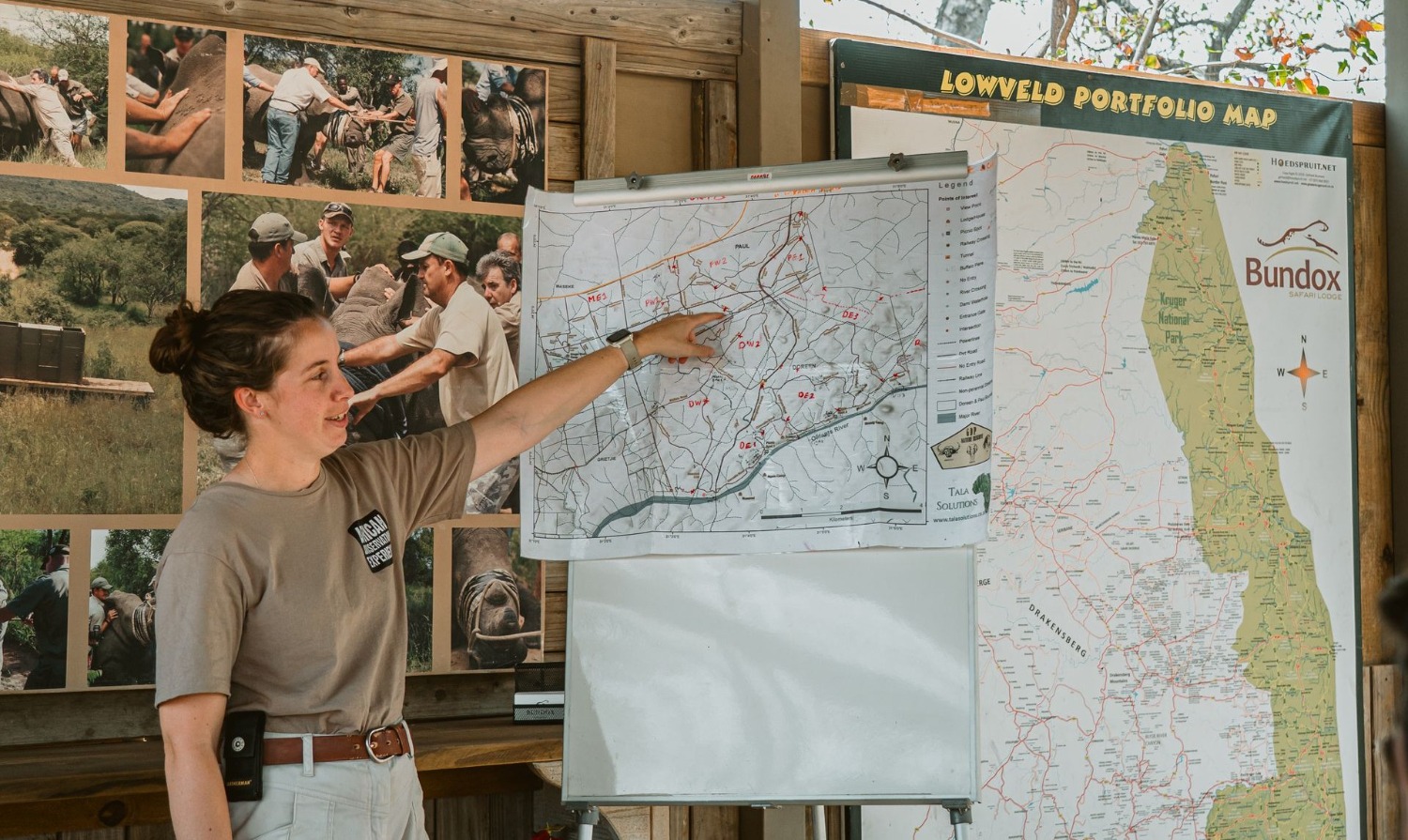
At Khanya Tented Camp, travelers are introduced to conservation work and research relevant to the area through guided discussions.
These talks can include wildlife monitoring, animal movement, habitat pressures, species behavior and the role of research in helping conservation teams understand what is happening across the reserve.
Camera traps are one of the tools discussed as part of this process. Remotely triggered cameras can help researchers record which species are moving through an area, when animals are present and, in some cases, identify individual animals over time. The information collected can contribute to a broader understanding of movement, distribution, population, behavior and changes within the reserve.
Down2theWire Brings a Conservation Issue Into Focus
Another part of the Live Wild & Conserve experience introduces travelers to Down2theWire, an initiative that uses recovered poaching snare wire to create handmade jewelry.
A snare is a simple but dangerous trapping device, usually made from a loop of wire placed along an animal path. When an animal walks into the loop, the wire can tighten around its neck, leg or body. Snares are indiscriminate, which means they do not only affect the species a poacher may have intended to catch. Antelope, predators and other wildlife can all become trapped, often suffering serious injury or death.
During the Down2theWire activity, travelers make a bracelet or bangle from recovered snare wire while learning more about why snaring remains a conservation concern and what happens when wildlife is caught in these traps.
For many safari guests, this is a side of wildlife protection they would otherwise never encounter. A game drive may show the animals living in the reserve, while the Down2theWire experience introduces one of the less visible threats conservation teams have to deal with behind the scenes.
Its purpose is to create awareness, explain the realities of snaring and give travelers a clearer understanding of one of the challenges involved in protecting African wildlife.
A Safari First, With Conservation Built Into the Journey
Live Wild & Conserve is not a volunteer program or research placement.
Travelers are not expected to carry out the work of conservation professionals. Instead, they are introduced to the people, research methods, challenges and conservation stories connected to the areas they are visiting.
The safari remains central, with game drives, wildlife viewing, time at camp and an Olifants River cruise forming part of the current experience. Conservation is incorporated alongside these activities so that guests can better understand the landscape as they move through it.
For American travelers planning a long-haul trip to South Africa, this offers a way to include conservation learning within the safari itself rather than having to plan a separate volunteer or research experience.
A More Informed Safari Traveler
The change Bundox is responding to is not that travelers want less of the traditional safari. They still want wildlife, strong guiding and time in the bush.
What is changing is the level of curiosity around the experience.
Travelers are asking what happens beyond the game drive, how reserves operate, what conservation challenges exist and whether activities described as conservation have a clear purpose.
Live Wild & Conserve has been structured around those questions. Rather than making broad claims about the impact of a short safari, Bundox is focusing on helping guests better understand the conservation work already taking place within the landscape.
The result is a safari that still delivers the wildlife experience travelers came for, while giving them a clearer view of what is involved in protecting and understanding the places they have traveled to see.