Manchester cartoonist says Britain needs humour more than ever
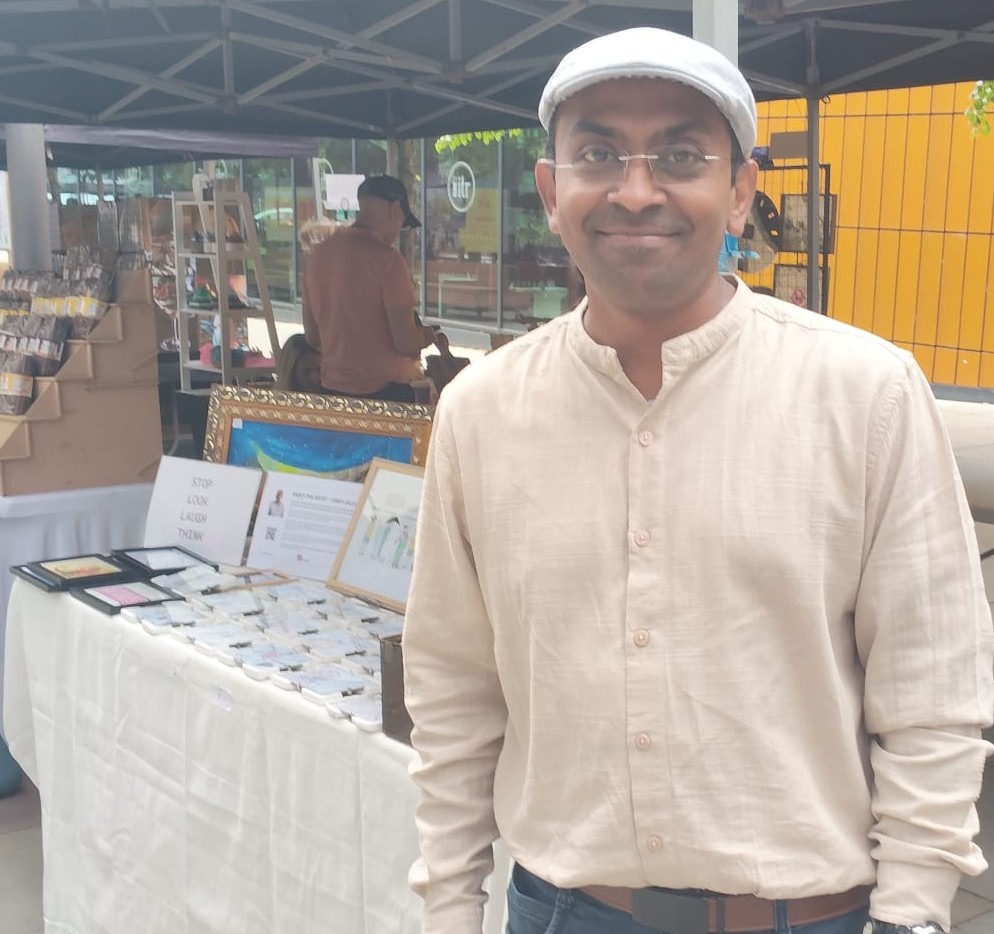
Manchester artist and cartoonist Vinay Jalla is calling for greater recognition of cartoonists as quiet contributors to public wellbeing after spending an entire day at a city market without selling a single cartoon—but leaving hundreds of people smiling.
Vinay took a collection of his original Teal Lines cartoons to First Street Makers Market in Manchester with hopes of selling his work. By the end of the day, every cartoon was still on the stand.
Financially, it was a disappointing result. Socially, it told a very different story.
Throughout the day, students, young families, office workers and visitors repeatedly stopped to browse the cartoons. Children laughed before explaining the jokes to their parents. Friends called each other over to share their favourites, while strangers found themselves laughing together over everyday observations captured in simple black-and-white drawings.
Rather than dwelling on the lack of sales, Vinay believes the experience revealed something far more important about the role humour plays in modern society.
“In a world filled with difficult headlines, uncertainty and constant disagreement, people are searching for moments of relief,” he said. “For a few seconds, a cartoon allows people to step outside whatever is worrying them. It creates a pause, a smile and often a conversation between complete strangers.”
The Manchester-based artist believes cartoons remain one of the most accessible forms of art because they ask for nothing from the viewer except a willingness to smile.
“Unlike many art forms, cartoons don’t require specialist knowledge or interpretation. Everyone understands humour. It crosses generations, backgrounds and cultures. I watched grandparents laughing with grandchildren, students laughing with professionals and complete strangers pointing cartoons out to each other. Those shared moments are surprisingly powerful.”
The experience also highlighted the unusual economics of cartooning.
“By the time someone laughs, the cartoon has already achieved its purpose. The emotional reward comes before any decision to buy. That’s wonderful for society, although not always ideal for the cartoonist.”
Vinay says independent artists often measure success through sales but believes they should also recognise the value of the emotional impact their work has on people.
“We’re living in an age where anxiety, division and constant online debate can leave people feeling exhausted. Humour doesn’t solve society’s problems, but it can soften them. A smile won’t change the news, but it might change how someone feels for the rest of the day.”
His Teal Lines series explores everyday life through subtle humour and observation, encouraging people to find comedy in ordinary moments rather than conflict. Many of the cartoons touch on themes including technology, climate change, food, work and modern behaviour, inviting reflection without confrontation.
Vinay believes cartoonists have an important place in British culture that is often overlooked.
“Britain has a rich tradition of satire and cartooning, but cartoons also perform a quieter role. They help us laugh at ourselves, remind us of our shared humanity and create small moments of connection between people who may otherwise never speak. That contribution is difficult to measure in sales figures, but easy to see when people gather around a cartoon and leave smiling.”
Although he returned home without selling a single piece of artwork, Vinay says he considers the day a success.
“As artists we naturally hope people will take our work home. But perhaps the greatest compliment is knowing someone walked away feeling lighter than when they arrived. My stall may not have generated any income that day, but it generated something just as valuable. Hundreds of genuine smiles.”