One of Yorkshire’s leading technical textile manufacturers, is celebrating having been showcased as a leading example to the British High Commissioner to Pakistan, Jane Marriott CMG OBE, the UK’s most senior diplomatic representative in the country.
As Arville, whose engineered fabrics save lives and enhance safety primarily within the aerospace, defence and automotive industries, in more than 50 countries, looks to build on its international success and forge new relationships in overseas markets, it valued the visit from the British High Commissioner to explore trade opportunities in Pakistan, whilst being keen to share the knowledge and experience the business has accumulated over the last 75 years, in support of Pakistan businesses looking to expand into higher value products and more integrated supply chains.
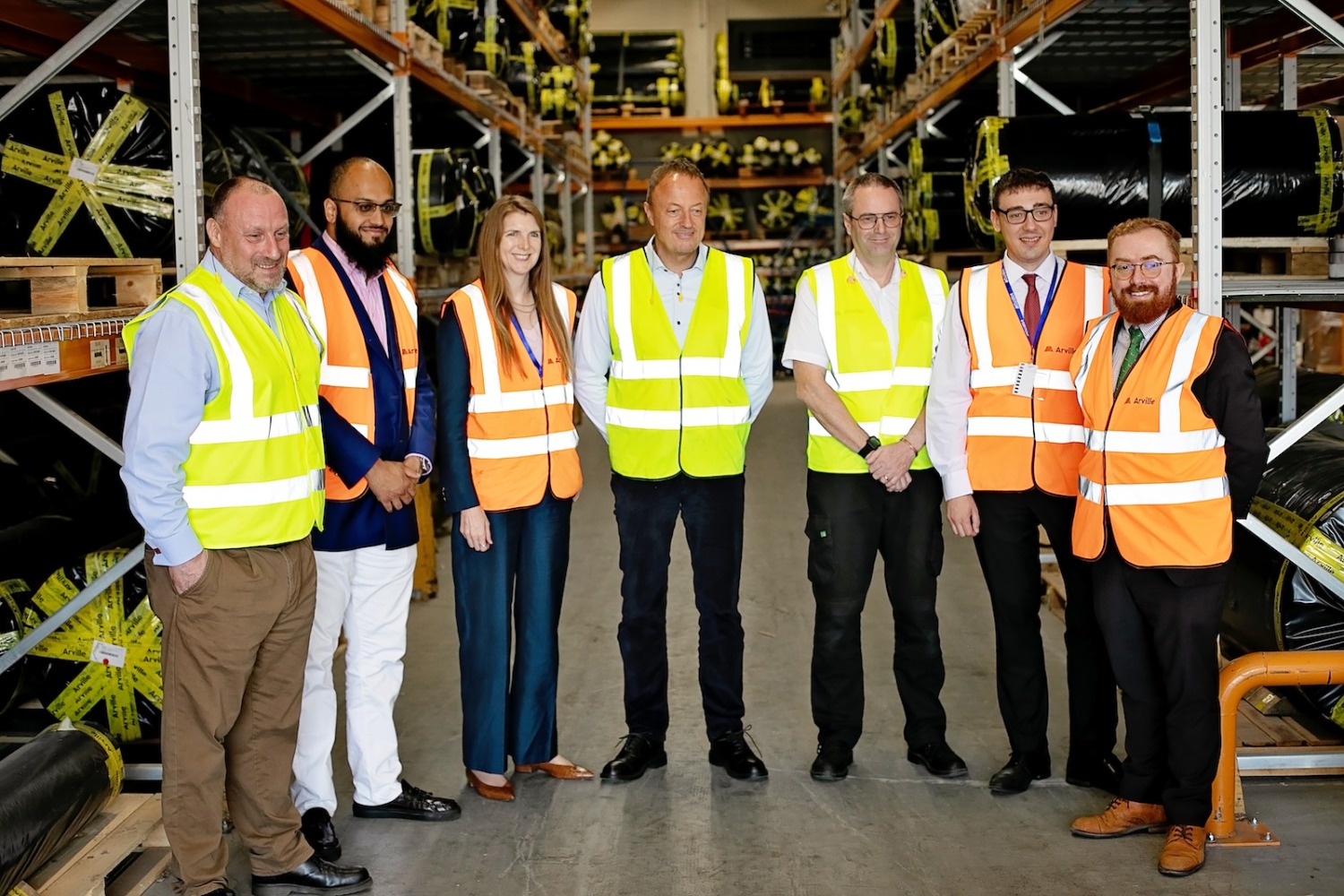
The visit to Arville’s factory in Wetherby, organised by Shahban Aziz, Managing Director of the Textile Centre of Excellence, brought together representatives from British industry, international trade and higher education to explore how expertise could be shared between the UK and Pakistani textile sectors, and where new partnerships could be built. The High Commissioner was joined by James Kelly, Deputy Head of Middle East and Pakistan Bilateral Trade Relations at the Department for Business, Innovation, Science and Trade, alongside Professor Parik Goswami, Director of Research and Innovation at the University of Huddersfield, and Max Partington of the West Yorkshire Combined Authority.
During the visit the High Commissioner was given an insight into the Arville’s end to end UK manufacturing capability, from highly technical textile design and specialist weaving based in Wetherby through to coating and fabrication located at their sister sites in Bury and Bradford, but the visit also looked beyond the factory floor, to conversations that opened doors for manufacturers in both countries.
Steve Gill, Group Chief Executive Officer said:“Pakistan has one of the largest textile industries in the world, though its strength has traditionally been concentrated in cotton, yarn, fabric and garment production. At Arville we’ve been specialists for decades in specialist, higher value technical textiles: materials engineered for uses such as aerospace, defence, and automotive, protective clothing. The discussions raised on the factory floor were based on the premise that each market could learn from the other. Could Pakistan draw on Yorkshire’s experience of specialist manufacturing to develop more of its own? And what could we, and other British firms, learn in return from the scale of growth Pakistan’s manufacturing industry has experienced?”
During her visit, British High Commissioner to Pakistan, Jane Marriott CMG OBE, was shown Arville’s manufacturing capabilities, diverse product range and technical textile applications, followed by a tour of the production facilities. She said: “Arville is a great example of British innovation and manufacturing excellence. What stood out today was its collaborative spirit and ambition to build new partnerships. By bringing together UK expertise and Pakistan’s dynamic textile sector, we can create new opportunities for innovation, trade and growth”.
Rather than one country selling to the other, the opportunity discussed was an exchange: technical knowledge, research links, skills development and shared problem solving between two industries with different strengths and a common trade.
Steve Gill, Group Chief Executive Officer at Arville, said: “This region has undergone a remarkable transformation from traditional textile manufacturing to highly engineered technical fabrics, building generations of knowledge and expertise along the way.
“There is now a significant opportunity to take those capabilities to a wider international market. We would welcome government support in strengthening trade links with Pakistan, raising awareness of the specialist textile expertise that exists within our region and helping to open new opportunities for collaboration.
“This could include improving access to key raw materials such as cotton, developing partnerships with textile manufacturers and weavers in Pakistan, and exploring opportunities for Arville’s specialist defence textiles to support the requirements of Pakistan’s defence sector.
“We are also keen to explore how our technical textile expertise can contribute to some of the wider challenges facing Pakistan. In particular, Arville’s filtration textile capabilities could potentially support the development of solutions for water contamination and help improve access to cleaner, safer water.
“We see considerable potential for a two-way relationship, combining Pakistan’s established textile industry with the advanced technical textile expertise and manufacturing capabilities we have developed here in the UK.”
Shahban Aziz, Managing Director of the Textile Centre of Excellence, said: “We were delighted to welcome the British High Commissioner to Pakistan and provide an opportunity to showcase the depth of textile expertise and advanced manufacturing capability we have here in West Yorkshire.
“The region has a proud textile heritage, but today it is also home to highly innovative businesses developing specialist products for some of the world’s most demanding industries. Visits such as this are incredibly valuable in raising the international profile of those capabilities and opening the door to new trade, export and collaborative opportunities between West Yorkshire, the UK and Pakistan.”
A number of regional priorities are expected to be taken forward through the West Yorkshire – Pakistan Trade Industry and Innovation Summit on 12th November which is an exciting next step.
For Arville, the visit forms part of a wider ambition to keep growing the international reach of a business that has been manufacturing in Yorkshire since 1951.
The visit was facilitated by Shahban Aziz, Managing Director of the Textile Centre of Excellence a national, industry led organisation that works with more than 100 textile and manufacturing businesses across the UK to develop skills, support innovation and create opportunities for greater industry collaboration.