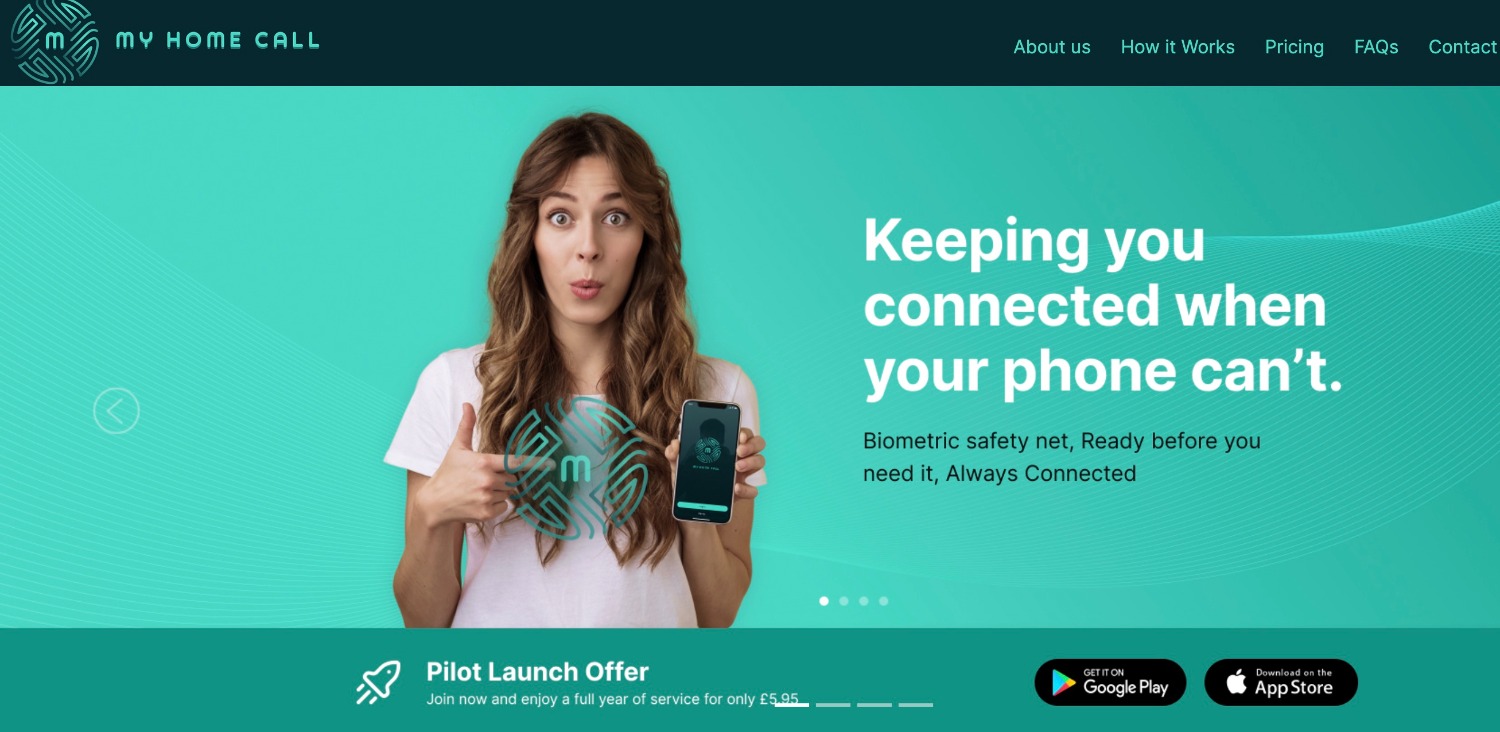
Emergency services across the UK face increased pressures during the winter months. As part of national Winter Safety Awareness Week running from Monday 8th to Sunday 14th December, My Home Call is joining forces with partners nationwide to raise awareness of simple, effective steps the public can take to stay safe – and to help emergency services reach people faster when it matters most.
Shorter days, poor visibility and harsher weather conditions such as ice, sleet and fog increase the risk of accidents and incidents. Many people will still be meeting friends, travelling or enjoying winter events – but these darker, colder conditions can make it far more difficult to be found in an emergency.
To support the campaign, My Home Call is urging the public to follow three key safety steps before heading out this winter:
1. Download the free what3words app
The what3words app enables anyone to identify and share their precise location with emergency services. It works offline, making it invaluable in places with poor signal. The app is available on iOS, Android, and via the online map at what3words.com.
More than 85% of UK emergency services use what3words because it helps save time, resources, and lives.
2. Create your My Home Call account
My Home Call allows users to instantly share their live what3words location and contact their trusted people from any smartphone — even if their own device is:
- lost
- stolen
- out of battery
- damaged
My Home Call ensures people can still be located quickly in emergencies. Whether someone becomes separated at an event, stranded while travelling, or unable to access their phone, they can still reach help securely and reliably.
Available on iOS and Android.
3. Save and update key contacts and emergency information
Ensure your essential contacts – whether family, friends, carers or colleagues – are up to date and easily accessible. In an emergency, having the right people just one tap away can significantly speed up support. My Home Call encourages everyone to review their contacts before winter fully sets in.
Why precise location matters
When calling 999, one of the first questions asked is: “Where is the emergency?”
But describing a location accurately can be extremely difficult, especially under stress, or in unaddressed or unfamiliar places such as:
- rural walking routes
- motorway hard shoulders
- large event sites
- poorly lit or remote areas
Contrary to popular belief, emergency services often cannot automatically detect a caller’s exact location, which can cause dangerous delays.
what3words solves this problem by dividing the world into 3m x 3m squares, each with a unique three-word identifier. This means every entrance, field, roadside spot or festival area has a simple address.
This technology has already helped save countless lives. For example:When Gary Mason suffered a heart attack along the Bromsgrove Highway, his son shared their what3words address – ///anyway.lend.give – allowing emergency teams to reach them just in time.
Quote from My Home Call
“Every second counts in an emergency, especially during the winter months when visibility drops and response times are under greater pressure. At My Home Call, we see first-hand how quickly situations can escalate when someone can’t be located or loses access to their phone.
That’s why we’re proud to support the use of what3words. It gives every person, in every situation, a precise and trusted way to be found. Together, we’re helping families, event teams and first responders connect faster, stay safer, and remove uncertainty when it matters most.”
– Mike, Founder & CEO, My Home Call
How to use what3words in an emergency
- Open the what3words app or online map.
- Tap the “Locate Me” icon to display your current 3-word address.
- Share your what3words address verbally with emergency call handlers.
- Stay where you are unless instructed to move.