With almost one million young people outside employment or education, construction employers are being challenged to stop demanding experience from people who have never been given an opportunity to gain it.
British under-25s are nearly three times more likely to be out of work than the general population.
An estimated 981,000 young people aged 16 to 24 were not in education, employment or training between April and June 2026. That is 13.6% of the age group.
At the same time, construction continues to warn about skills shortages, an ageing workforce and difficulties recruiting the people it needs.
Catherine Storer, Director at Essential Site Skills, said the two problems cannot continue to be discussed separately.
“Construction cannot keep talking about skills shortages while waiting for fully trained, experienced and immediately job-ready people to appear.
“Young people are told they need experience to get a job, but they need an employer to give them that first experience. Unless someone breaks that cycle, they remain locked out and the industry keeps recruiting from the same shrinking pool.”
The Netherlands Does Not Wait for Young People to Disappear
The UK is now examining how the Netherlands maintains a youth NEET rate of just 4.8%, one of the lowest in Europe.
Vocational education begins earlier and more young people combine employment with study. If someone under 23 drops out of education or training, their local council is alerted within days and expected to help them return.
The Dutch system also takes a tougher approach to welfare. Under-27s without a work history cannot immediately claim standard unemployment benefit and must go through a 28-day waiting period with a recorded job search.
Not every part of that model would transfer easily to the UK. But its central principle is difficult to ignore: young people are identified and supported before short-term disengagement becomes long-term worklessness.
Catherine said:
“The Netherlands does not simply wait for a young person to disappear from education and hope they eventually find their way into employment.
“There is earlier vocational learning, closer contact with employers and intervention when somebody drops out. The UK needs to decide whether it is prepared to be equally persistent about keeping young people connected to opportunity.”
Construction Must Offer a First Step
That opportunity does not always need to begin with a permanent job.
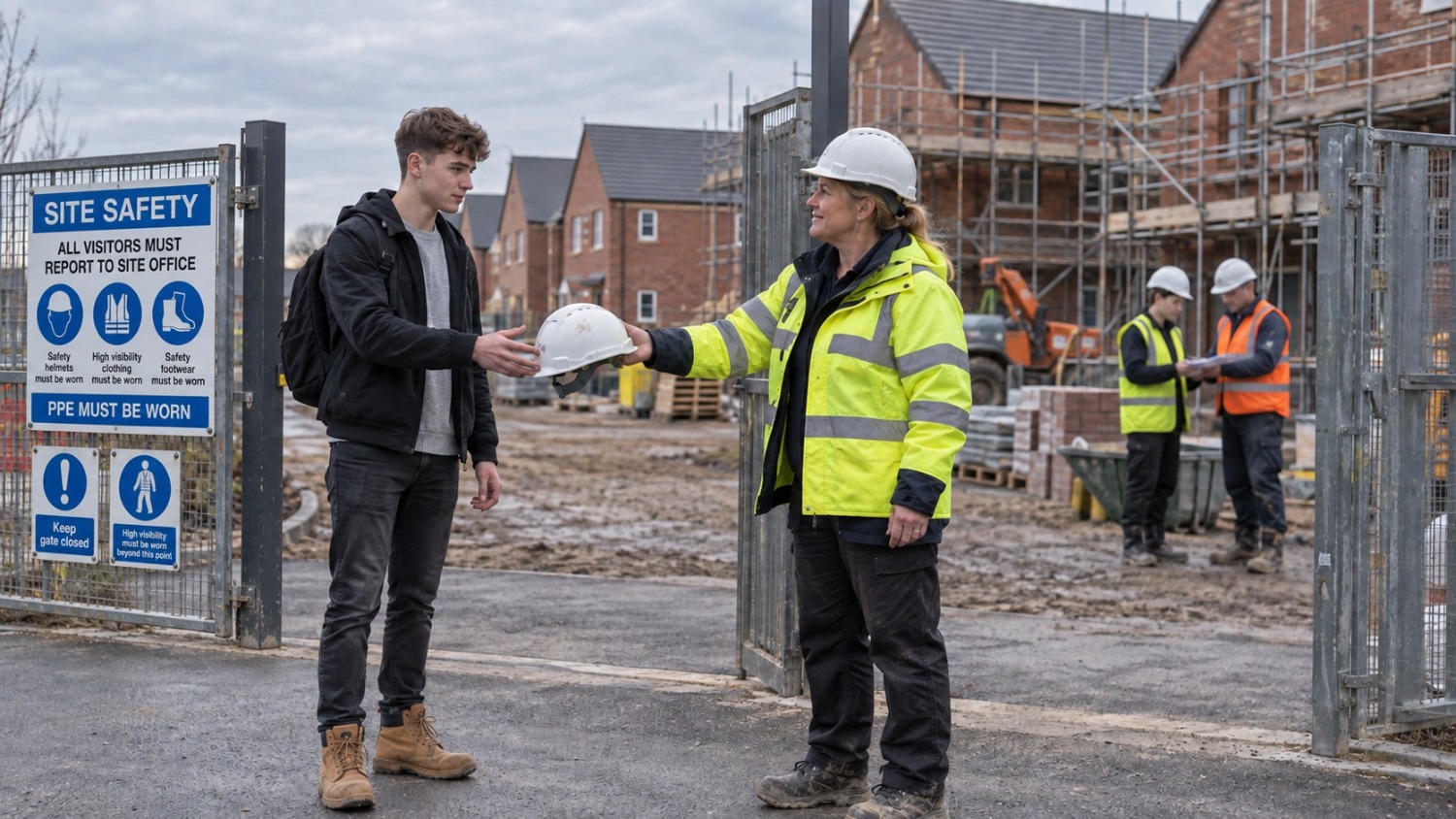
A few properly supervised days with a construction company, housebuilder, civil engineering contractor or builders’ merchant can expose a young person to occupations they may never have considered.
Someone spending a few days on site or with a construction business while attending college gains more than practical experience. They learn about punctuality, communication, teamwork, site behaviour and the expectations of a real employer.
Short placements, workplace visits, mentoring, apprenticeships and shared opportunities across construction supply chains could all provide an entry point.
“Employers regularly say young applicants are not work-ready, but work-readiness has to be developed somewhere,” Catherine continued.
“A blank CV does not mean a young person lacks ability or potential. It often means nobody has given them their first chance.
“Construction cannot solve youth unemployment on its own. But an industry that urgently needs new workers should be asking what it can do — not only what young people are missing.”
From First Chance to Skilled Career
Construction offers routes into electrical work, plumbing, heating, carpentry, bricklaying, groundworks, plant operations, engineering, surveying, health and safety, site supervision and project management.
The first opportunity may be small, but it can lead to an apprenticeship, skilled employment, an NVQ, supervision, management or business ownership.
Catherine concluded:
“Young people do not need another campaign telling them construction is a good career. They need employers prepared to open the door.
“If the industry wants the next generation, it must stop waiting for finished workers and start helping to build them.”
This follows an earlier call from Essential Site Skills for technical education reform to create genuine career progression. Read more about technical education and construction careers.
The statistics and details of the Dutch employment system were reported by ITV News.