Icelandair‘s new survey of 2,000 travellers found that nearly half (47%) of Brits feel social media is negatively affecting their holidays. Almost a third (29%) choose destinations based on TikTok or Instagram, yet 38% admit they struggle to relax once they arrive.
With overtourism being at the heart of summer holiday fatigue, Iceland’s flagship airline has sought to uncover where Europe’s busiest hotspots regain their charm after peak season.
Icelandair analysed 30 popular destinations across five stress factors, tourist and hotel density, noise, light pollution, and crime. The study revealed that favourites like Florence, Nice, Lake Como, Interlaken, and Bath are among the most overwhelming in peak season. But booking data from Airroi.com shows that by September, the crowds start to thin, offering travellers the chance to experience these places with more peace, space, and authenticity.
From Chaos to Calm: Where Europe Unwinds in September
-
Sibiu, Romania: Transylvania’s jewel offers a laid-back September Escape
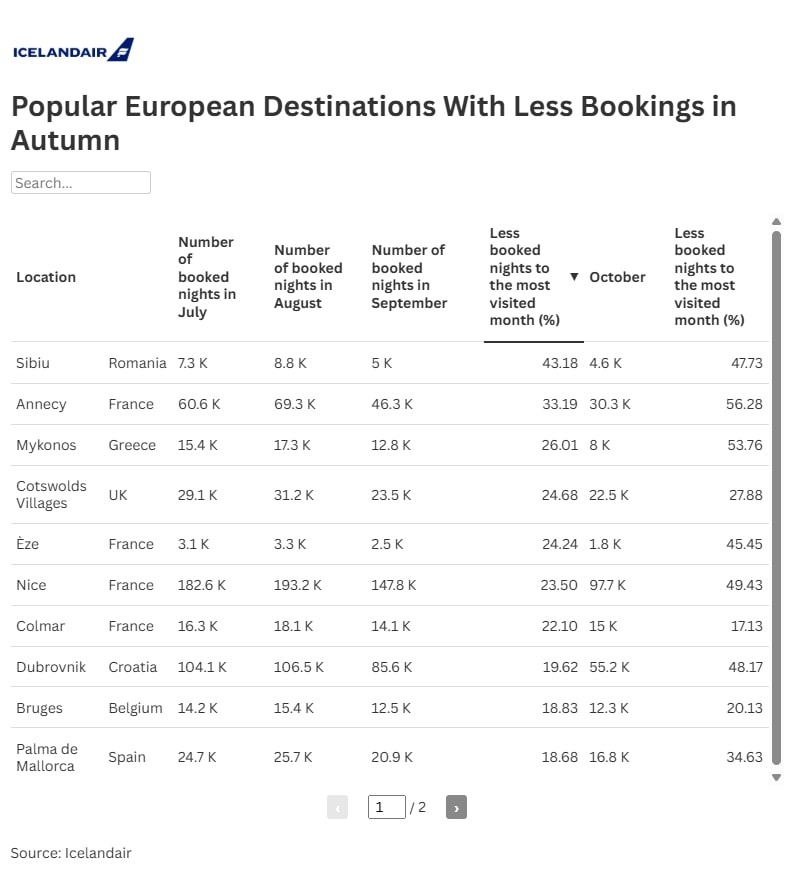
In Transylvania, the city of Sibiu offers one of Europe’s most beautifully preserved medieval old towns, lined with cobbled streets and pastel houses. The city, which gained popularity after being crowned European Capital of Culture in 2007, ranked 10th out of 30 in Icelandair’s wider tranquillity study with a score of 88/150. But in early autumn, Sibiu transforms into a peaceful retreat as bookings fall by 43% in September compared to August. The weather stays inviting with cosy highs of 20–24°C and crisp nights around 9–12°C. On Reddit, travellers often describe Sibiu as “enchanting”, an impression only heightened in the off-season.
-
Annecy, France: More room for outdoor activities in September
Further west, Annecy in the French Alps is another destination that reveals a calmer side once summer ends. Nicknamed the “Venice of the Alps” for its turquoise lake and fairytale quarter of canals, bridges, and flower-filled balconies, it is unsurprisingly a summer favourite. That popularity pushed it to 22nd place in the wider study, with a tranquillity score of just 61/150. Yet by September the picture changes: bookings drop by a third (33%) compared to August, and by October they are more than halved. The early autumn climate is still welcoming, with highs of 21–24°C and mild evenings, perfect for walks and outdoor activities (with fondue in the evening).
-
Mykonos Greece: Party island winding down in September
Even Mykonos, also known as Greek Ibiza, finds its rhythm again after the summer peak. Famous for golden beaches, whitewashed houses, and crystal-clear waters, the island ranked 18th in the study with a tranquillity score of 64/150 and placed 5th for highest crime rate, highlighting its intensity in high season. Once September arrives, however, visitor numbers ease back, with bookings down more than a quarter (26%). The island remains sun-drenched, with September highs of 24–27°C and sea temperatures of 23–24°C.
Iceland in September: nature’s reset button
For those venturing further north, Iceland in September offers its own blend of tranquility and awe , especially the number of booked nights across the country continues to decline. As the nights grow darker, the aurora borealis season begins, but the temperatures still remain relatively mild at 7–11°C. Travellers can chase the northern lights without enduring subzero conditions.
Top Places to visit in Iceland in September:
Jökulsárlón Glacier Lagoon & Diamond Beach (South Coast) – fewer tourists, surreal drifting icebergs, and soft autumn light, which is ideal for photographers.
The nearest town to these natural beauties is Höfn, which is a bit more than an hours drive. In September, it’s slightly less busier than in peak August with the number of booked nights dropping 18%.
Lake Mývatn & North Iceland – volcanic craters, bubbling geothermal fields, and golden landscapes with nights dark enough for aurora spotting.
Volcanic lakes are a 60-mile drive from Akureyri, which is the second largest urban area after Reykjavík. The region also experiences a drop in bookings in September, 27% compared to its peak in August.
Hornstrandir Nature Reserve (Westfjords) – one of Iceland’s last true wildernesses, offering solitude, dramatic cliffs, and Arctic foxes sightings before winter closures begin.
Crowds are rarely a concern here, as this remote nature reserve is only accessible by boat from Ísafjörður, a town with a mere 2,600 population. Plus, September is even more peaceful as they experience a 41% drop in booked nights compared to peak in July.
ENDS