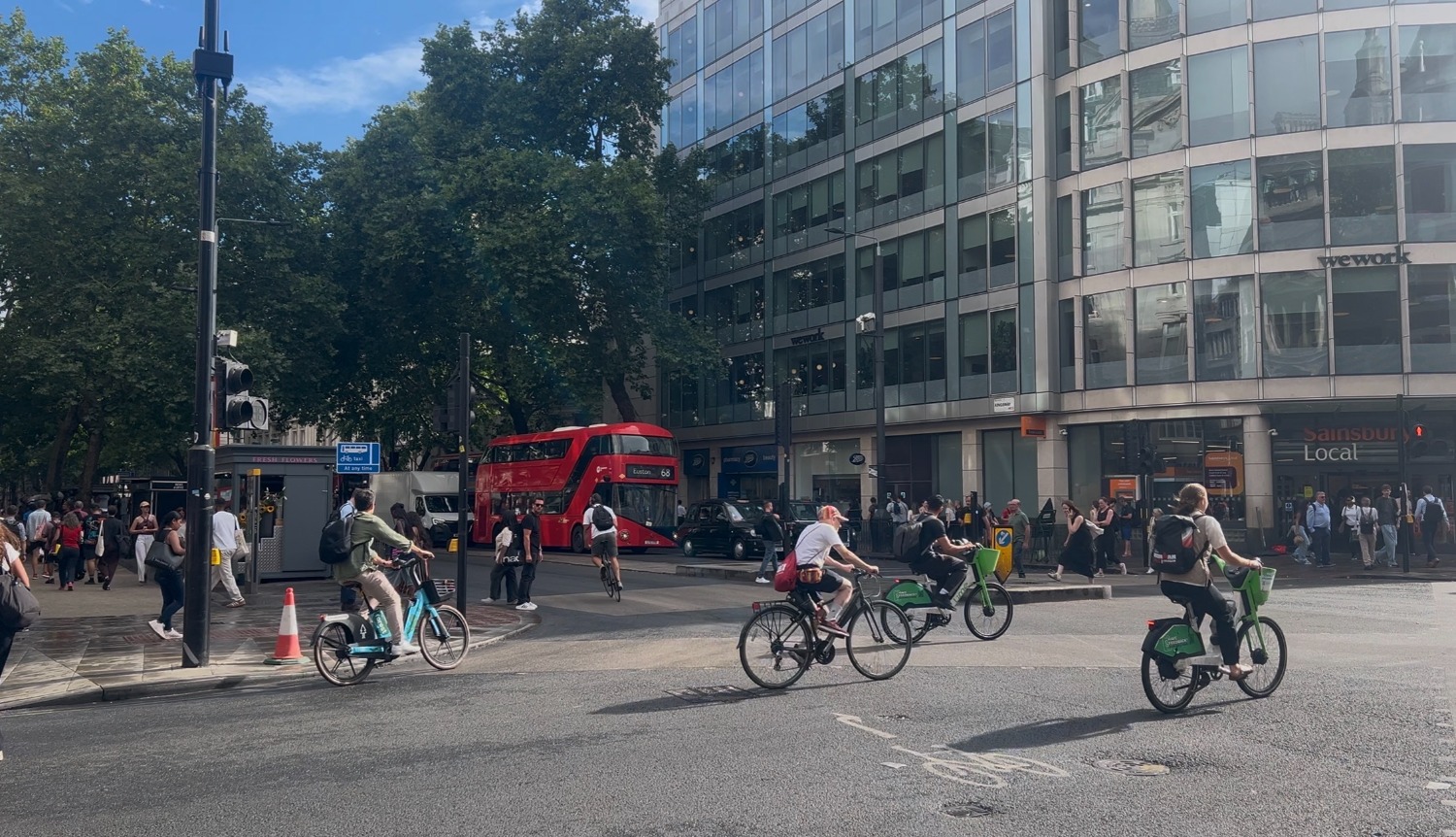
Safer cars cut driver and passenger casualties by 46% but vulnerable road users[1] account for 57% of killed or seriously injured road casualties
New analysis from Angelica Solutions highlights the growing road safety divide between road users
New analysis of STATS19 police collision data by Angelica Solutions reveals a widening road safety gap. While casualties among people travelling inside vehicles have fallen by 46% since 2010, vulnerable road users only saw a 16% reduction over the same period, meaning they now account for a larger share of those killed or seriously injured (KSI) on England’s roads.
The findings come as the Government commits £4.5 billion through its latest Cycling and Walking Investment Strategy[2] which aims to increase the proportion of short journeys made by walking, wheeling and cycling from 48% to 55%, while increasing the number of children who usually walk or cycle to school from 47% to 60%
The analysis demonstrates that while road safety has improved overall, the benefits have not been shared equally. Advances in vehicle safety have significantly reduced casualties among drivers and passengers, but progress for pedestrians, cyclists, motorcyclists and other vulnerable road users has been far more modest. As more people are encouraged to walk and cycle, the findings suggest that without further improvements to road safety, the overall number of serious casualties could continue to rise despite individual risk levels gradually improving.
Vulnerable road users have gone from accounting for around three in every ten road casualties (of any severity) in 2010 to four in every ten in 2024. They account for 57% of everyone killed or seriously injured on England’s roads over that period.
The upward trend is reflected across every police force area in England with all 39 forces seeing an increase, with London seeing the most extreme rise from an already-high base (City of London 78%→88%, Metropolitan Police 47%→61%). Other regions similarly have experienced sharp increases in the proportion of casualties involving vulnerable road users between 2010 and 2024.
- Merseyside: 24% to 47%
- Thames Valley: 25% to 42%
- Northumbria: 24% to 39%
- Durham: 23% to 37%
- Cheshire: 24% to 36%
- Nottinghamshire: 28% to 40%
“The findings raise important questions as the Government seeks to encourage more active travel. Under its latest Cycling and Walking Investment Strategy, ministers aim to increase the proportion of short urban journeys made by walking, wheeling and cycling from 48% to 55%, while increasing the number of children who usually walk or cycle to school from 47% to 60%. Our analysis suggests that unless road safety improvements keep pace with these ambitions, encouraging more people onto the roads could lead to an increase in the overall number of serious casualties”, warns Sarah Vaughan, Director of Angelica Solutions.
The business modelled the impact of a 50% increase in walking and cycling, while holding today’s injury rates constant. The analysis suggests this could result in around 4,700 additional pedestrians and cyclists being killed or seriously injured each year in England.
“It’s not that our roads are becoming more dangerous, it’s that they’re becoming safer at different speeds depending on how you travel. We’ve made enormous progress protecting people inside vehicles through advances in vehicle safety, but pedestrians, cyclists and other vulnerable road users haven’t benefited to the same extent. If we want more people to choose active travel, we need to ensure investment in walking and cycling is matched by effective investment in making those journeys safer. Otherwise, we risk widening an already significant road safety gap,” concludes Sarah Vaughan
[1] Vulnerable Road users – pedestrians, cyclists, e-scooter & e-bike riders, motorcyclists, horse-riders and mobility scooters
[2] https://www.gov.uk/government/news/cycling-and-walking-boom-with-45-billion-for-thousands-of-new-routes-and-safer-crossings