Associate Professor Stass Shpanin combines American folk art and artificial intelligence to question public memory
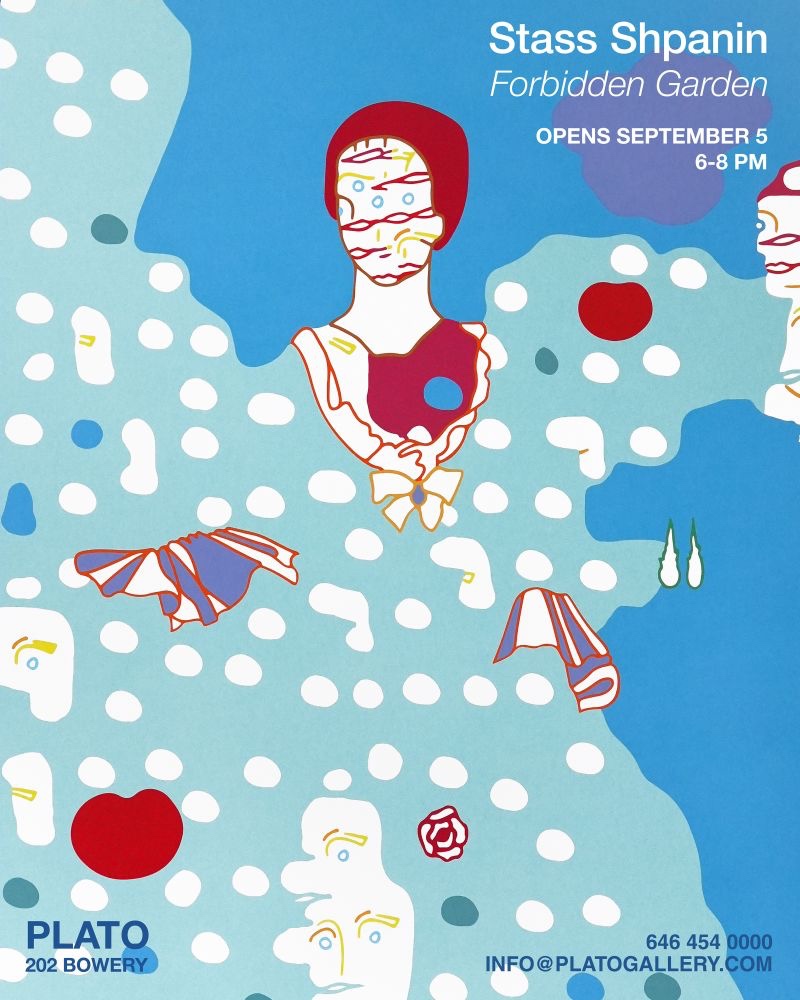
Stass Shpanin, an assistant teaching professor and program director in the Department of Visual, Media, and Performing Arts (VMPA), is using regional imagery to question notions of nature, mythology, and the evolution of Americana in his solo exhibition, Forbidden Garden. The show is on view from August 30 through October 4, at New York’s PLATO Gallery with a public reception scheduled for Friday, September 5, from 6 to 8 p.m.
A Philadelphia-based artist, Shpanin focuses on interpretations and fabrications of the past that reverberate in the present. He combines centuries-old American folk imagery with AI technology on hand-painted canvases to deconstruct civic myth-making while examining the visual mechanisms affecting public memory.
Born in Azerbaijan—formerly the Soviet Union—Shpanin has lived in the United States since he was a teenager; he is no stranger to ideological changes within nations and the imagery associated with these transformations. The art on display in Forbidden Garden combine images of birds, animals, and plants that have appeared in many states and municipalities’ insignia, flags, and official documents for millennia; their meanings are often similar but adjusted to a particular context.
To create his paintings, Shpanin chooses an example of German “fraktur,” an illustration style adopted by German immigrants to Pennsylvania from mid-18th to mid-19th centuries, then digitally breaks the illustration down, creating new compositions that often contain glitches from the technology he uses.
Shpanin’s digital creations take solid and permanent form on canvases via vibrant, vinyl paint applied by hand, similar to how glitches in memory and history forge false or twisted narratives—sometimes intentionally or circumstantially believed to be true.
PLATO is a contemporary art gallery located at 220 Bowery in New York City. Elena Platonova founded the gallery with the goal of cultivating intercultural dialogue. It mainly focuses on the work of artists with diverse cultural, ethnic, and national backgrounds, who maintain continuity with the traditions of art history while creating new ones. PLATO particularly welcomes the mixed types, the misfits, multihyphenates, immigrants, hybrids, and those who can see the world through the eyes of the other.