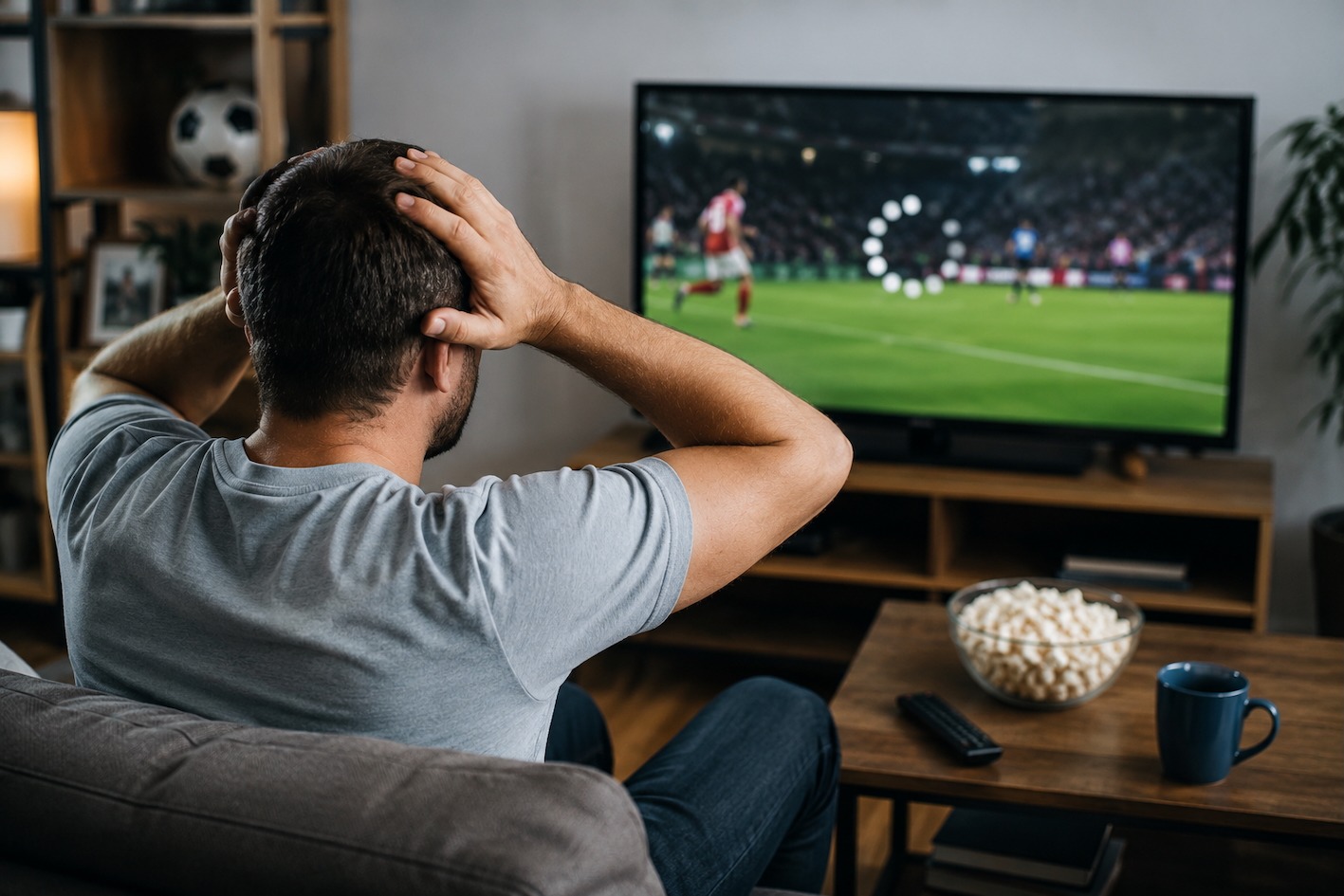
Red Card for Buffering: One in Five Sports Fans Have Missed Key Moments Due to Internet Issues

Image credit: Zen Internet

At a glance: AI-assisted overview, optimised for journalists, search & news aggregators

Research by Zen Internet shows that one in five UK sports fans have missed crucial moments of live sports due to internet issues like buffering and freezing. The study highlights the growing concern over the reliability of home broadband as more people stream sports events online. With millions expected to stream the 2026 FIFA World Cup, Zen Internet advises fans to ensure their internet connections are optimised to avoid disruptions.

Press Release

Manchester, UK - June 17,2026

New research from Zen Internet has revealed that one in five UK sports fans have missed key moments watching live sport at home due to internet-related issues.

The survey of 2,000 British adults suggests that almost half (47%) have experienced some form of internet-related problem during major sporting events, with the main complaints being buffering and freezing.

And it’s not just buffering causing connectivity issues when streaming not-to-be-missed sporting moments.

  • 2% have had their internet slow down because multiple devices were connected.
  • 8% have experienced delays compared with live TV or social media updates.
  • 7% have had streaming apps crash or fail to load.
  • 6% have suffered poor picture quality or lag.

With live sport increasingly streamed rather than watched through traditional broadcast channels, the reliability of home broadband connections is becoming a growing concern for sports fans.

Around 19.4 million people in the UK watched England’s World Cup quarter-final against France in December 2022, making it one of the most-watched TV broadcasts of the tournament in Britain. Zen also recorded its highest internet traffic peak of that year during the France v Morocco semi-final (December 2022), with network demand reaching 21% above the previous year’s highest peak.

This year, according to Zen’s latest polling, seven in ten Brits say they intend to watch at least some of the 2026 FIFA World Cup, compared to 52% who said the same ahead of the 2022 tournament1.

Around 13-14% will be heading to the pub or public screening to view the live action.

Of those watching matches at home, almost half will rely on the internet and one in seven (14%) will be checking their internet connection before kick-off according to the survey.

Richard Tang, CEO of Zen Internet, comments:

“There are few things more frustrating for sports fans than having a stream freeze just as a goal is scored, a wicket falls or a race reaches a crucial moment. Major sporting events bring millions of people together, but they also place huge demands on home broadband networks as households stream matches across multiple devices at the same time.

“With millions expected to stream FIFA World Cup matches this summer, there are a few simple steps households can take to give themselves the best chance of enjoying uninterrupted coverage.

“If you’re planning to stream a big match, it’s worth checking your connection in advance rather than waiting until kick-off. Make sure your streaming apps and devices are up to date, position your router in the best possible location and, where possible, connect your TV or streaming device directly to your router using an ethernet cable.

“It’s also worth being mindful of what else is happening on your home network. Large downloads, software updates, online gaming and multiple streams running at the same time can all place additional demands on your broadband connection.”


Notes to editors

Richard Tang’s Top Tips for Buffer-Free Sport This Summer
  1. Test your connection before kick-off: run a quick speed test and make sure everything is working as expected.
  2. Update your apps in advance: don’t wait until match day for streaming services, smart TVs or devices to install updates.
  3. Reduce network congestion: pause large downloads, cloud backups and software updates during important matches.
  4. Use the strongest connection available: connect via ethernet where possible, or watch close to your Wi-Fi router.
  5. Check who’s using the network: multiple streams, gaming sessions and video calls can all impact performance during peak viewing times.
*It’s worth noting that the World Cup games are all on terrestrial TV and that’s typically the better way to watch. Streaming can lag several seconds behind the broadcast, which means hearing your neighbours erupt before you’ve seen what happened. Nothing kills the excitement quite like a delayed goal. About Zen Zen is an independent telecommunications services provider with 30 years’ experience and a reputation for award-winning customer service. Voted the Which? Utilities Brand of the Year 2025 and Which? Recommended provider for six consecutive years, Zen is renowned for delivering excellent customer service and technical support From fast, reliable broadband for homes and small businesses to enterprise-grade infrastructure and hybrid cloud solutions, Zen supports organisations of all sizes with connectivity they can count on. A certified B Corporation, Zen is committed to doing right for people and planet, building long-term relationships, driving innovation, and helping businesses thrive. For more: www.zen.co.uk. Methodology: The research was conducted by Censuswide, among a sample of 2000 UK Adults (natrep 18+). The data was collected between 27.05.2026 – 29.05.2026. Censuswide is a member of the Market Research Society (MRS) and the British Polling Council (BPC), and a signatory of the Global Data Quality Pledge. We adhere to the MRS Code of Conduct and ESOMAR principles Sources:
  1. Ipsos study

Get more news like this

Get more news like this on Google. Set News By Wire as a ‘Preferred News Source’ to get quicker access to news that’s important.

All done!
Thank you for subscribing.

Email Subscription