During the week the entire crypto industry descended on Singapore for TOKEN2049, one side event asked a different question than the rest of the city. Not which cycle is next, but which threat is. Quantova, the sovereign post quantum Layer-1, hosted a focused gathering of builders, researchers, and operators around a single idea projected on the screen all evening. Built for the day quantum computers arrive.
It was a deliberate counter-programming move. TOKEN2049 week is wall-to-wall with parties selling optimism. Quantova used its night to talk about the one risk most of the industry has filed under “later”, the day a sufficiently powerful quantum computer can forge the cryptographic signatures that secure nearly every wallet in crypto.
A thesis
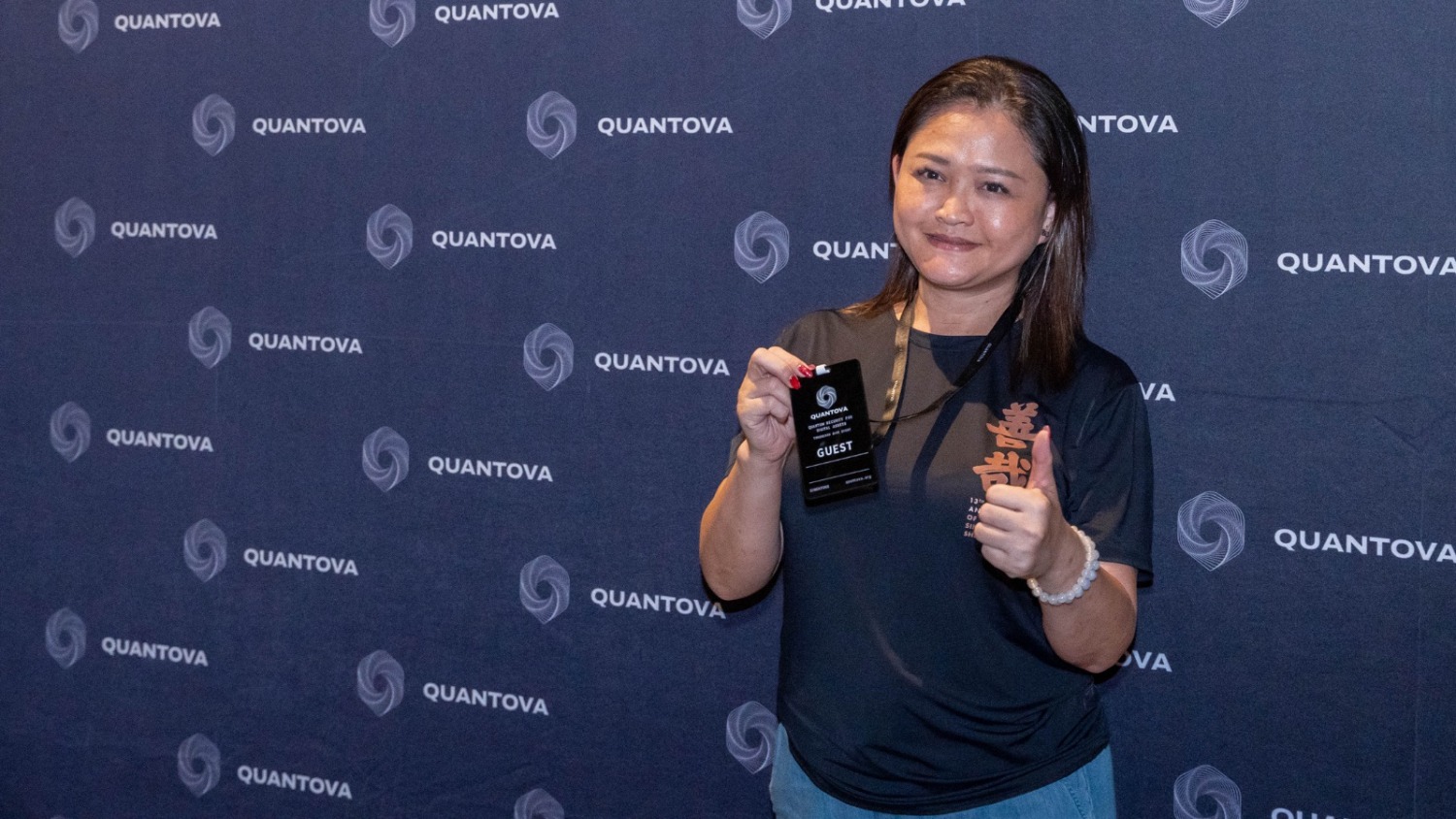
Most project events lead with price, roadmap, or airdrop. Quantova led with the product. The room’s backdrop carried the message plainly, quantum security for digital assets, and the opening slide set the tone for the night. A sovereign post quantum Layer-1, built from scratch, designed to keep digital assets safe when the cryptography underneath today’s blockchains no longer holds.
The distinction matters. Public-key cryptography, the mathematics that lets a wallet prove ownership of funds, is the single part of the blockchain stack that quantum computing most directly threatens. The standards bodies agree a transition is coming, and most chains are still drafting migration plans to retrofit quantum resistance onto systems that were never designed for it. Quantova’s pitch is that it has nothing to migrate, because it started quantum safe. Every signature on the network uses NIST-standardized post quantum cryptography from the first block.
The conversations were the point
What made the evening land was not the slides. It was the room. The crowd skipped the small talk and went straight for the technical questions that actually separate a serious protocol from a narrative. How does the consensus work. Why write the cryptography from scratch instead of bolting on a library. What exactly does post quantum security protect, and what does it not.
Those are the right questions, and they are the reason Quantova exists. The project has built its entire stack around the assumption that classical cryptography will eventually fail, a consensus layer that certifies blocks with aggregated post quantum signatures, a virtual machine designed around post quantum primitives rather than retrofitted for them, a purpose-built smart contract language, and a hash-based prover that avoids the elliptic-curve math quantum computers are expected to break.
Security set the tone
Fittingly for an event about security, the night welcomed Dmytro Matviiv, CEO of HackenProof, whose presence reinforced the theme. When the conversation in the room is about how a system holds up under adversarial pressure. That tone, technical, skeptical, grounded is exactly the audience Quantova set out to attract.
Why Singapore, why now
TOKEN2049 is the largest gathering in crypto, which makes it the right place to make a claim that the rest of the industry is not yet ready to make. The quantum threat to digital assets is not science fiction, and it is not a problem that solves itself. It requires infrastructure built for it, on purpose, ahead of time.
Quantova used its side event to plant exactly that flag. Not a promise of future quantum resistance, but a network that is already running on it. For a room full of people who spend their days separating real engineering from marketing, that was the most interesting thing said all week.
The event was the first time Quantova gathered the community this way. Judging by the questions, the conversations, and the people who stayed late, it will not be the last.