Life cycle assessment shows PECO’s reusable block pallet generated 88% fewer greenhouse gas emissions than an average whitewood stringer pallet under the study assumptions
PECO Pallet Inc. (PECO), a North American pooled pallet provider, has completed a series of independently verified carbon and life cycle assessments, strengthening the environmental data available to customers and stakeholders about its circular pallet pooling model.
Working with science-based sustainability consultancy Tunley Environmental, PECO established its first companywide greenhouse gas (GHG) inventory covering Scope 1, 2 and 3 emissions, aligned with the GHG Protocol and BS EN ISO 14064-1. The work established a 2023 baseline, with subsequent verification of the company’s 2024 and 2025 GHG inventories to support ongoing measurement and reporting, alongside the development of a roadmap towards net zero by 2050 and near-term emissions reduction targets for Scope 1 and 2 activities.
Alongside this, PECO completed an externally verified cradle-to-grave Life Cycle Assessment (LCA) of its reusable block pallet in accordance with ISO 14067, ISO 14040 and ISO 14044. The assessment was undertaken to better understand the environmental impacts associated with the pallet throughout its life cycle.
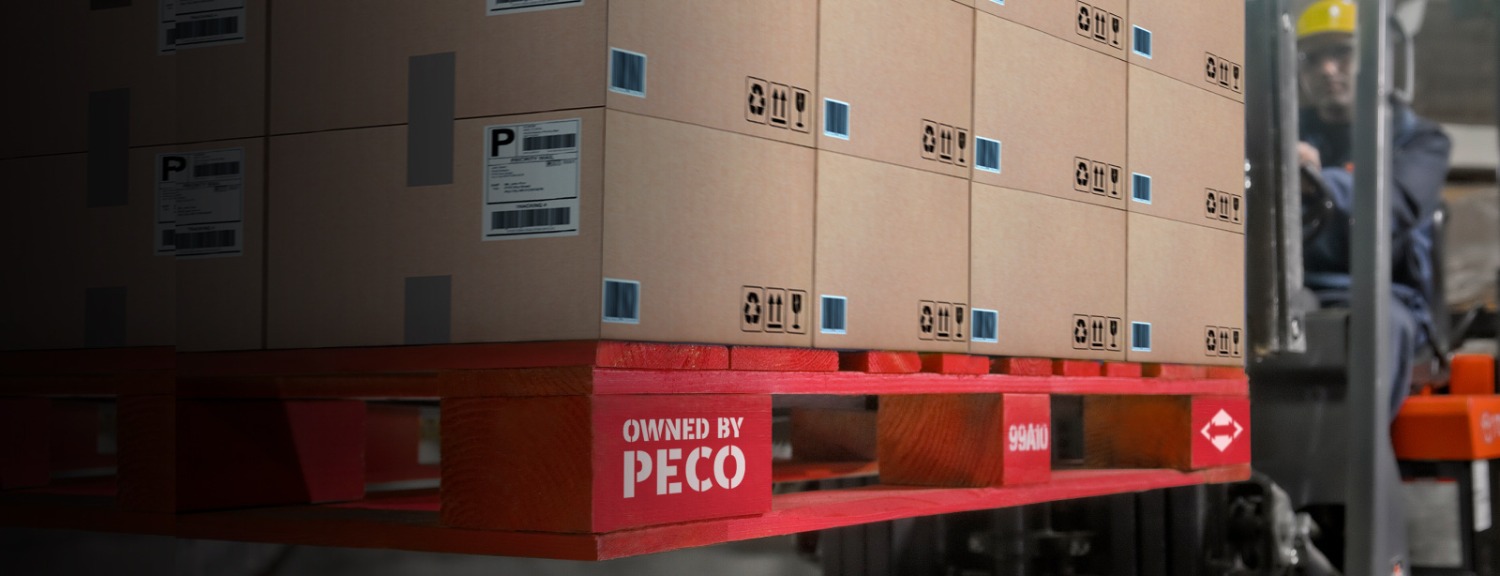
Under the study assumptions, the comparative assessment found that the PECO reusable block pallet generated 88% fewer greenhouse gas emissions than an average whitewood stringer pallet. This equated to an estimated reduction of approximately 108.2 kg CO₂e for every 100,000 lbs of product moved, or 8.2 times lower greenhouse gas emissions than the reference pallet.
The assessment programme has also helped inform wider environmental improvement initiatives across PECO’s depot network. These initiatives include evaluating electric forklift feasibility, installing LED lighting, improving ventilation and paint booth efficiency, investing in wood-waste shredders and balers, and introducing filtered water refill stations to help reduce single-use plastic consumption.
PECO has also strengthened resource recovery by reusing suitable pallet components during repairs, repurposing shredded wood, recycling removed nails, and recovering cardboard and plastic packaging where possible. These activities support the company’s reusable pallet model and broader circular economy approach by helping to maximise the value of materials already in use.
Emily Alexander, Senior Associate Scientist at Tunley Environmental, said:
“Reliable environmental data enables organisations to make informed decisions and communicate environmental performance with increased confidence. By completing independently verified greenhouse gas and life cycle assessments, PECO has established an evidence base that can support both internal strategy and customer engagement.”
Katie Bishop, Sustainability Program Manager at PECO Pallet Inc. states:
“Completing these verified assessments marks an important milestone in our sustainability journey. The findings strengthen our understanding of where we can create environmental value today and where we can improve tomorrow. As demand for transparent, science-based sustainability information continues to grow, we’re committed to providing customers and stakeholders with data they can trust.”
As customers, regulators and supply chain partners increasingly seek transparent, evidence-based environmental data, independently verified assessments are becoming useful for organisations looking to understand, measure and communicate their environmental impacts using recognised international standards.