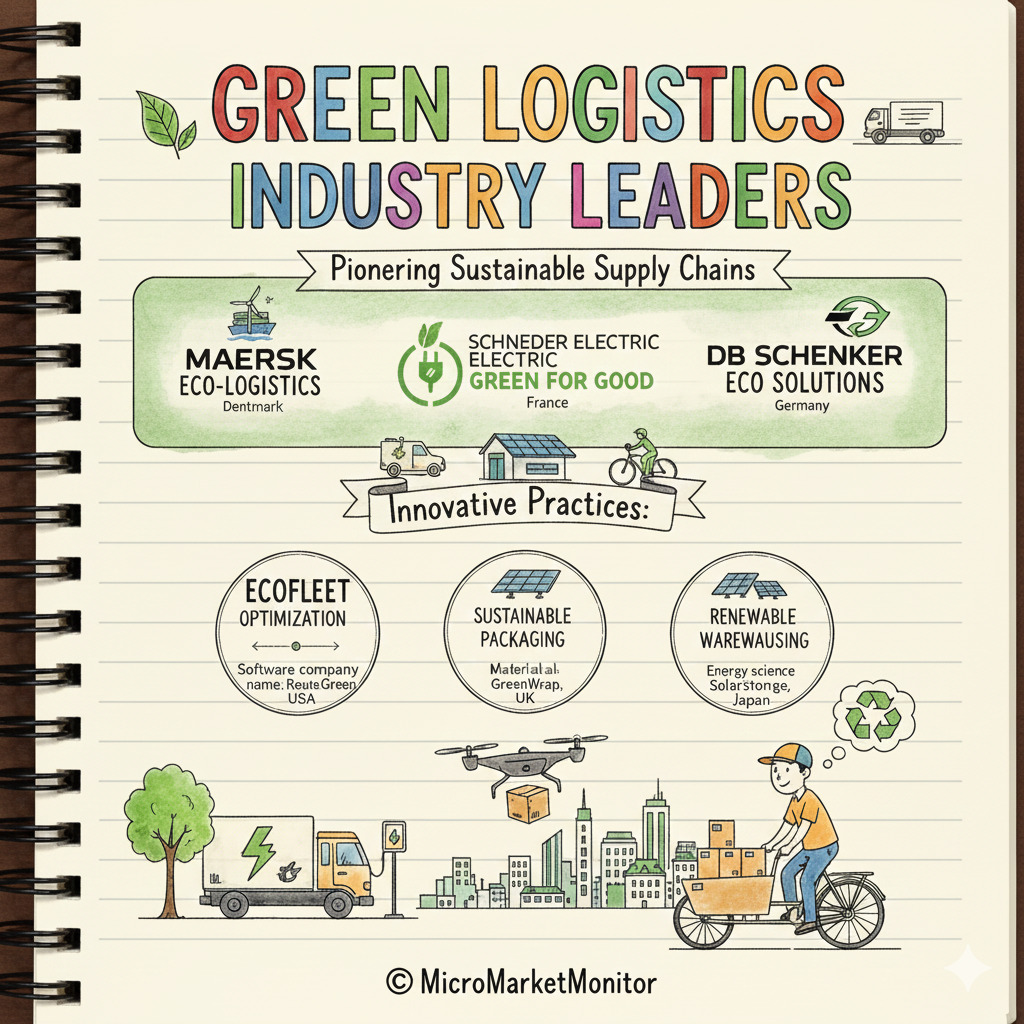
The global green logistics market is experiencing unprecedented growth, with MicroMarketMonitor’s latest research projecting the market to expand from USD 55.9 billion in 2025 to USD 78.9 billion by 2030, representing a robust compound annual growth rate of 7.1% during the forecast period. This remarkable expansion signals a fundamental transformation in how businesses approach environmental sustainability across global supply chains.
Download PDF Brochure: https://www.micromarketmonitor.com/contact/1483889797-download_pdf_brochure.html
Executive Summary: A New Era in Sustainable Logistics
The convergence of stringent environmental regulations, technological innovation, and evolving corporate responsibility is reshaping the logistics landscape. Companies face mounting pressure from regulators globally, with frameworks like the EU’s Corporate Sustainability Reporting Directive and SEC climate rules requiring standardized emissions tracking. This regulatory momentum, combined with consumer demand for eco-friendly practices, is propelling the green logistics market into a transformative growth phase.
According to MicroMarketMonitor’s comprehensive analysis, carbon accounting and reporting platforms dominate the green logistics solutions landscape, driven by their critical role in helping companies meet compliance requirements while reducing their environmental footprint. The research identifies retail and e-commerce as the leading end-use segment, accounting for substantial market share due to increasing demands for sustainable packaging and carbon-neutral last-mile delivery solutions.
Market Dynamics: Forces Driving the Green Revolution
Regulatory Imperatives Accelerate Adoption
Environmental legislation worldwide is creating powerful incentives for green logistics adoption. The EU’s Fit-for-55 package, including FuelEU Maritime and Alternative Fuels Infrastructure Regulation, alongside the U.S. Inflation Reduction Act, have established clear compliance timelines and direct incentives for cleaner freight operations. These regulatory frameworks are no longer optional considerations but essential business requirements.
Logistics companies must now comply with stringent emission standards, waste management protocols, and energy efficiency requirements, transforming sustainability from a competitive advantage into a fundamental operational necessity.
Technology as the Great Enabler
Technological advancement stands as perhaps the most significant catalyst for market growth. Advances in battery energy density, Internet of Things-enabled telematics for emissions monitoring, artificial intelligence-powered route optimization, and real-time visibility platforms are making measurable emissions reductions both technically and commercially feasible.
Digital carbon tracking capabilities now enable corporate Scope 3 reporting and supplier engagement at scale, turning sustainability metrics into actionable business intelligence. Companies implementing these technologies report significant operational efficiencies alongside environmental benefits.
Corporate Commitments Transform Supply Chains
The business case for green logistics extends beyond regulatory compliance. Large shippers increasingly make procurement decisions contingent on emissions transparency, transforming sustainability into a revenue opportunity for green-capable third-party logistics providers. This shift in procurement criteria creates competitive pressure throughout the supply chain ecosystem.
Corporate net-zero pledges, amplified by investor focus on Environmental, Social, and Governance criteria, are redirecting substantial capital toward green fleet electrification, sustainable aviation fuel procurement, and energy-efficient warehousing infrastructure.
Solution Landscape: Carbon Accounting Leads the Charge
Carbon Accounting & Reporting Platforms Dominate
Carbon accounting and reporting platforms capture the largest solution share within the green logistics market, reflecting their indispensable role in regulatory compliance. These platforms provide the interoperability and scalability essential for logistics giants managing complex, multi-jurisdictional operations.
The solutions enable companies to track emissions across Scope 1, 2, and 3 categories, providing the granular data needed for both regulatory reporting and strategic decision-making. As reporting requirements intensify globally, demand for sophisticated carbon accounting capabilities continues to accelerate.
Emerging Technologies Drive Innovation
Analytics and artificial intelligence for predictive carbon tracking represent the fastest-growing solution segment. These advanced systems leverage machine learning algorithms to optimize routing, predict maintenance needs, and identify efficiency improvements before they become operational issues.
Carbon offset and trading services complement tracking capabilities, allowing companies to address residual emissions while working toward long-term reduction goals. Meanwhile, Environmental, Social, and Governance consulting services help organizations develop comprehensive sustainability strategies aligned with their unique operational contexts.
End-Use Industry Analysis: Retail and E-Commerce at the Forefront
Retail & E-Commerce Lead Market Adoption
The retail and e-commerce segment commands the largest market share, driven by several converging factors. The explosive growth of online shopping has intensified focus on last-mile delivery emissions, with consumers increasingly aware of the environmental impact of their purchasing decisions.
Major e-commerce platforms and retailers face mounting pressure to implement eco-friendly packaging solutions, optimize delivery routes to reduce vehicle emissions, and transition to electric vehicle fleets for urban deliveries. Companies that successfully communicate their sustainability efforts often see enhanced brand loyalty and customer retention.
Food & Agriculture: The Fastest-Growing Segment
The food and agriculture sector emerges as the fastest-growing end-use segment, propelled by stringent traceability mandates and rapid biofuel adoption. Regulatory requirements for supply chain transparency in food logistics, combined with growing adoption of renewable fuels, position this sector for exceptional growth.
Cold chain logistics face particular scrutiny due to their energy-intensive nature, driving innovation in refrigeration technologies and renewable energy integration. Companies operating in this space increasingly invest in temperature-controlled electric vehicles and solar-powered cold storage facilities.
Manufacturing and Beyond
Manufacturing, pharmaceuticals and healthcare, and energy sectors round out the major end-use categories. Each faces unique sustainability challenges and opportunities, from optimizing industrial supply chains to ensuring temperature-sensitive pharmaceutical products maintain integrity throughout carbon-neutral distribution networks.
Geographic Landscape: Asia-Pacific Dominates, North America Accelerates
Asia-Pacific: The Current Market Leader
Asia-Pacific dominates the green logistics market, driven by China’s e-commerce surge and India’s green infrastructure initiatives. The region’s massive manufacturing hubs and state-backed electric vehicle fleet expansions create scale advantages that currently outpace more mature markets in Europe and North America.
China’s dual-carbon goals and India’s commitment to reducing emissions intensity by 45% by 2030 provide strong policy support for green logistics adoption. Rapid urbanization throughout Southeast Asia further amplifies demand for sustainable supply chain solutions.
Request Sample Pages of Report: https://www.micromarketmonitor.com/contact/1483889797-request_sample.html
North America: The Fastest-Growing Region
North America experiences the fastest regional growth rate, led by sustainable port initiatives in the United States and carbon tax incentives in Canada. Corporate net-zero commitments from major retailers and manufacturers, combined with technological leadership in artificial intelligence-driven routing solutions, position North America for exceptional growth.
Mexico’s expanding manufacturing sector under the United States-Mexico-Canada Agreement brings additional momentum, with nearshoring trends creating opportunities to implement green standards from the ground up rather than retrofitting existing operations.
Europe: Mature Market with Deep Expertise
Europe’s established environmental regulatory framework and deep expertise in sustainability practices continue to influence global standards. The European Green Deal and related initiatives provide clear roadmaps for logistics decarbonization, while the region’s dense transportation networks facilitate efficient implementation of multimodal green solutions.
Deployment Models: Cloud-Based Solutions Gain Momentum
The market segments across three primary deployment models, each serving distinct operational requirements:
Cloud-Based Software-as-a-Service platforms lead adoption due to their scalability, lower upfront costs, and ease of integration with existing systems. These solutions enable rapid deployment and continuous updates as regulatory requirements evolve.
On-Premise deployments appeal to organizations with stringent data security requirements or specific integration needs with legacy systems. While requiring higher initial investment, these solutions offer maximum control and customization.
Hybrid models combine cloud scalability with on-premise security, providing flexibility for organizations managing sensitive data while benefiting from cloud-based analytics and reporting capabilities.
Competitive Landscape: Industry Giants Lead Transformation
Market Leaders Drive Innovation
Industry leaders including DHL Supply Chain, United Parcel Service, FedEx Corporation, and A.P. Moller-Maersk drive sustainability through innovations like electric fleets, AI-driven carbon tracking, and green warehousing. Strategic initiatives demonstrate commitment to decarbonization goals while maintaining operational excellence.
Deutsche Post DHL Group’s acquisition of DB Schenker and Maersk’s investment in autonomous vessels exemplify how major players position themselves at the forefront of supply chain decarbonization. These companies leverage their scale to negotiate favorable terms with technology providers and influence industry standards.
Mid-Market and Regional Players Innovate
Regional logistics providers and specialized sustainable logistics firms create competitive pressure through innovative approaches and niche expertise. These organizations often move more quickly to implement emerging technologies and serve as proving grounds for solutions that eventually scale to larger operations.
Third-party logistics providers increasingly differentiate themselves through sustainability credentials, recognizing that green capabilities represent both risk mitigation and revenue opportunities in an evolving market landscape.
Investment and Opportunity Landscape
High-Growth Opportunity Areas
Several segments present particularly compelling growth opportunities:
Digital Carbon Services: Software-as-a-Service platforms for carbon accounting, Scope 3 analytics, and AI-powered route and fleet optimization deliver measurable fuel and emissions savings at enterprise price points, creating substantial revenue potential.
Urban Last-Mile Electrification: Electric delivery vans, cargo bikes, and micro-fulfillment centers address the rapidly growing demand from e-commerce while meeting urban emissions regulations. This segment benefits from converging policy support and consumer preferences.
Green Shipping Corridors: Public-private partnerships linking ports and major trade lanes create concentrated markets for low-carbon marine fuels and bundled services, including fuel supply, port handling, and green shipping contracts.
Energy-Efficient Warehousing: Solar photovoltaic installations combined with battery storage and smart HVAC systems deliver durable operational expense savings with attractive payback periods, particularly in markets with high electricity costs.
Investment Considerations
Public funding programs and tax credits, exemplified by Inflation Reduction Act support for fleet electrification and charging infrastructure, lower the total cost of ownership for green logistics solutions. These incentives create favorable conditions for organizations considering sustainability investments.
However, investors and operators must navigate several considerations:
- Infrastructure readiness varies significantly by geography, affecting implementation timelines and costs
- Technology maturity differs across applications, with heavy-duty long-haul transport lagging passenger vehicle electrification
- Policy volatility in some markets introduces uncertainty requiring flexible implementation strategies
- Fuel availability constraints for sustainable aviation fuel, renewable diesel, and green hydrogen may limit near-term scaling in certain segments
Challenges and Barriers to Adoption
Economic and Operational Hurdles
High capital costs associated with transitioning from conventional fleets to electric or hydrogen-powered vehicles limit quicker adoption, particularly for small and medium-sized logistics providers. While long-term operational savings often justify investments, the upfront financial burden remains substantial.
Infrastructure gaps compound these challenges. Charging stations for electric trucks, hydrogen fueling corridors, and sustainable aviation fuel production facilities remain insufficiently scaled, creating regional disparities in adoption capabilities. Developing economies continue relying heavily on diesel-powered fleets due to lower upfront costs and abundant fossil fuel supply.
Regulatory and Standardization Challenges
Regulatory fragmentation across geographies complicates multinational logistics operations, as companies must comply with different reporting standards and green certifications across markets. While the European Union enforces stringent carbon reporting requirements, many regions lack harmonized emissions frameworks, creating complexity for global operators.
Data and measurement standardization challenges further complicate adoption. Inconsistent Scope 3 measurement practices, fragmented reporting standards, and variable supplier data quality hinder enterprise-wide carbon accounting and auditing efforts.
Market Dynamics and Customer Behavior
Customer price sensitivity slows adoption, as many shippers in low-margin industries remain unwilling to pay premium pricing for low-carbon logistics services. Without widespread consumer willingness to absorb higher costs, service providers struggle to scale sustainable offerings profitably.
Technology maturity varies across applications. Battery capacity constraints in heavy-duty trucking, limited biofuel supply, and nascent hydrogen logistics chains currently limit scaling potential in certain segments, requiring continued research and development investment.
Future Outlook: Sustainable Growth Trajectory
Market Projections Through 2030
With rising urbanization and net-zero commitments, the market is positioned for sustained growth driven by innovative, low-carbon logistics solutions. The pathway from USD 55.9 billion in 2025 to USD 78.9 billion by 2030 reflects both organic market expansion and structural transformation of logistics operations.
Several factors will influence this growth trajectory:
- Continued regulatory tightening across major economies will mandate rather than incentivize green logistics adoption
- Technology cost curves for electric vehicles, batteries, and renewable fuels continue improving, enhancing economic viability
- Infrastructure investments by governments and private sector participants will reduce deployment barriers
- Consumer awareness and preferences increasingly favor brands demonstrating genuine sustainability commitments
Emerging Trends to Watch
Autonomous and Connected Vehicles: The convergence of electrification and autonomous technology promises significant efficiency gains and emissions reductions through optimized routing and platooning capabilities.
Circular Economy Integration: Reverse logistics and closed-loop supply chains gain prominence as companies seek to maximize resource utilization and minimize waste throughout product lifecycles.
Blockchain for Transparency: Distributed ledger technologies enable unprecedented supply chain visibility, allowing stakeholders to verify sustainability claims and track carbon footprints with confidence.
Alternative Fuel Maturation: Continued development of sustainable aviation fuel, renewable diesel, and hydrogen infrastructure will unlock decarbonization in currently challenging segments like long-haul trucking and aviation.
Methodology and Research Approach
MicroMarketMonitor’s comprehensive analysis employed rigorous research methodologies combining extensive secondary research with targeted primary interviews across the value chain. The study examined market dynamics across 15+ countries, incorporating data from over 3,700 product literature sources, annual reports, and industry statements.
The research utilized both top-down and bottom-up approaches to ensure accuracy in market sizing and segmentation. Data triangulation techniques validated findings across multiple sources, while primary research with C-suite executives, procurement leaders, and industry experts provided qualitative insights into market trends and future directions.
Key Stakeholders and Industry Participants
The green logistics ecosystem encompasses diverse stakeholders:
- Logistics Service Providers implementing sustainable operations across their networks
- Technology and Software Providers developing carbon accounting, analytics, and optimization solutions
- Electric Vehicle and Fuel Suppliers enabling fleet electrification and alternative fuel adoption
- Regulatory Bodies and Governments establishing frameworks and incentives for sustainability
- Industry Associations and NGOs promoting best practices and facilitating knowledge sharing
- Sustainability Consultants guiding organizations through transformation journeys
- Research and Development Institutes advancing technologies and methodologies
- Environmental Certification Agencies validating claims and establishing standards
Get Complete Report @ https://www.micromarketmonitor.com/offerings/checkout/1483889797/single_license
Embracing the Green Logistics Imperative
The transformation of global logistics operations represents both a challenge and an opportunity for organizations across industries. As regulatory requirements intensify, technology capabilities mature, and stakeholder expectations evolve, green logistics transitions from competitive differentiator to operational necessity.
Organizations should consider several immediate actions:
- Assess Current State: Conduct comprehensive emissions audits across Scope 1, 2, and 3 categories to establish baseline measurements and identify highest-impact opportunities
- Develop Strategic Roadmaps: Create phased implementation plans aligning sustainability goals with operational capabilities and financial resources
- Invest in Technology: Deploy carbon accounting platforms and optimization tools providing visibility and control over emissions
- Engage Supply Chain Partners: Collaborate with suppliers and service providers to extend sustainability practices throughout the value chain
- Monitor Regulatory Developments: Stay informed about evolving compliance requirements across operating geographies to ensure readiness
- Communicate Progress: Transparently report sustainability metrics and progress toward goals to stakeholders including customers, investors, and regulators