Failed subscription payments could lead to 9% revenue loss for small businesses
New Ecommpay playbook reveals how ‘invisible retention’ at the payment layer can stop failed payments becoming lost customers
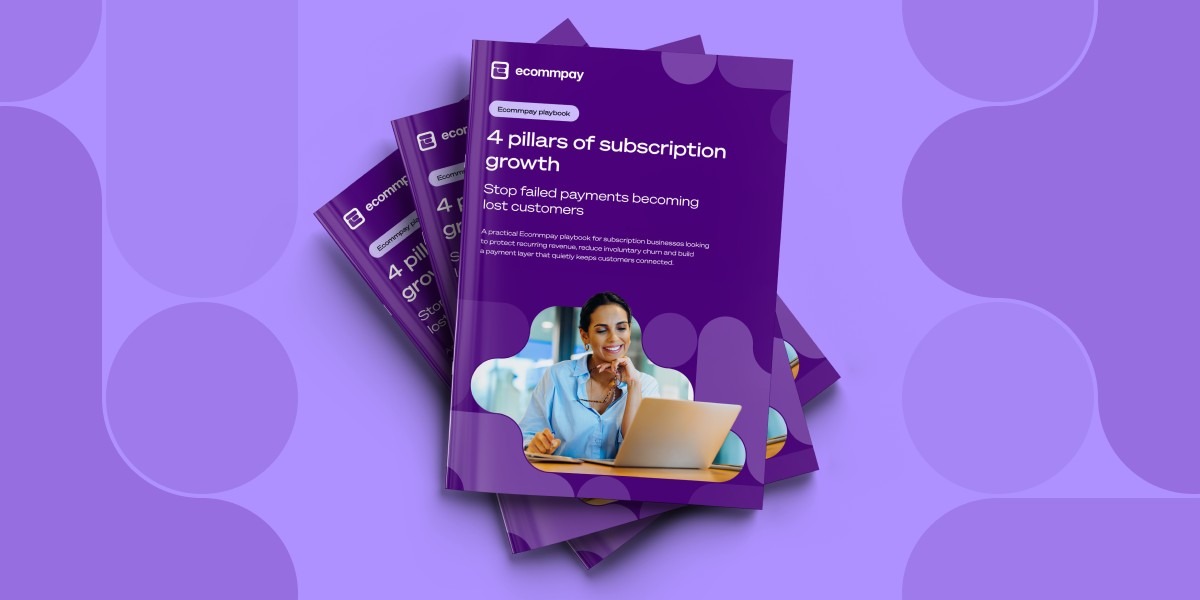
Offering subscriptions is a fundamental component for many small businesses – however a failed payment can be a key point of failure, according to a new guide published by inclusive global payments platform, Ecommpay. 4 Pillars of Subscription Growth: Stop Failed Payments Becoming Lost Customers identifies that 7% of charges across recurring billing fail on the first attempt and subscription businesses lose an average of 9% of revenue to failed payments. With 77% of consumers now actively auditing their subscriptions, it’s vital that small businesses ensure their payments infrastructure isn’t the cause of failure.
Research by Ecommpay found that e-commerce businesses of all sizes are losing customers because their payment infrastructure is silently pushing subscribers towards cancellation. A single failed subscription payment can lead a customer to question whether to go through the process of amending the payment method or take the simpler route of cancelling the subscription altogether.
The Ecommpay playbook provides practical guidance on protecting recurring revenue, reducing avoidable churn and keeping subscriptions running smoothly.
“Consumers must be given the facility to cancel a subscription if they no longer want the product or service, but the reality is that many do not cancel because the product disappoints them,” explained Luke Pierce Ionides, Small Business Community Executive, Ecommpay. “Sometimes they leave because the payment layer gives them a reason to reconsider which is why payment infrastructure that keeps customers connected when billing fails in the background is vital. We call this invisible retention.”
Invisible retention is not about preventing customers from cancelling. It is about ensuring that customers who intend to stay are not lost to avoidable payment failures such as expired card details, temporary funding shortfalls or network timeouts. Customers always retain full visibility of their subscriptions and the ability to cancel at any time. No payment recovery action is taken without the customer’s prior authorisation, and all subscription management controls remain accessible to the customer at all times.
“New UK consumer protection rules expected to come into force in Spring 2027 will make transparency, renewal reminders and simple cancellation processes mandatory for every subscription business,” added Luke Pierce Ionides. “Ecommpay for Small Businesses complements these requirements, ensuring that payment recovery operates alongside – not in place of – the transparency and consumer control that the new rules demand.”
The Ecommpay playbook sets out four practical pillars that turn payments from a back-office function into a retention engine while maintaining full compliance with consumer rights:
- Automated retries can recover 15–30% of initially failed transactions before the customer needs to take any manual action. Retries operate within scheme rules and the customer’s existing payment authorisation.
- Advanced tokenization keeps card credentials updated automatically in the background, so billing continues without any customer action, even when a card is expired or replaced. This operates through card scheme Account Updater services with issuer and cardholder consent frameworks.
- Direct Debit programmes can achieve success rates above 95%⁵ , while reducing processing costs on high-ticket transactions and protecting payers’ right to a full and immediate refund in the event of an error.
- Variable Recurring Payments (VRPs) let customers authorise recurring collections within limits they control, offering merchants instant settlement, no card expiry, no interchange fees and no card chargebacks in the traditional card scheme sense.
Ecommpay for Small Businesses is providing SMEs and micro enterprises with access to Ecommpay’s full payment infrastructure and dashboard functionality. Payments are available in any currency, and as well as recurring payments for subscriptions, payment types available include card payments, Apple Pay and Google Pay, pay-ins, payment links and refunds. Designed and built by a proven, secure and SME-focused payments provider, the solution effectively and efficiently meets the needs of even the smallest merchant, ensuring they remain compliant and helping ambitious businesses to reach their potential.