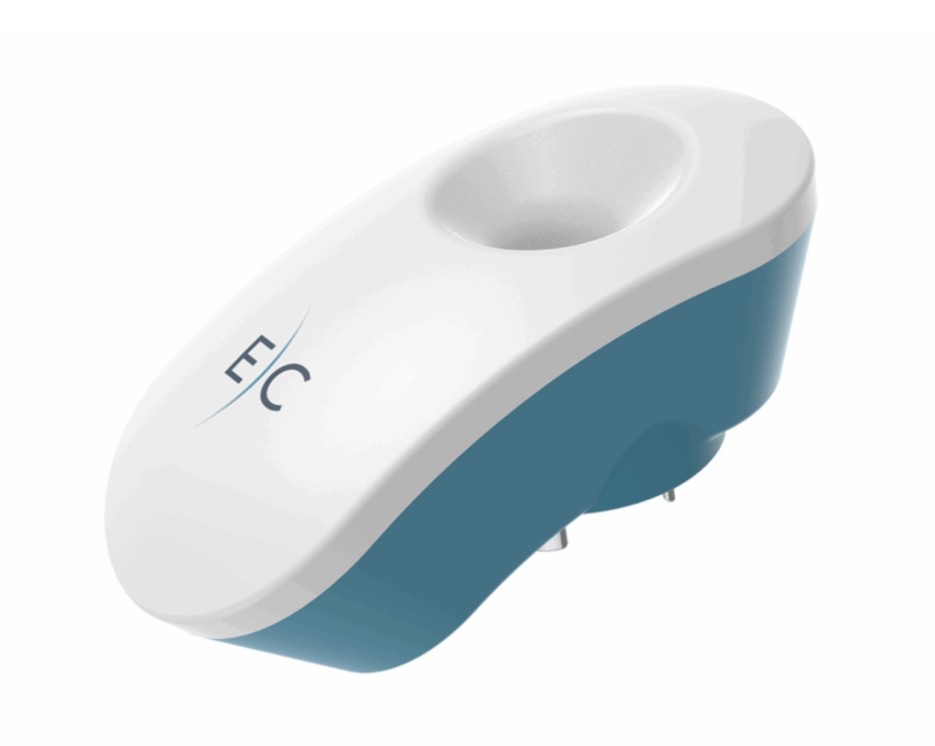
EyeCool Therapeutics today announced the publication of the first randomized, double‑masked, multicenter clinical trial evaluating its investigational ocular surface cooling device for the treatment of chronic ocular surface pain (COSP) in Ophthalmology and Therapy. The study showed that a single in‑office treatment produced durable and clinically meaningful reductions in eye pain, along with significant improvement in corneal sensitivity, in patients with peripheral‑dominant pain phenotypes.
The trial, “A Randomized Double‑Masked Study Evaluating Safety and Efficacy of a Novel Topical Cooling Device for Chronic Ocular Surface Pain” (Galor et al., Ophthalmol Ther, 2026; doi:10.1007/s40123‑026‑01392‑3), enrolled adults with COSP to receive a one‑time, 4‑minute treatment with either the active or a sham handheld cooling device.
In this prospective randomized, double masked controlled study, unilateral treatments were administered to 31 subjects with follow‑up to 8 weeks. Across three patient‑reported outcome measures, the active treatment arm demonstrated greater reductions in eye pain at week 8 than the sham arm, with all three exceeding thresholds for clinically meaningful improvement.
In a pre‑specified post hoc analysis of eyes with peripheral‑dominant pain, defined as a reduction in pain from a proparacaine challenge, eye pain severity improved significantly versus sham at week 8 (nominal p = 0.042) in one instrument, and overall eye pain showed a strong trend toward statistical significance (nominal p = 0.088) in another.
The device was well tolerated, with no serious adverse events reported. The most common adverse event was transient conjunctival hyperemia.
“The publication of this randomized, double‑masked study is an important step for patients living with chronic ocular surface pain,” said Anat Galor, MD, MSPH, Bascom Palmer Eye Institute, University of Miami, and lead author of the study. “Not only did we see clinically meaningful improvements across multiple pain instruments, but we also observed that baseline corneal sensitivity, initially below normal in both arms, statistically significantly improved only in the actively treated group. This technology may address a critical unmet need in this population with limited effective options.”
Cristos Ifantides, MD, MBA, EyeCool’s Chief Medical Advisor added, “For the first time, we have published RCT data strongly suggesting that EyeCool’s investigational cooling device can deliver durable, clinically meaningful pain reduction and improve corneal sensitivity in peripheral‑dominant COSP, with no serious safety signals.”
“This publication is a pivotal milestone for EyeCool and for the field of ocular surface pain,” said Ruben F. Salinas, PhD, CEO of EyeCool Therapeutics. “As we advance ETX‑4143 through development, our goal is to build a robust body of evidence that will support physicians in offering a precise, in‑office, non‑pharmacologic option for those suffering from this debilitating condition.”