-
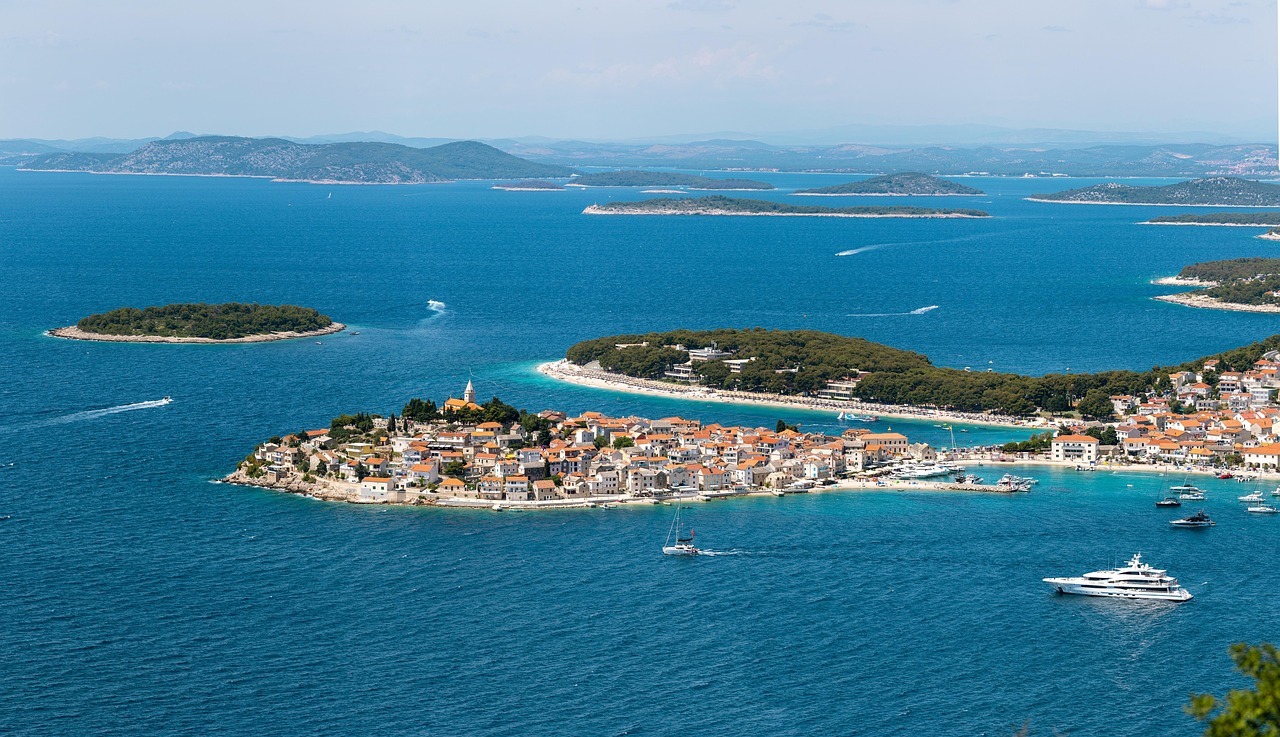
Croatia ranks first as the best coastal EU country to live in, scoring 85.76 out of 100. It performs well across all six factors, and has the lowest rate of perceived local crime, violence or vandalism of any country, at 1.4%.
-
Cyprus comes in fourth place, being the warmest and sunniest country in the list, with a mean temperature of 21.2°C and 4,053 hours of annual sunshine per year.
-
Romania ranks third overall, ahead of more popular coastal destinations such as Portugal, which rounds out the top 10, and Spain (13th place).
-
Bulgaria offers the highest personal tax competitiveness score, scoring a perfect 100 out of 100.
For anyone dreaming of trading their daily commute for sea views, a slower pace of life and fresh produce from a local market, a new study has named the coastal European country that ticks every box: Croatia.
That’s according to Cyprus-based Philippou Law Firm, which conducted an index study to rank 22 coastal EU countries offering the best overall quality of life. Each country was scored out of 100 based on six factors: average household spending per person, housing costs as a proportion of household income, personal tax competitiveness, perceived local crime, violence or vandalism, annual sunshine, and mean temperature.
Croatia claims the top spot with the highest overall score of 85.76 out of 100. The country offers one of Europe’s most financially accessible options for those looking to relocate. Average household spending per person is €12,410 a year, one of the lowest of the entire ranking. Housing costs account for only 11.5% of income, the second lowest in the study.
Malta placed second, scoring 80.91 out of 100. As the second sunniest country in the study, with 3,963 hours of annual sunshine per year, the island also offers the highest mean temperature outside of Cyprus at 20.7°C. It also scores very highly on personal tax competitiveness with a score of 93.8/100, which measures how simple and favourable a country’s personal tax system is for individuals.
Perhaps not the first country that comes to mind for coastal living, Romania surprises with third place overall (78.92 out of 100). Average household spending per person is the lowest in the index, at €11,460 per year. Romania’s tax system is almost as favourable as Bulgaria’s: the second highest personal tax score in the study, at 97.7/100.
Those who love sunshine should consider Cyprus, which takes fourth place with a score of 75.52. It is the warmest and sunniest country in the study, with a mean temperature of 21.2°C and 4,053 hours of annual sunshine per year. Housing is among the most affordable too, with costs accounting for just 10.9% of household income, the lowest in the entire index.
Interestingly Portugal ranks 10th overall (65.71 out of 100). It has both the sixth highest sunshine, at 3,698 hours per year, and the sixth highest mean temperature, at 17.3°C, and ranks in the upper half of the pack, at 10th best for perceived local crime (6.9%). It is let down by its personal tax score (58.2 out of 100), however, with Portugal placing sixth from the bottom for this factor.
The Top Coastal Countries in Europe to Relocate
|
Rank |
Country |
Average household spending per person each year |
Housing costs as a percentage of income |
Personal tax competitiveness score (0-100) |
Percentage of people perceiving crime in their area |
Sunshine hours per year |
Mean temperature(°C) |
Index Score (/100) |
|
1. |
Croatia |
€12,410 |
11.50% |
83.6 |
1.40% |
3,600 |
17.2 |
85.76 |
|
2. |
Malta |
€17,570 |
12.60% |
93.8 |
7.40% |
3,963 |
20.7 |
80.91 |
|
3. |
Romania |
€11,460 |
15.60% |
97.7 |
5.90% |
3,331 |
14.3 |
78.92 |
|
4. |
Cyprus |
€20,080 |
10.90% |
83.8 |
9.60% |
4,053 |
21.2 |
75.52 |
|
5. |
Slovenia |
€16,100 |
12.80% |
77.1 |
6.80% |
3,314 |
15.3 |
70.20 |
|
6. |
Bulgaria |
€9,250 |
18.10% |
100 |
15.60% |
3,375 |
14.2 |
70.07 |
|
7. |
Poland |
€12,730 |
15.80% |
72.6 |
2.80% |
2,831 |
10.8 |
67.79 |
|
8. |
Lithuania |
€15,000 |
15.30% |
78.1 |
2.70% |
2,807 |
10.3 |
66.96 |
|
9. |
Latvia |
€12,520 |
15.50% |
77.4 |
5.40% |
2,816 |
9.2 |
65.73 |
|
10. |
Portugal |
€16,050 |
16.30% |
58.2 |
6.90% |
3,698 |
17.3 |
65.71 |
|
11. |
Italy |
€21,320 |
14.10% |
62.4 |
6.40% |
3,724 |
17.4 |
63.92 |
|
12. |
Estonia |
€14,940 |
18.90% |
84.6 |
4.30% |
2,790 |
7.9 |
62.38 |
|
13. |
Spain |
€17,710 |
16.00% |
54.9 |
13.60% |
3,875 |
19.6 |
59.15 |
|
14. |
Greece |
€15,150 |
34.60% |
84.5 |
20.90% |
3,940 |
20.3 |
47.99 |
|
15. |
France |
€22,200 |
18.50% |
50.7 |
14.70% |
3,631 |
16.1 |
45.92 |
|
16. |
Belgium |
€26,670 |
17.60% |
72.0 |
12.40% |
2,666 |
12.0 |
41.28 |
|
17. |
Sweden |
€23,350 |
24.20% |
65.5 |
9.40% |
2,749 |
8.8 |
38.72 |
|
18. |
Ireland |
€28,120 |
16.20% |
52.5 |
9.60% |
2,486 |
11.1 |
36.48 |
|
19. |
Finland |
€24,210 |
21.10% |
59.6 |
11.50% |
2,776 |
7.1 |
35.57 |
|
20. |
Netherlands |
€26,680 |
19.90% |
57.3 |
16.70% |
2,733 |
11.8 |
31.04 |
|
21. |
Denmark |
€27,670 |
33.00% |
58.9 |
6.30% |
2,741 |
10.1 |
28.90 |
|
22. |
Germany |
€26,600 |
24.10% |
29.5 |
10.70% |
2,676 |
10.8 |
24.77 |
Nikolas Avgousti, Associate at Philippou Law Firm, commented:
“Relocating to a new country is one of the most significant decisions a person can make, yet the tax implications can be one of the most overlooked aspects. While salary and cost of living are of course important, the rate and simplicity of personal taxation can make a dramatic difference to how far your income stretches, and it’s something people often don’t think about until they’ve already made the move.
Countries like Croatia and Malta are becoming increasingly attractive to expats and remote workers not just for their climate and living costs, but because they also score strongly for personal tax competitiveness. Malta was rated third best for personal tax competitiveness in our study, while Croatia also performs well, meaning these countries should certainly be on your radar if you’re planning a move abroad.”