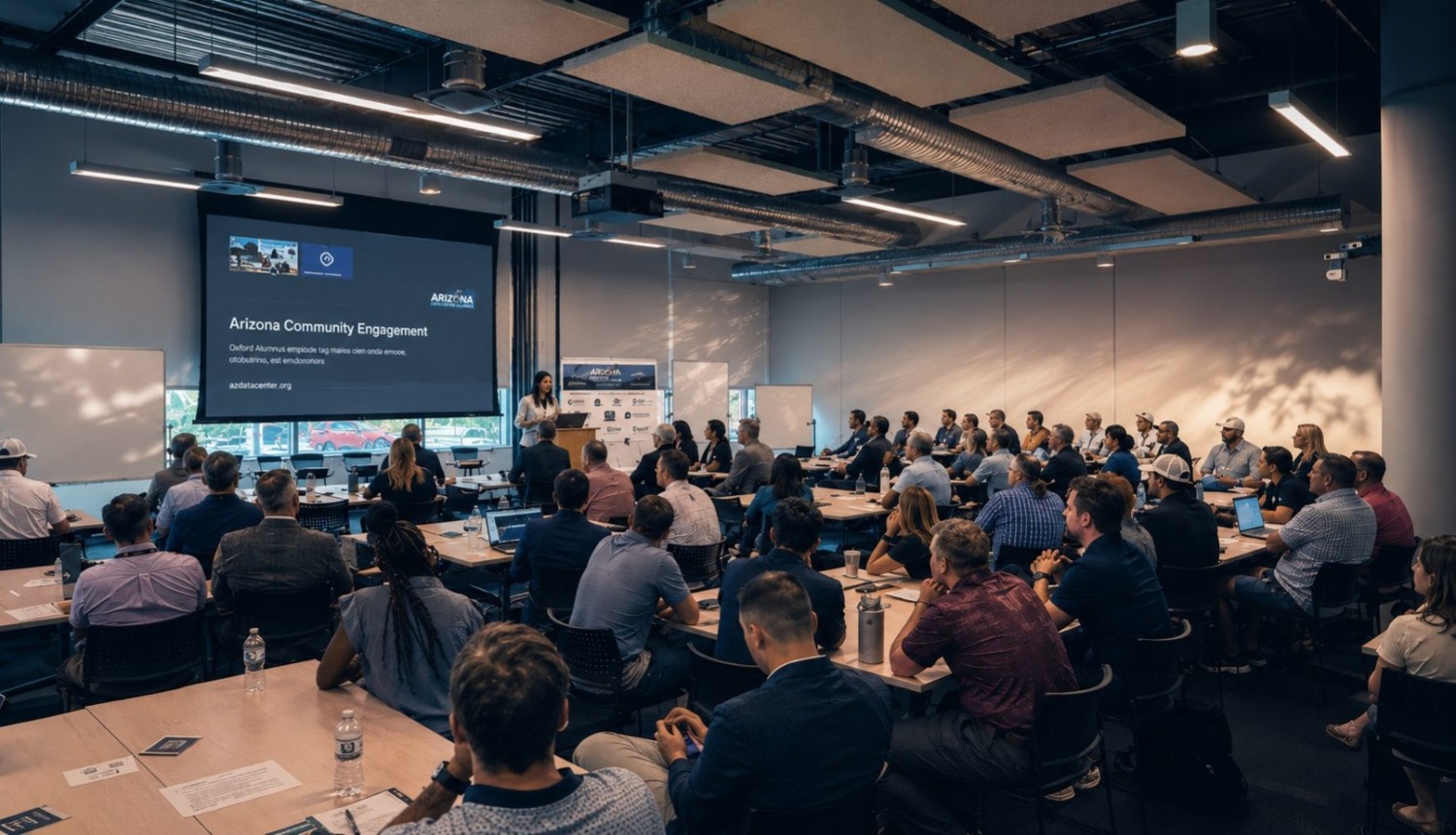
The Arizona Data Center Alliance hosted Building Community Trust in the Data Center Era on June 25 at ASU SkySong, convening more than 100 people for Arizona’s first industry-led, structured session focused on community engagement around data center growth. It was a working conversation, not a showcase, designed to put the people who make these decisions and the people affected by them in the same room.
The group included data center operators and customers, developers, utilities, mayors and county supervisors, economic development organizations, and community voices. Operators and customers included Microsoft and EdgeCore, while economic and infrastructure perspectives came from the Arizona Commerce Authority, the Greater Phoenix Economic Council, APS, and JLL.
The session was convened in response to growing calls for earlier, more transparent engagement around large-load energy users, including data centers. Governor Katie Hobbs’ Arizona Energy Promise Taskforce called for building community support through proactive engagement, and city leaders, including Phoenix Mayor Kate Gallego through her participation in the global data center pact, have raised similar questions about how growth should be shaped around community needs, resource impacts, affordability, and public trust.
The day opened with a plain-language overview of what data centers are, how they support everyday digital life, why Arizona has become a major market, and how the state got here, before any panel discussion began. From there the conversation moved to the issues residents raise most: water, power and grid timing, rates, transparency, jobs, noise, land use, and cumulative community impact.
“This work did not come out of a vacuum. Governor Hobbs’ Energy Promise Taskforce called for proactive community engagement around large-load energy users, and the Alliance took that seriously,” said Andrea Clinton, Director of Community Engagement for the Arizona Data Center Alliance. “Arizona communities are asking specific questions about water, power, rates, transparency, jobs, land use, and whether they have a meaningful voice before decisions feel final.”
A panel of local leaders, including Mayor Eric Orsborn of Buckeye, Mayor Keith Eaton of Florence, Mayor Andy Sutton of Eloy, and Pinal County Supervisor Rich Vitiello, spoke to where trust has broken down and what they need from developers earlier in the process. Local leaders emphasized that better engagement should not be confused with opposition to growth. “It’d be a bad day if we decided that we’re not building any data centers. I think we would lose on a lot of different issues,” Orsborn said.
Officials also made clear that communities need better information earlier in the process. Sutton said one of the first priorities should be making community benefits clear “before anything happens,” adding that “it cannot be a surprise to them.”
Jessica Western of the Institute for Rural Collaboration challenged the industry to move beyond one-way outreach. “Do not do an open house and call it collaboration, because you are going to lose trust,” Western said. “Collaboration means working together.”
A live poll of the room reinforced the message. Two-thirds of those polled said community engagement should begin before site selection, the earliest point in a project. Asked who should carry that responsibility, the top answer was everyone together: operators, developers, cities, utilities, and economic development groups. Asked what communities need most, the room pointed to honest discussion of tradeoffs and clearer information about water and power.
The Alliance will continue working with communities, local officials, utilities, operators, developers, and economic development organizations to build a practical framework for what good engagement should look like in Arizona. The next community conversation is scheduled for September 17, 2026, and the Alliance welcomes anyone who wants to take part.