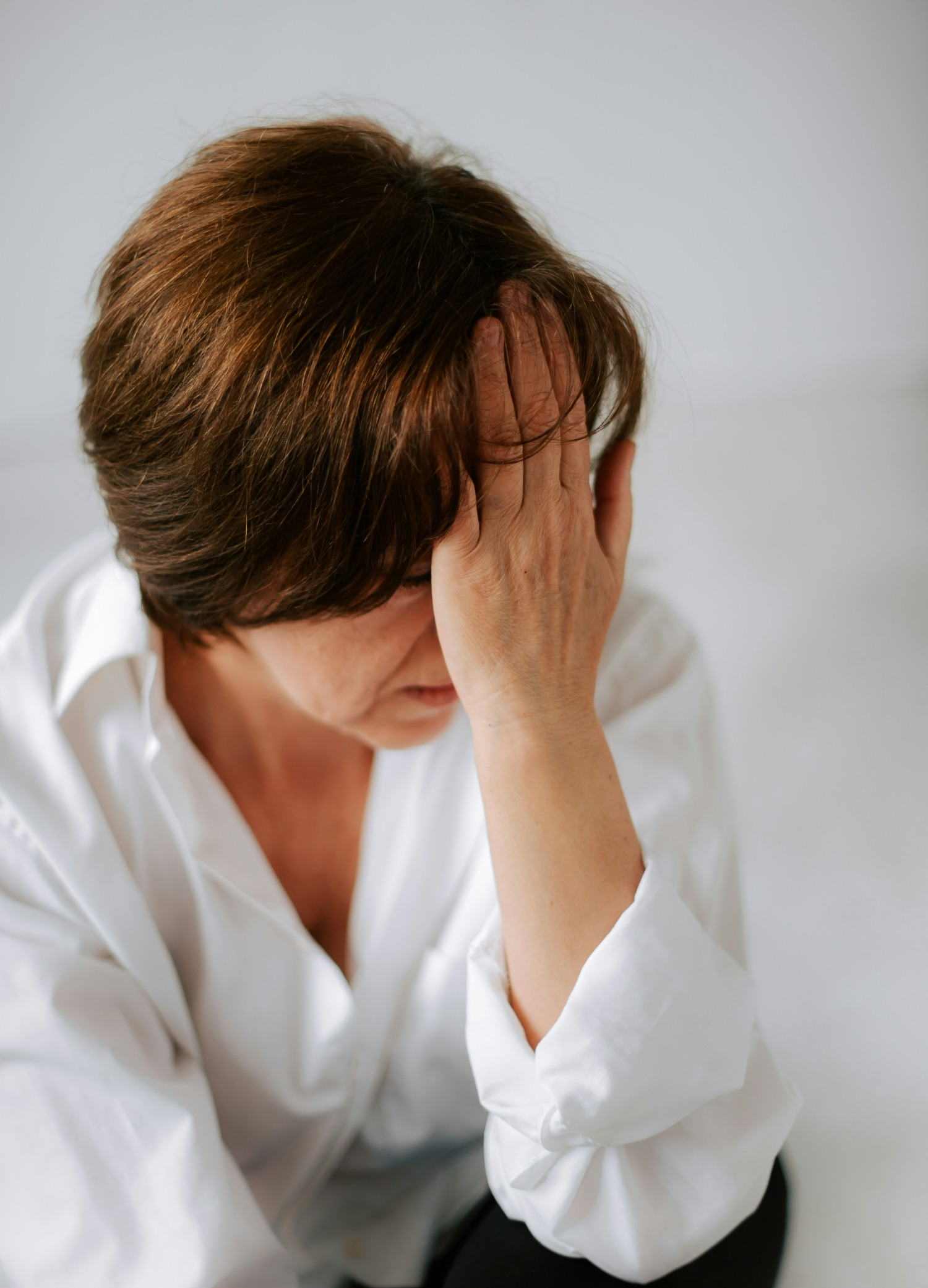
Antidepressants Linked to Low Libido in Menopausal U.S. Women, New Insights Show; Experts explain the connection and what women can do about it

Image credit: Menopause and women image by Kateryna Hliznitsova

Editorial Brief
At a glance: AI-assisted overview, optimised for journalists, search & news aggregators

New insights from Health & Her reveal that antidepressants, particularly SSRIs and SNRIs, significantly contribute to low libido in menopausal women in the U.S., with 63% reporting a loss of sexual desire. Experts highlight that while these medications are effective for mood disorders, they also have treatable sexual side effects, and women should not have to choose between mental health and sexual wellbeing. The findings also suggest that additional factors like obesity, diet, and healthcare access may exacerbate libido issues in American women compared to their global counterparts.

Press Release

New York, NY - March 31, 2026

As conversations around menopause gain momentum across the U.S., new insights from Health & Her (experts in perimenopause and menopause) highlight a critical—but often overlooked—factor affecting women’s sexual health: antidepressant use.

A recent Health & Her survey found 63% of American menopausal women report a loss of sexual desire—a significantly higher rate than seen in global data.[1] While menopause itself plays a role, experts point to antidepressants—particularly SSRIs and SNRIs—as a major contributing factor.

However, specialists emphasize that this issue is both predictable and treatable, and women should not feel forced to choose between mental health and sexual wellbeing.

Antidepressants: A Central — but Treatable — Driver of Sexual Dysfunction

Sexual side effects are among the most common adverse effects of antidepressants in both sexes, with 88.7% of women in recent outpatient data reporting sexual dysfunction while taking these medications. SSRIs and SNRIs have the highest association with reduced libido, diminished arousal, delayed orgasm, and reduced genital sensation.

“SSRIs and SNRIs are highly effective treatments for mood disorders, but they also have well‑documented impacts on sexual desire and arousal. These effects are biological, predictable, and importantly — treatable. Women do not need to choose between good mental health and sexual wellbeing.” — Dr Harriet Connell is a Primary Care Physician with a specialist interest in women’s health.

These side effects arise largely from serotonin’s inhibitory effect on dopamine, a neurotransmitter critical for desire, reward, and orgasm. Increased serotonin can also suppress sympathetic pathways involved in physiological arousal, lubrication, and climax.

In fact, as Dr. Connell points out, antidepressants can affect multiple phases of sexual response in not only women but also men. Reported effects include the following

  • Reduced arousal
  • Delayed orgasm or delayed ejaculation
  • Anorgasmia
  • Lower libido
  • Reduced genital sensation (dysaesthesia)

These symptoms align with clinical evidence describing disruptions in desire, arousal, and orgasm due to neurochemical effects of antidepressants.

Dr. Connell continues: “It is essential to recognise low mood, anxiety, and relationship stress themselves have profound sexual side effects — independent of medication. Treating underlying psychological distress may improve sexual functioning even while antidepressants have their own effects. This makes sexual functioning a balance: supporting mental health effectively while minimising unwanted side effects, and identifying what matters most to the individual.”

Which Antidepressants Are More or Less Likely to Affect Libido?

Higher likelihood of causing sexual dysfunction

  • SSRIs (e.g., sertraline, fluoxetine, citalopram)
  • SNRIs (e.g., venlafaxine, duloxetine)
    Multiple datasets confirm higher risk for both men and women.

Lower likelihood

  • Bupropion
  • Agomelatine
  • Mirtazapine
    Studies consistently show these medications are associated with fewer sexual side effects.

Why American Menopausal Women Show Higher Libido Concerns Than Women Globally

Large cross‑national studies such as the WISHeS (Women’s International Study of Health and Sexuality) [1] show consistently higher rates of distressing low desire among American women during the perimenopausal decade. The reasons extend beyond antidepressant use:

  1. Greater Metabolic and Cardiovascular Burden in U.S. Women

Obesity and cardiometabolic disease — both more prevalent in the U.S. — undermine libido via inflammation, fatigue, vascular changes, pain, and body‑image distress. [2]

  1. Higher Intake of Ultra‑Processed Foods

American adults consume a larger share of calories from ultra‑processed foods than European counterparts, driving energy volatility, low mood, vascular impairment, and inflammation — all known libido suppressors. [3,4]

  1. Healthcare Delays and Fragmented Access

U.S. women are more likely to experience unmet medical needs and delayed treatment, meaning issues that influence libido (vaginal symptoms, thyroid disease, depression, pain conditions) often remain untreated longer. [5]

  1. Surgical Menopause Patterns

Hysterectomy and oophorectomy rates are higher in the U.S., increasing the prevalence of surgical menopause — a known risk factor for distressing low desire. Meanwhile, the U.S. shows lower uptake of menopausal hormone therapy compared with the UK. [6]

  1. Mental health treatment patterns and medication side effects

Antidepressant use doubles in women from 10.3% in ages 18-39 to 20.1% in women ages 40-59 which is the menopausal age range. [7] “The most commonly reported adverse sexual effects in women taking antidepressants are problems with sexual desire (72%) and sexual arousal (83%).[8-11]

Rossie’s Six Nutrition‑Based Pathways to Support Libido During Menopause

Registered Nutritionist & Women’s Health Expert for Health & Her, Rossie Letts outlines six actionable, biology‑aligned strategies to support libido through dietary change — addressing the deeper contributors that research shows are most relevant for American women.

  1. Stabilise Blood Sugar for Energy & Mood

Refined‑carbohydrate diets cause blood sugar swings, fatigue, and low mood — a common menopausal complaint.

Tip: Build meals around protein, healthy fats, and fibre (eggs, fish, pulses, vegetables) to support steady energy and nervous‑system stability.

  1. Improve Vascular Health for Arousal

Good blood flow is essential for sexual arousal.
Tip: Include vascular‑supportive foods: oily fish, olive oil, berries, leafy greens, beetroot.

  1. Reduce Inflammation

Low‑grade inflammation worsens fatigue, body discomfort, and sexual wellbeing.
Tip: Reduce ultra‑processed foods; increase omega‑3s, colourful plants, herbs, and anti‑inflammatory spices.

  1. Replenish Key Libido‑Related Micronutrients

Iron, zinc, magnesium, B vitamins, and omega‑3s influence energy, mood, and arousal.
Tip: Prioritise seafood, iron‑rich foods, nuts, seeds, whole grains, and greens.

  1. Support the Gut–Brain Axis

Gut health plays a crucial role in mood and hormonal regulation.
Tip: Diversify fibre sources and incorporate fermented foods, while cutting ultra‑processed items.

  1. Reduce Stress Load Through Balanced Eating Patterns

Highly restrictive dieting or under‑eating sends “threat” signals to the body, suppressing libido.
Tip: Eat regularly, avoid constant rushing, and adopt a positive, compassionate approach to food


Notes to editors

Dr Harriet Connell is a Primary Care Physician with a specialist interest in women’s health, particularly focusing on the relationship between hormones, nutritional medicine, health and wellbeing. Harriet’s own medical history, along with the loss of her husband to non-smokers lung cancer has led her to dive deep into learning about the critical role the gut microbiome and nutrition has in regulating immune function, inflammation and hormone metabolism. Rosie Letts, Registered Nutritionist & Women’s Health Expert to Health & Her Rosie Letts is an award-winning UK-based Registered Nutritionist specialising in women’s health, hormone balance, and menopause support. With more than a decade of clinical experience, she has helped thousands of women transform their wellbeing through evidence-based nutrition and practical lifestyle strategies. Rosie is the founder of Rosie Letts Nutrition, a virtual clinic supporting women through every life stage—from fertility and pregnancy to perimenopause and menopause. As Nutrition Advisor to Health & Her, one of the UK’s leading perimenopause and menopause wellness brands, Rosie translates the latest research into clear, relatable guidance that helps women feel their best. Her expertise has been featured internationally, and she recently appeared in Four Days, a Ravoke documentary exploring life, health, and menopause through an immersive four-day journey. Her qualifications, memberships and awards include: BSc in Nutritional Therapy – University of Westminster; ICHAN outstanding practice 2018 award; Member of the Complementary & Natural Healthcare Council (CHNC); Member of the British Association of Nutritional Therapists (BANT). Notes to Editors About Health & Her® ‘Discover You Again’ Created for women, by women. Health & Her launched in 2019 by co-founders, Kate Bache and Gervase Fay, whose mission was to provide every woman going through perimenopause and menopause access to services and products to help them discover themselves again. Health & Her® is an award-winning website, supplements, plus a free app that aims to empower women to take control of their menopausal health. Health & Her cuts through the confusion when it comes to female health and supports women to own their journey through perimenopause and menopause. Health & Her aim to offer a 360-degree service developed with experts to provide everything from evidence-backed supplements and solutions, expert advice content, to a clinic service and daily symptoms tracker. All powered by real-time data and research conducted with thousands of women in the UK, USA and across the EU. The Health and Her offering includes:
  • Perimenopause and Menopause supplement range – Health & Her conducted extensive research with thousands of women to understand how best to support wellbeing during menopause. This resulted in the Health & Her Multi-Nutrient range which was formulated with experts. The range consists of Perimenopause, Perimenopause Mind+, Menopause, Weight Management and Intimacy+
  • Free Health & Her App – offers a selection of evidence-based exercises, interactive tools and personalised insights designed to help manage symptoms and empower women through their menopause journey. Available for free on iOS and Android.
  • Free Menopause Hormone Checker – Designed to help women understand and improve their menopause experience, our menopause checker to find out more about articles, services and dietary options that are most popular among women just like you.
  • Free expert advice – Health & Her provides an extensive expert advice hub written by leading experts in their field around issues relating to perimenopause and menopause. Health & Her works closely with a large panel of experts who include Physicians, nutritionists, sleep experts, yoga teachers, psychologists, relationship counsellors, makeup artists, gynecologists and menopause coaches. Health & Her advice content covers a whole array of answers to questions that reflect different aspects of a woman’s journey during perimenopause and menopause.
For more information, please visit www.healthandher.com [1 Hayes RD, Dennerstein L, Bennett CM, Koochaki PE, Leiblum SR, Graziottin A. Relationship between hypoactive sexual desire disorder and aging. Fertility and sterility. 2007 Jan 1;87(1):107-12. [2]. Saadedine M, Faubion SS, Grach SL, Nordhues HC, Kapoor E. Association between obesity and female sexual dysfunction: a review. Sexual Medicine Reviews. 2024 Apr;12(2):154-63. [3]. Lane MM, Gamage E, Du S, Ashtree DN, McGuinness AJ, Gauci S, Baker P, Lawrence M, Rebholz CM, Srour B, Touvier M. Ultra-processed food exposure and adverse health outcomes: umbrella review of epidemiological meta-analyses. bmj. 2024 Feb 28;384. [4]. Juul F, Parekh N, Martinez-Steele E, Monteiro CA, Chang VW. Ultra-processed food consumption among US adults from 2001 to 2018. The American journal of clinical nutrition. 2022 Jan 1;115(1):211-21. [5] Rosen RC, Shifren JL, Monz BU, Odom DM, Russo PA, Johannes CB. Correlates of sexually related personal distress in women with low sexual desire. The journal of sexual medicine. 2009 Jun;6(6):1549-60. [6] Dennerstein L, Koochaki P, Barton I, Graziottin A. Hypoactive sexual desire disorder in menopausal women: a survey of Western European women. The journal of sexual medicine. 2006 Mar;3(2):212-22. [7] Reference to NAHNES report on CDC: https://www.cdc.gov/nchs/products/databriefs/db377.htm [8] Serretti A, Chiesa A. Treatment-emergent sexual dysfunction related to antidepressants: a meta-analysis. J Clin Psychopharmacol. 2009;29(3):259–266. [DOI] [PubMed] [Google Scholar] [9] Reichenpfader U, Gartlehner G, Morgan LC, et al. Sexual dysfunction associated with second-generation antidepressants in patients with major depressive disorder: results from a systematic review with network meta-analysis. Drug Saf. 2014; 37(1):19–31. [DOI] [PubMed] [Google Scholar] [10] Gartlehner G, Hansen RA, Morgan LC, et al. Comparative benefits and harms of second-generation antidepressants for treating major depressive disorder: an updated meta-analysis. Ann Intern Med. 2011;155(11):772–785. [DOI] [PubMed] [Google Scholar] [11].Clayton A, Keller A, McGarvey EL. Burden of phase-specific sexual dysfunction with SSRIs. J Affect Disord. 2006;91(1):27–32. [DOI] [PubMed] [Google Scholar]

Get more news like this

Get more news like this on Google. Set News By Wire as a ‘Preferred News Source’ to get quicker access to news that’s important.

All done!
Thank you for subscribing.

Email Subscription