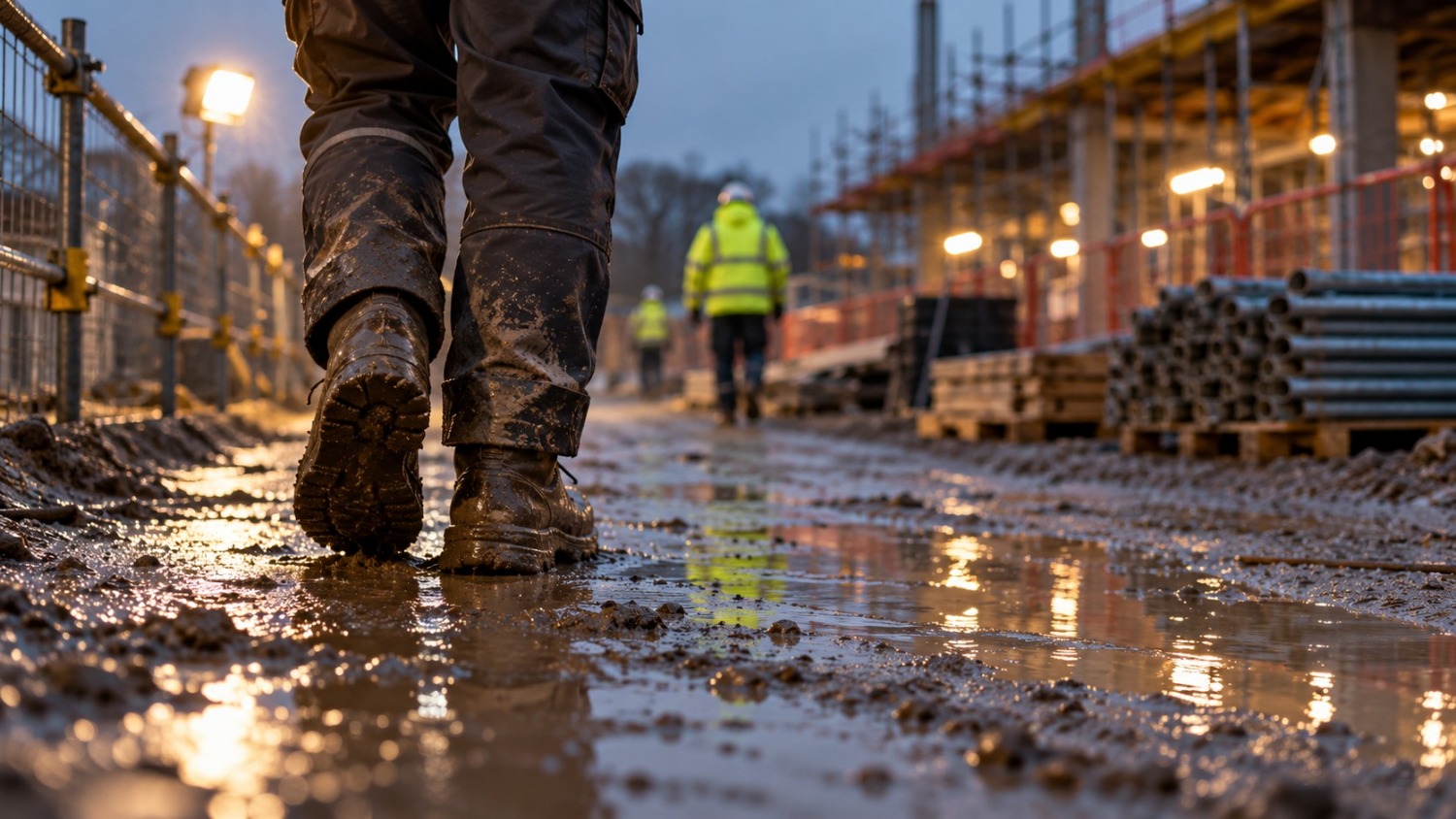
Construction safety specialists urge employers to reassess site conditions as darker evenings, wet weather and falling temperatures increase everyday hazards.
As Britain moves into the darker winter months, construction employers are being urged to take a closer look at one of the most common, and frequently underestimated, causes of workplace injury.
Figures published by the Health and Safety Executive (HSE) reveal that 30% of non-fatal employee injuries reported under RIDDOR in 2024/25 were caused by slips, trips or falls on the same level.
That represents almost one in three reported workplace injuries.
And with British Summer Time ending on 25th October 2026, reduced daylight, wet surfaces, muddy access routes and falling temperatures are creating additional challenges for construction sites across the country.
Essential Site Skills, a UK construction health and safety training provider, is warning that familiar hazards should not be mistaken for acceptable risks.
The Everyday Hazards Behind Serious Workplace Injuries
Slips and trips are often associated with relatively minor incidents. Yet a fall on an uneven surface, a poorly lit staircase or a slippery access route can result in fractures, prolonged absence from work and potentially life-changing consequences.
According to the HSE, 59,219 non-fatal employee injuries were reported under RIDDOR in 2024/25.
While slips, trips and falls on the same level accounted for the largest proportion, falls from height accounted for a further 8%.
The figures highlight the continuing importance of safe access, effective housekeeping, appropriate lighting and proactive risk management.
The HSE has also issued seasonal advice highlighting how reduced daylight, wet leaves, rainwater and icy conditions can increase the risk of slips and trips in the workplace.
For construction sites, where working environments and pedestrian routes can change daily, these conditions require particular attention.
Familiar Risks Should Never Become Acceptable Risks
A spokesperson for Essential Site Skills commented:
“There’s a tendency to associate serious construction accidents with heavy machinery, working at height or particularly hazardous activities.
“But almost one in three reported non-fatal workplace injuries involves something as ordinary as a slip, trip or fall on the same level.
“We’re talking about hazards that can be present on practically any construction site, from muddy walkways and uneven ground to poor lighting and materials left in access routes.
“Winter doesn’t introduce these risks for the first time. It makes existing weaknesses harder to ignore.
“Employers know that darker evenings, heavy rain and freezing temperatures are coming. The real question is whether those foreseeable conditions have been properly considered before someone gets hurt.”
Prevention Starts Before the First Accident
Essential Site Skills is encouraging construction employers and site managers to reassess their winter safety arrangements, particularly around:
- Adequate lighting for early starts, late finishes and pedestrian access.
- Safe, clearly designated walkways free from unnecessary obstructions.
- Measures to manage mud, standing water, wet leaves, ice and frost.
- Regular reviews of site conditions and changing risk assessments.
- Clear communication and prompt reporting of hazards and near misses.
The company also emphasises that training, supervision and a positive reporting culture all contribute to effective accident prevention.
The spokesperson added:
“Nobody should have to accept a slippery walkway or poorly lit access route as simply part of working on a construction site.
“Good safety management isn’t just about responding when something goes wrong. It’s about recognising the conditions that could cause an accident and doing something about them.
“Sometimes the most important safety improvement isn’t a major investment or a complicated new system.
“It’s making sure the route people walk every morning is actually safe.”
A Seasonal Reminder With Year-Round Relevance
The HSE provides guidance on preventing slips and trips, including advice on workplace inspections, environmental conditions and appropriate control measures.
As winter approaches, Essential Site Skills is encouraging construction businesses to revisit these resources, review their existing arrangements and ensure workers understand the importance of identifying and reporting hazards.
Because a workplace accident shouldn’t be the first indication that something needs to change.
Further practical guidance is available in Essential Site Skills’ article, Winter Construction Site Safety: Slips, Trips and Falls.