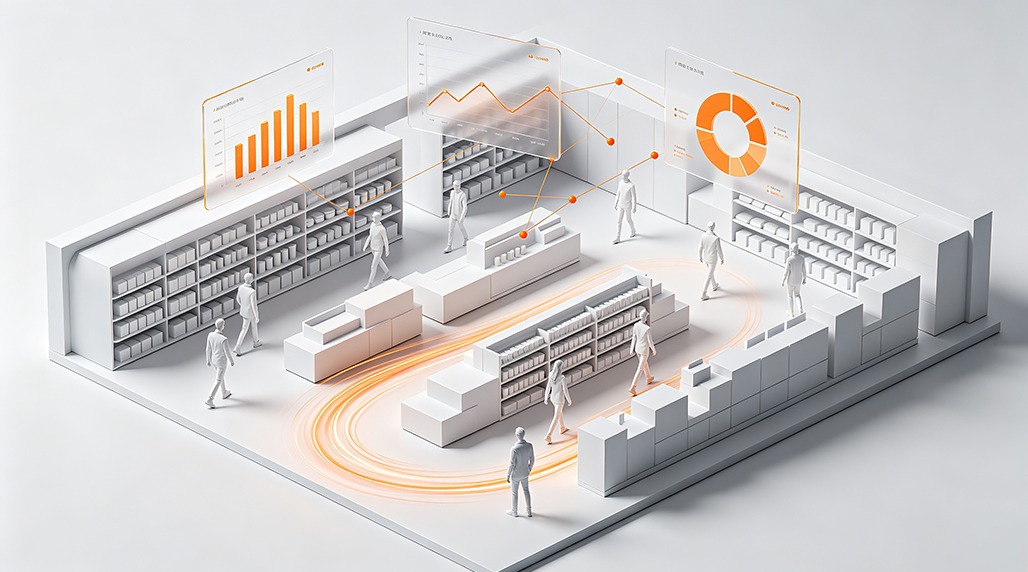
AI-powered people counting technology is increasingly becoming a foundational layer in retail analytics and commercial space optimization, as businesses shift from experience-based management to data-driven operational decision-making.
Across retail stores, shopping malls, and public venues, operators are adopting intelligent foot traffic measurement systems to better understand customer flow, occupancy patterns, and conversion efficiency. The technology is now widely used to support store performance analysis, workforce planning, and space utilization optimization.
From Foot Traffic Counting to Retail Intelligence Systems
Traditional retail performance evaluation has largely relied on sales data alone. However, sales figures do not reflect how many visitors entered a store, how long they stayed, or how they moved within the space.
Modern people counting systems address this gap by capturing real-time foot traffic data and converting it into structured analytics. Key metrics typically include:
- Entry and exit traffic volume
- Peak and off-peak traffic periods
- Dwell time and in-store engagement patterns
- Occupancy levels across time segments
- Conversion rate based on traffic-to-sales correlation
Industry analysts note that these metrics are increasingly being used as leading indicators of store performance rather than secondary operational data.
Core Technologies Behind AI People Counting Systems
The evolution of AI people counting technology has been driven by improvements in computer vision, infrared sensing, and depth-based recognition systems. Common technical approaches include:
- Binocular stereo vision for depth perception
- Infrared beam interruption for entry detection
- Time-of-Flight (ToF) sensors for spatial accuracy
- Edge computing for real-time processing
- AI-based object filtering to reduce false counts
These technologies enable more stable performance in high-traffic environments such as retail entrances, shopping malls, transportation hubs, and exhibition centers.
Retail Use Cases Expanding Across Multiple Industries
The adoption of foot traffic analytics systems is expanding beyond traditional retail into broader commercial and public environments.
In retail stores, operators use people counting data to measure conversion rates and evaluate promotional effectiveness. In shopping malls, aggregated traffic data helps optimize tenant placement and improve floor performance distribution. In exhibition and event spaces, visitor flow analysis supports safety management and crowd control strategies.
For chain retailers, standardized traffic measurement across multiple locations is also enabling more accurate benchmarking of store performance and site selection decisions.
Shift Toward “Effective Traffic” in Retail Analytics
A growing focus in the industry is the concept of effective foot traffic, which goes beyond raw visitor counts. Businesses are increasingly analyzing:
- Returning vs. new visitors
- Average dwell time per visit
- Zone-level engagement within stores
- Interaction depth with product areas
These indicators provide a more accurate reflection of customer behavior and purchasing intent, allowing retailers to refine store layouts and staffing strategies.
Privacy and Data Compliance in People Counting Systems
As adoption increases, privacy protection remains a critical consideration. Most modern AI people counting solutions operate on anonymous data processing principles, avoiding the collection of personally identifiable information.
This approach ensures compliance with data protection frameworks such as GDPR while still enabling detailed operational analytics.
Outlook: Integration With Predictive Retail Systems
Industry observers expect people counting technology to become increasingly integrated with broader retail intelligence ecosystems, including:
- Inventory management systems
- AI-driven demand forecasting
- Automated marketing platforms
- Workforce scheduling tools
This convergence is expected to further enhance operational efficiency and enable real-time decision-making in retail environments.
As retail continues its transition toward data-centric operations, people counting systems are evolving from simple monitoring tools into core infrastructure for commercial analytics.