In San Severo, southern Italy, theater company “Foyer ’97” has transformed a long-shuttered street kiosk into a one-of-a-kind cultural landmark, reigniting the national conversation about Italy’s disappearing newsstands and the power of grassroots arts in underserved communities.
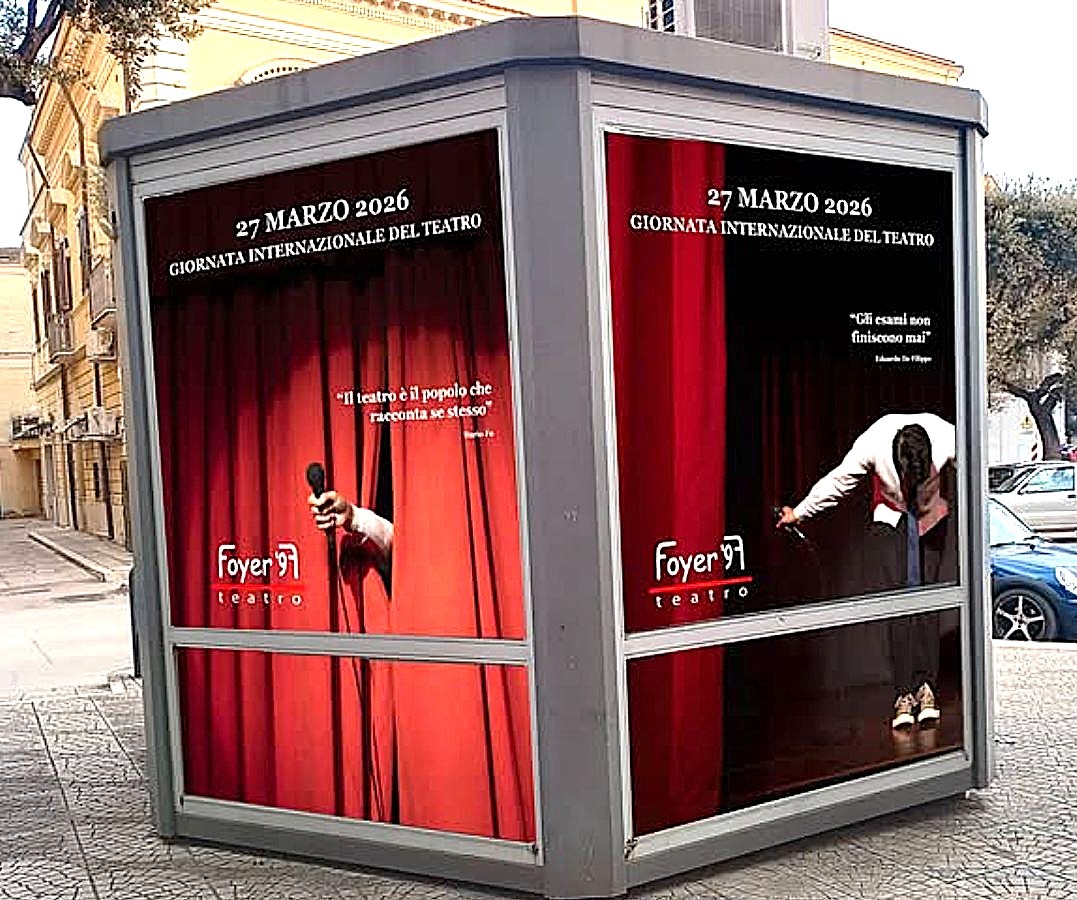
A long-abandoned newsstand on a quiet street in downtown San Severo, in the Foggia province of southern Italy, has been given a second life — and it may be unlike anything seen anywhere else in the world. The venue is called “Teatro Edicola” (Newsstand Theater), and it lays claim to being the smallest theater on earth. The project is the work led by “Foyer ’97” artistic director Francesco Gravino and was launched to coincide with “2026 World Theater Day” on March 27, with the stated goal of turning a forgotten piece of urban infrastructure into a meeting place for people and stories.
The space spans just a few square meters. Inside, the performers. Outside, the audience: six spectators at a time, seated less than three feet from the stage. Each show runs approximately fifteen minutes — just enough time, those who have attended say, to experience something that feels unlike any other night at the theater.
The choice to work in such a radically confined space is by design, not necessity. “This is a proximity theater,” Gravino explained. “In an age of digital distance, we are putting human contact back at the center.” The statement reads almost like a manifesto—issued at a moment when culture is struggling to find physical footing in cities and genuine connections between people feel increasingly scarce.
The municipal government of San Severo has backed the initiative, recognizing it as a concrete example of urban regeneration in action. City officials noted that the project proves how small-scale interventions — low-cost, high-meaning — can generate a cultural and social impact that far outlasts the event itself: “You don’t need large investments to create culture. You need ideas that bring a community together.”
Teatro Edicola speaks to a challenge playing out across Italy. According to industry data, the number of active newsstands in the country has fallen from roughly 35,000 in 2005 to approximately 20,000 in 2024 — a decline of 42.8 percent in under two decades. Once cornerstones of neighborhood life and spontaneous social exchange, thousands of kiosks have been shuttered by the collapse of print media sales and the shift to digital news consumption, leaving unused voids scattered across Italian cities.
In this context, what is happening in San Severo carries particular civic weight. The city, like much of Southern Italy, is often defined in public discourse by its structural vulnerabilities — organized crime, social hardship, and urban marginalization. In territories like this, a small-scale cultural initiative can become something more than an arts project: an act of belonging and of resistance.
Buoyed by the response to the debut season, Teatro Foyer ’97 is now weighing plans to program new performances on an ongoing basis and is actively exploring the possibility of purchasing the newsstand outright in order to give the project a permanent home. San Severo, with its miniature theater, is sending a message that reaches well beyond its own borders: culture can take root anywhere — even in the smallest of spaces. Perhaps this is precisely where it should start.