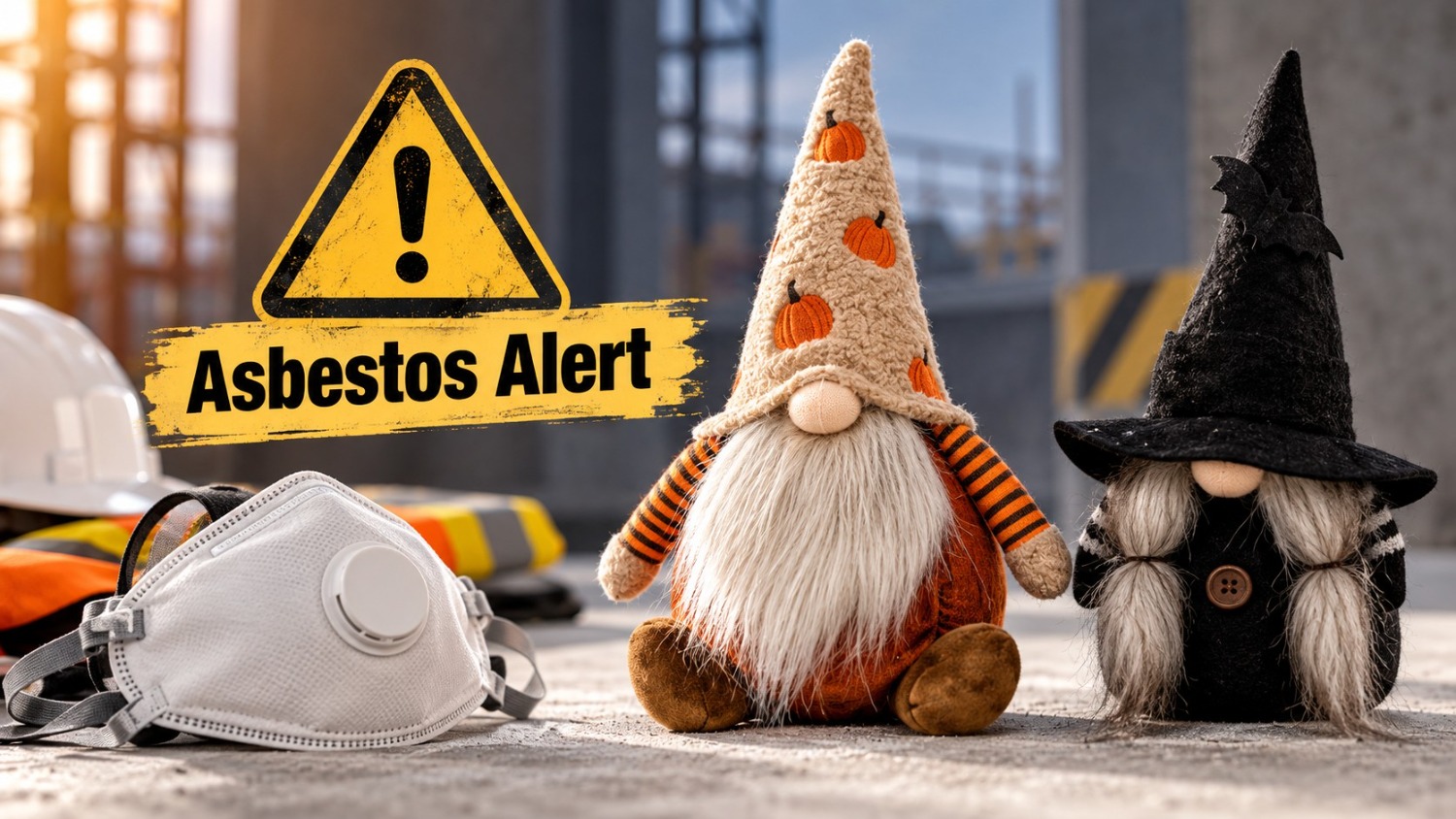
An urgent recall of Halloween decorations over asbestos fears has prompted a construction health and safety specialist to warn that the banned material remains one of Britain’s deadliest workplace hazards. The Office for Product Safety and Standards (OPSS) issued a recall on 6 October after testing identified that sand sealed inside two Primark Halloween gonks may contain small quantities of asbestos. The decorations, featuring pumpkin and witch designs, have been withdrawn from sale, with customers advised to stop using them immediately.
Now Essential Site Skills, a UK construction training and health and safety specialist, says the unexpected discovery is a reminder that asbestos remains a serious risk more than 25 years after it was banned. According to the Health and Safety Executive (HSE), around 5,000 people die from asbestos-related diseases in Great Britain every year, while approximately 20 tradespeople die each week as a result of past exposure.
Catherine Storer, Director at Essential Site Skills, said:
“Most people wouldn’t expect to find asbestos in a Halloween decoration. That’s what makes this recall so alarming.
“But while this particular incident involves household products, asbestos is something construction workers can still encounter during everyday activities. “We banned asbestos in 1999, but we haven’t eliminated the danger. It’s still present in buildings across the country, and disturbing it without recognising the risk can have devastating consequences.
“The frightening thing about asbestos is that you won’t necessarily know you’ve been exposed. The health effects can take decades to emerge, by which point the damage has already been done.”
Asbestos was widely used in building materials, insulation, ceiling tiles and pipework before its prohibition. It can still be found in properties built or refurbished before 2000. Workers involved in refurbishment, demolition and maintenance can be exposed when asbestos-containing materials are drilled, cut, broken or disturbed, releasing microscopic fibres into the air.
Under the Control of Asbestos Regulations 2012, employers must ensure workers who could be exposed to asbestos receive appropriate information, instruction and training.
Catherine continued:
“There’s a dangerous assumption that asbestos is a problem we’ve already dealt with. But thousands of people are still dying from exposure that happened years ago.
“We cannot afford to repeat those mistakes with today’s workforce. “Workers need to recognise when asbestos could be present, understand when to stop work and know the correct procedures to follow.
“And where respiratory protective equipment is required, simply handing someone a mask isn’t enough. It needs to be suitable for the hazard, correctly fitted and properly used.
“Training and prevention might not make headlines, but they can make the difference between someone going home safely and developing a life-changing illness years down the line.”
Essential Site Skills provides UKATA Asbestos Awareness training, alongside Face Fit Testing and Face Fit Train the Tester courses, helping employers improve workforce awareness and respiratory protection. The company is urging construction businesses, particularly those involved in refurbishment and maintenance of older properties, to review their asbestos awareness procedures and ensure workers have appropriate training and protection.