Businesses and government agencies have spent years treating cybersecurity as a defensive cost center, something you fund reluctantly and hope never has to prove its worth. That mindset is starting to shift, and the change is being driven by artificial intelligence tools that can spot trouble across a network in minutes instead of weeks.
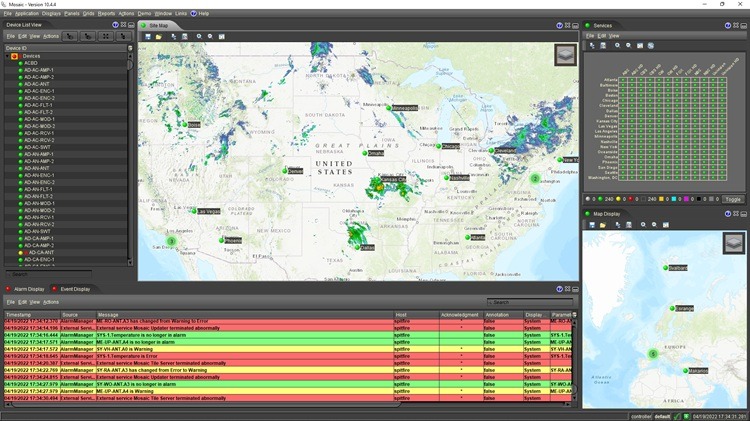
The shift is showing up across the telecom and networking industry. Security processes that once required teams of analysts combing through logs by hand are increasingly handled by AI systems that can flag anomalies across radio access networks, core infrastructure, and virtualized environments almost as soon as they appear. For an industry that has long struggled to keep pace with the speed of modern threats, that kind of visibility is a meaningful turning point.
Doug Roberts, Chief Technology Officer at Cytranet, has watched this play out firsthand with the businesses and government clients his company serves. Cytranet provides telecom and internet infrastructure to enterprise and public sector customers, many of whom depend on always-on connectivity for everything from payroll systems to emergency communications.
“For a long time, the honest answer to ‘are we secure’ was ‘we think so, and we’ll find out if something goes wrong,'” Roberts said. “AI-assisted monitoring has changed that conversation. We can see patterns forming across a network in real time, rather than reconstructing what happened after an outage or a breach. That’s not a small improvement, it’s a fundamentally different way of protecting a network.”
Roberts pointed to the growing sophistication of network infrastructure itself as part of what makes this possible. As more carriers and service providers move toward software-defined and virtualized network architectures, the volume of telemetry data available for analysis has grown enormously. AI models trained on that data can now recognize the early signs of a distributed denial-of-service attack, a misconfigured device, or unusual traffic patterns that might indicate a compromised endpoint, often before a human operator would notice anything unusual.
That matters most for the customers who cannot afford downtime. Government agencies need to keep essential services running for the communities they serve. Hospitals and utilities need networks that stay up regardless of what else is happening in the world. Businesses of every size are increasingly dependent on connectivity for basic operations, not just convenience.
“Our customers aren’t asking us whether we have a firewall anymore,” Roberts said. “They’re asking how fast we can detect and respond to something they haven’t even thought of yet. AI gives us a real answer to that question, and it lets us have a much more proactive relationship with the organizations we serve, instead of a reactive one.”
Roberts also sees the trend as good news for smaller organizations that previously could not afford enterprise-grade security operations. AI-driven detection tools, once the exclusive domain of the largest carriers and cloud providers, are increasingly built into the infrastructure that regional and mid-market providers like Cytranet offer their customers.
“Five years ago, this level of network intelligence was only available to the biggest players,” Roberts said. “Now it’s something we can build into the connectivity we provide for a school district or a mid-sized manufacturer. That’s a genuine leveling of the playing field, and it’s one of the more encouraging developments I’ve seen in this industry in a while.”
Industry analysts expect the trend to accelerate as more network operators adopt AI-based monitoring as a standard feature rather than a premium add-on. For Roberts and Cytranet, the goal is straightforward: keep the networks that businesses and government agencies depend on running smoothly, and catch problems before customers ever notice them.
“The best compliment we can get is when a customer doesn’t even realize how much was happening behind the scenes to keep their network safe,” Roberts said. “That’s what we’re building toward.”