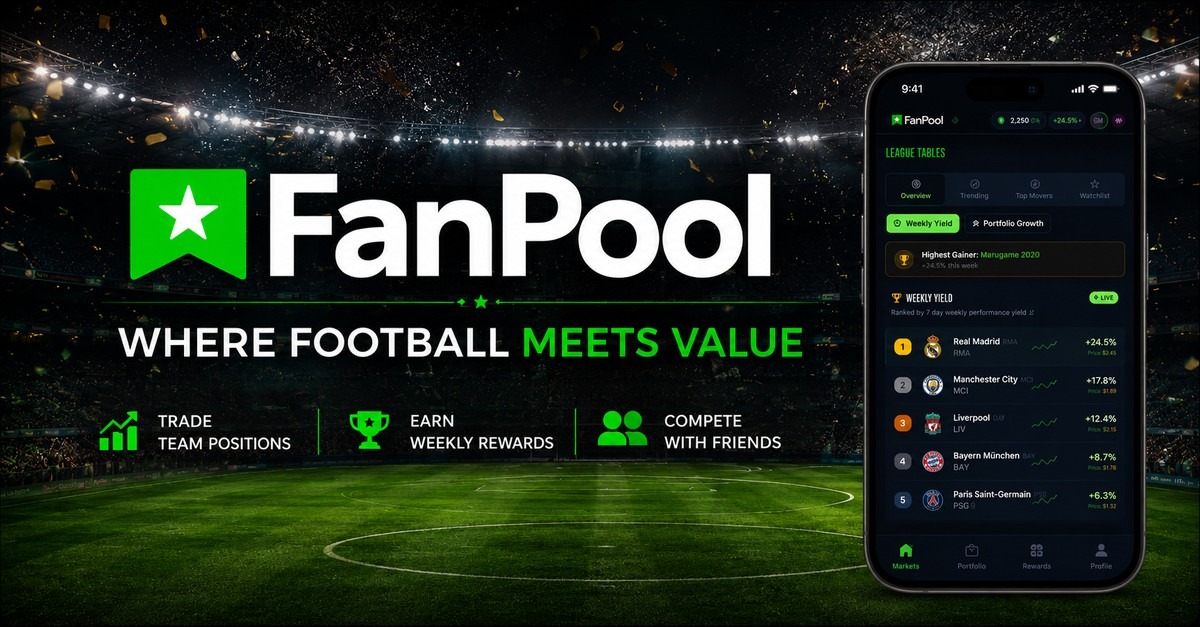
Football fans have long debated which team is best, who will win the league and who can lift the World Cup. FanPool, a fantasy trading ecosystem for football, says its latest market study shows that a different question is becoming more important as football moves into a market-based entertainment format: which team represents the best value.
The study analyses 7,001 trades made by 456 traders across seven domestic European leagues and the FIFA World Cup 2026 market. Based on more than 104,000 FanCredits of trading volume, the research suggests that fans are starting to behave less like spectators and more like investors. The findings indicate that success alone does not determine value. Instead, value is shaped by the gap between expectations and reality.
FanPool describes this pattern as the Manchester City problem. Clubs such as Manchester City, Arsenal and Real Madrid attract significant attention because their quality is well known. However, when expectations are already very high, future outperformance becomes harder. In market terms, the best-known teams may already have much of their future upside reflected in current expectations.
By contrast, clubs operating just below the elite tier can sometimes offer a more interesting opportunity because they have room to exceed expectations. FanPool’s trading data shows notable activity around teams such as AFC Bournemouth, Brighton & Hove Albion and Nottingham Forest, suggesting that participants are looking beyond reputation and asking what the market may not yet fully appreciate.
“Football has always been a game of opinions. Markets are a game of expectations. The moment you combine the two, something fascinating happens: people stop asking only who will win and start asking where value exists. That is the behavioural shift we believe will define the next generation of football engagement,” said Ekow Yankah, Founder of FanPool.
To support this approach, FanPool recently launched a public Relative Form Indicator for World Cup teams. The ranking evaluates national teams using recent performance, opponent strength, venue effects and match importance. The methodology is continuously back-tested against more than 1,000 football matches every month to keep rankings current and reflective of real-world performance.
FanPool believes these patterns point toward a new category of consumer entertainment at the intersection of football, community, markets and artificial intelligence. Instead of selecting fantasy line-ups or placing bets on individual matches, users build and manage virtual portfolios of football clubs and national teams, compete against friends, participate in prediction challenges and earn rewards based on the quality of their decisions.
As World Cup 2026 approaches, millions of fans will debate favourites, outsiders and tournament winners. FanPool believes a new question is becoming equally important: not who is the best team, but which team represents the best value.
The study also indicates that football market participants may be developing a more disciplined way of evaluating teams. Rather than relying only on league tables, star players or brand recognition, they appear to be weighing whether expectations have moved too far ahead of likely performance. This creates a more analytical fan experience in which knowledge, timing and interpretation matter as much as loyalty. FanPool says this behaviour is especially relevant before major tournaments, when public opinion can shift quickly and fans are looking for structured ways to compare teams across different leagues, countries and playing styles.