New anonymized user data from RabattDigga suggests that many online shoppers may underestimate the real cost of everyday purchases when those purchases are measured in working hours instead of price alone.
Free Tool Helps Shoppers Pause Before Checkout
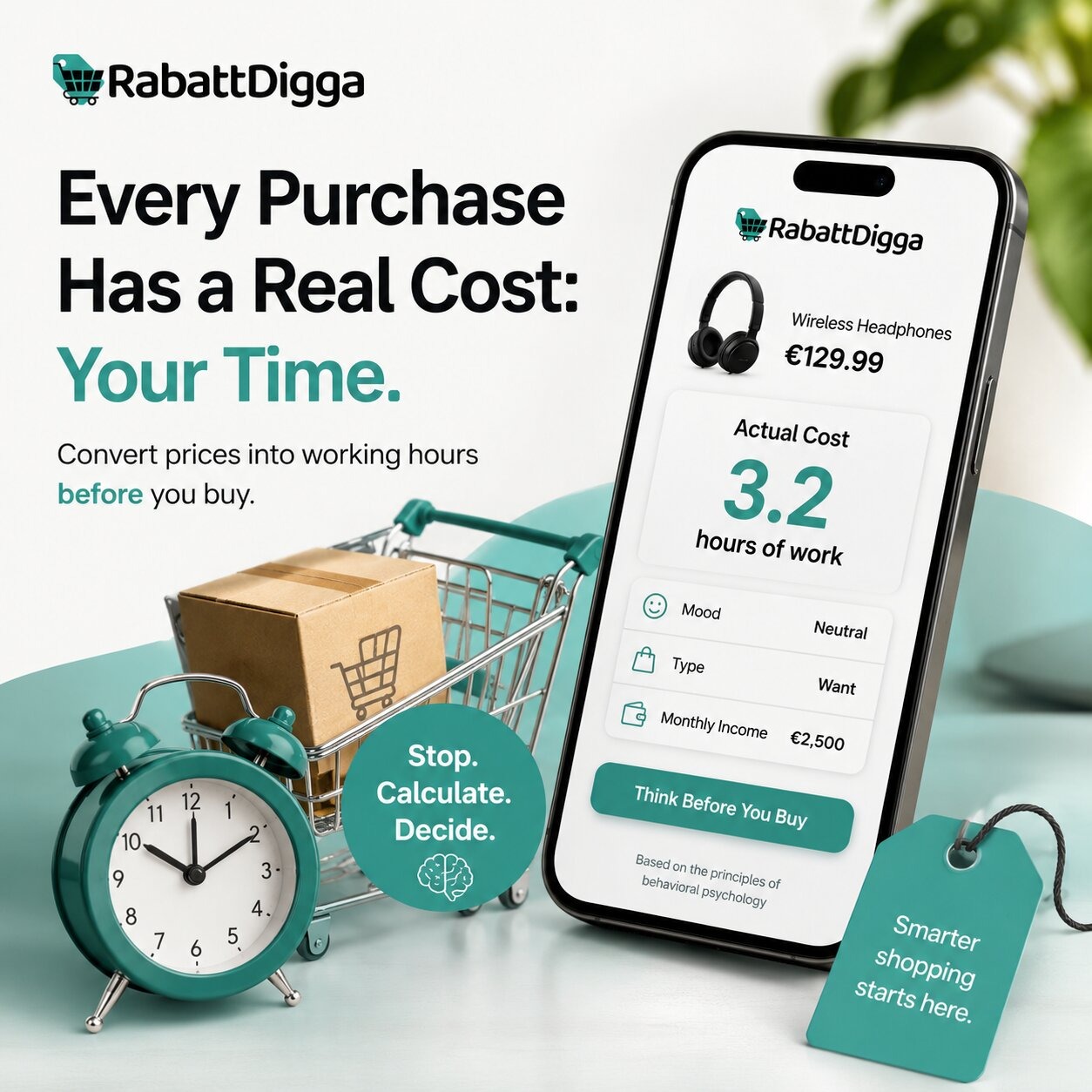
The findings come from RabattDigga’s free Impulse Buy Evaluator, an online tool designed to help consumers pause before checkout and think more clearly about a planned purchase.
Instead of only looking at the item’s price, the tool asks users to consider their monthly income, current mood, and whether the product is a genuine need or simply a want. It then converts the item’s price into an estimated number of working hours required to earn that amount.
Key Findings From Early User Data
Based on more than 5,000 anonymized completed evaluations from March 1 to May 31, 2026, RabattDigga found that:
- 72% of evaluated purchases represented more than three hours of work.
- 67% of evaluated purchases were categorized as a “want” rather than a necessity.
- 58% of users reported either a neutral or negative mood while using the tool.
The early findings suggest that many shoppers may not always connect a product’s price with the time and effort required to pay for it. A discount, sale, or limited-time offer may make a purchase feel cheaper in the moment, but the working-hours calculation can give shoppers a more practical way to judge affordability.
Discounts Can Save Money, But They Can Also Create Pressure
RabattDigga says the tool was created to support more mindful online shopping, especially during a time when consumers are regularly exposed to flash sales, coupon codes, free shipping thresholds, and limited-time deals.
While discounts can help shoppers save money, they can also create pressure to buy items that were not originally planned.
“What stood out to us was how often people labeled purchases as wants, not needs, and how many of those purchases represented several hours of work,” said Maximilian Krüger, Managing Director of RabattDigga. “A discount can be useful, but only when the purchase makes sense in the first place. We built the Impulse Buy Evaluator to help shoppers pause, think, and understand the real effort behind a price.
Mood May Influence Buying Decisions
The mood-related data also points to a wider issue in online shopping behavior. More than half of users accessed the tool while reporting either a neutral or negative mood, suggesting that emotional state may play a role in how people evaluate purchases.
RabattDigga says this does not mean every mood-driven purchase is harmful, but it does show why a short pause before checkout can be useful.
Smarter Shopping Means Knowing When Not to Buy
The Impulse Buy Evaluator is part of RabattDigga’s broader effort to help consumers shop more intentionally. The company is best known for helping users find discount codes and online deals, but it says smarter shopping is not only about paying less. It is also about knowing when a purchase is actually worth making.
RabattDigga plans to continue analyzing anonymized tool data to better understand how consumers respond to online shopping pressure, discounts, and emotional spending triggers.
Methodology
The findings are based on anonymized interactions with RabattDigga’s Impulse Buy Evaluator Tool between March 1 and May 31, 2026. The analysis included more than 5,000 completed evaluations.
Users self-reported item price, monthly income, mood, and whether the purchase was a need or want. Work-hour estimates were calculated by converting monthly income into an estimated hourly value. No personally identifiable information was used in the analysis.