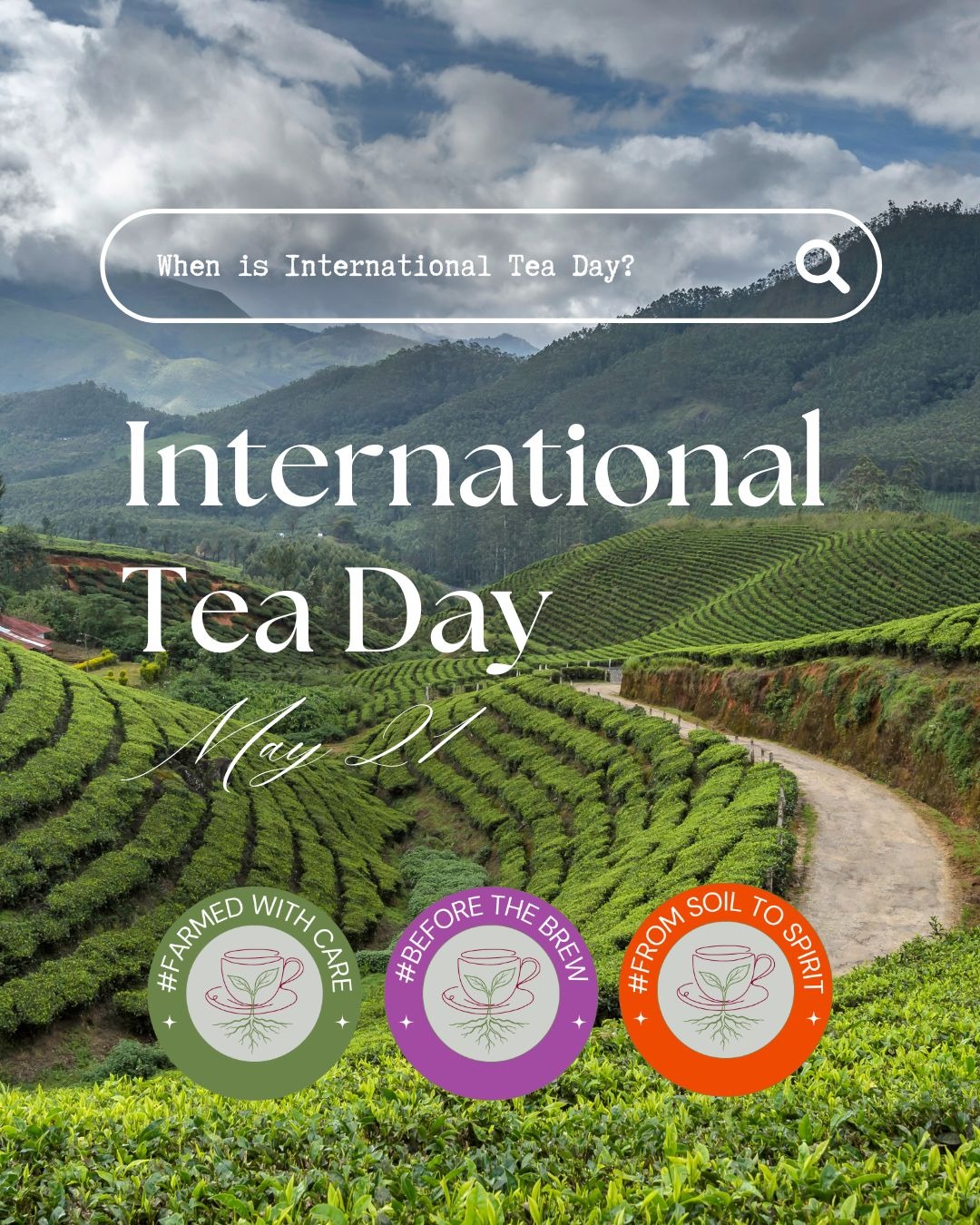
The Tea Association of the U.S.A. (TAUSA) joins the global tea community today in observing International Tea Day, celebrated annually on May 21 by designation of the United Nations General Assembly. Now in its seventh year as an officially recognized international observance, the occasion calls attention to the cultural, economic, and human dimensions of tea — the most widely consumed beverage on earth after water — and to the complex, often invisible supply chains that bring it to American tables, offices, and kitchen shelves.
A Day Rooted in Global Significance
Tea is grown in more than 60 countries and traded in every corner of the world. It is the livelihood of millions of smallholder farmers and a cornerstone of rural economies from South Asia to East Africa to South America. In the United States alone, tea is consumed by nearly half the population on any given day, representing a market that touches importers, blenders, retailers, foodservice operators, and independent tearooms alike.
International Tea Day, established by the United Nations in 2019 and first observed in 2020, was created to promote sustainable production and consumption, support the well-being of tea workers, and raise awareness of tea’s role in fighting hunger and poverty. It is also, at its heart, a celebration — of flavor, of tradition, of the quiet ritual that tea offers to people across every culture and walk of life.
Farmed with Care: The Campaign Behind This Year’s Observance
This year’s global campaign theme, Farmed with Care, is an invitation to look more closely at the origin of tea — at the soil in which it is grown, the agricultural practices that shape it, and the people whose expertise and labor determine its quality. Tea does not simply arrive in a box or a canister. It is the product of decisions made season after season, in gardens tended with knowledge that is often generations deep.
The Farmed with Care campaign centres on three interconnected realities. First, soil health: tea quality is inseparable from the land it grows in, and responsible producers invest in the biological integrity of their gardens as a long-term commitment to flavour and sustainability. Second, stewardship: from garden management to shade cultivation to water conservation, the practices adopted in tea gardens carry consequences that reach far beyond the farm gate. Third, people: behind every harvest are pluckers, processors, managers, and smallholders whose skills and conditions of work determine not only the tea in the cup but the resilience of the communities that depend on the industry.
For U.S. consumers and businesses, the campaign is a call to engage with provenance. Asking where tea comes from and how purchasing decisions which shape the supply chain is not merely a matter of curiosity — it is a form of informed participation in a global system that the U.S. market has considerable power to influence.
“Tea is one of the most traveled commodities in the world, and one of the least understood. Most Americans encounter it every day without knowing where it grew, who picked it, or what it took to get it to them. International Tea Day is an opportunity to close that gap — not just for consumers, but for our entire industry. When we understand the origins of what we sell and what we drink, we make better decisions. The Farmed with Care theme captures something I believe deeply: that the quality in the cup is a reflection of the care taken in the ground. That connection matters, and it is worth celebrating.”
— Shabnam Weber, President, Tea Association of the U.S.A.